This is not a theoretical guide to transformer export logistics. It is an account of what actually happened during the export of one of our transformers to a power station project in the Democratic Republic of Congo — including a logistical problem we did not anticipate, how we resolved it, and what we learned from it.
We are sharing this because we believe international buyers and EPC contractors deserve honest, practical information about what large equipment export from China actually involves — not just polished marketing content. If you are planning to procure a large power transformer from a Chinese manufacturer, this article is worth reading before you finalise your logistics plan.
The Project in Brief
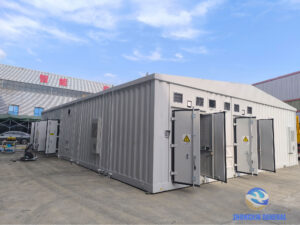
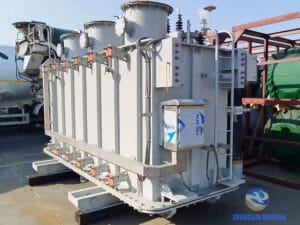
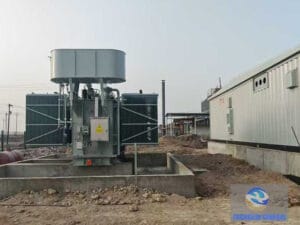
In mid-2025, Zhongxin General completed manufacturing of a SZ13-8000/120 on-load tap-changing power transformer — 8,000 kVA, 120kV class, with a total weight of 27.8 tonnes — destined for a power station project in the Democratic Republic of Congo. The unit was shipped in nitrogen-filled configuration, with high-voltage bushings removed, reducing transport weight to 17.5 tonnes. Associated switchgear was supplied as part of the same package.
The full project case study — including technical specifications, factory acceptance testing, and arrival verification — is documented here: 8000kVA OLTC Transformer Export to DR Congo — Project Case Study →
This article focuses specifically on the logistics journey.
The Timeline: What Was Planned vs. What Happened
| Milestone | Planned | Actual |
| Manufacturing complete | July 2025 | July 2025 |
| Factory dispatch | On client instruction | September 16, 2025 |
| Port of loading | Original port (Shanghai) | Rerouted to Lianyungang |
| Ready at port | — | December 6, 2025 |
| Vessel departure | — | December 2025 |
| Arrival at Mtwara Port, Tanzania | — | February 4, 2026 |
From factory completion to destination port arrival: approximately seven months. Of that, roughly two and a half months were directly attributable to the logistics rerouting episode described below.
What Happened at Shanghai Port
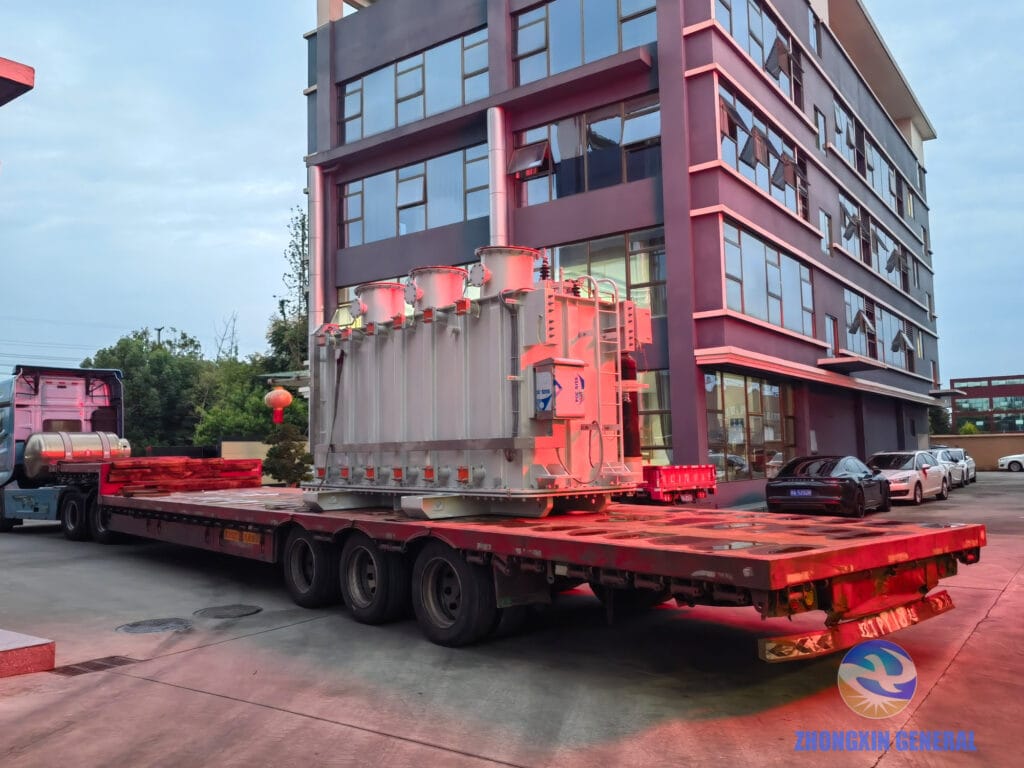
After the transformer main tank departed our Sichuan factory on September 16, 2025 and arrived at the original port of loading, the logistics team encountered a problem that is more common in large equipment export than many buyers realise:
The allocated vessel space could not accommodate the transformer main tank.
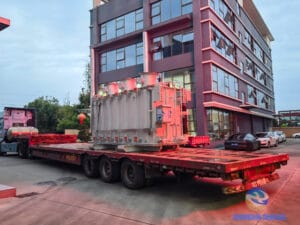
This is not as simple as a container being the wrong size. Large power transformers are not containerised cargo — they are shipped as out-of-gauge (OOG) or heavy-lift cargo, requiring specially configured vessel holds or deck space with appropriate load-bearing capacity and securing arrangements. The vessel space that had been pre-booked was insufficient for the transformer’s actual dimensions once on site.
The switchgear and accessories — which were containerised — were loaded and dispatched as planned. But the transformer main tank had to wait.
The Resolution: Rerouting to Lianyungang
With the original vessel space unusable for the main tank, our logistics team worked to identify an alternative solution. The decision was made to reroute the transformer to Lianyungang Port — a major port on China’s eastern seaboard with better availability of heavy-lift and out-of-gauge vessel space for the specific vessel type and routing required.
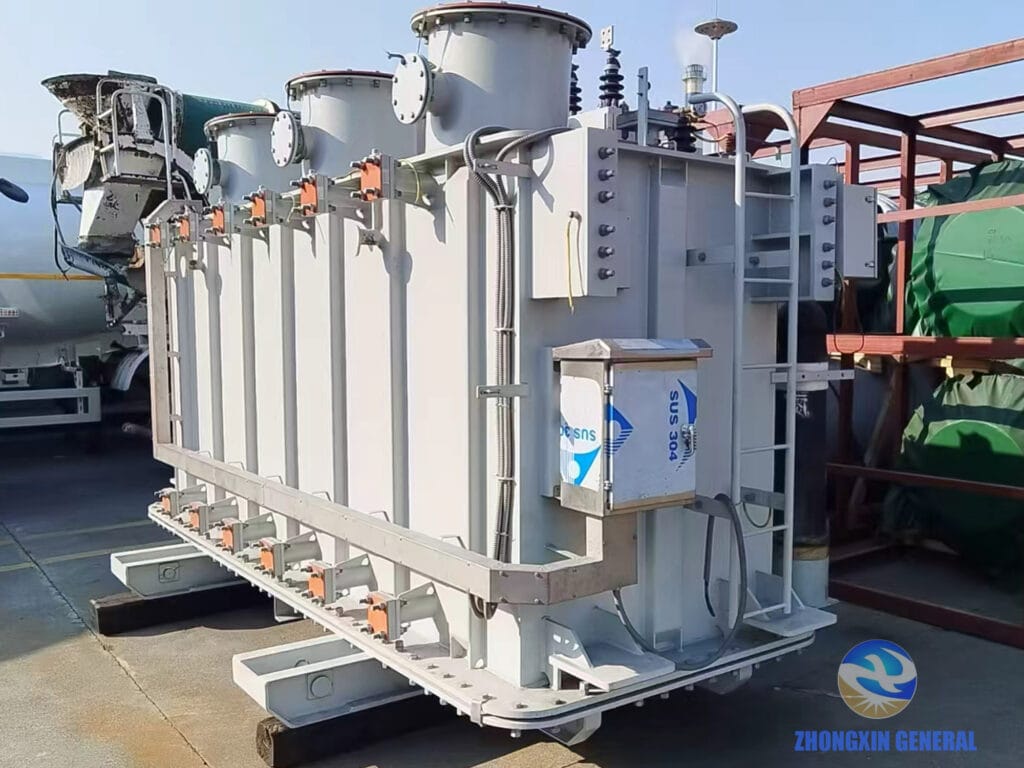
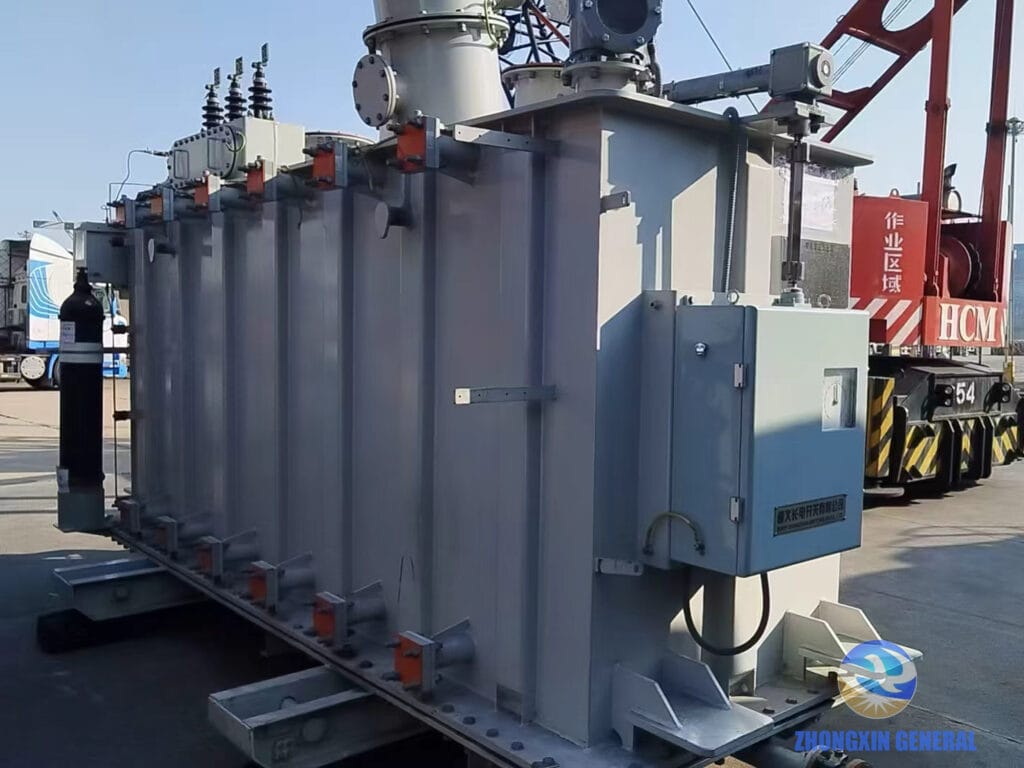
Securing appropriate vessel space at Lianyungang, coordinating the transport of the main tank from the Shanghai area to Lianyungang, and completing all documentation for the rerouted shipment took time. By December 6, 2025, the transformer main tank had arrived at Lianyungang Port and was staged for loading.
The main tank then sailed separately from the switchgear and accessories, which had already departed weeks earlier. Both shipments converged at the transit point — Mtwara Port, Tanzania — for onward delivery together to the DR Congo installation site.
Why This Happens: Understanding Out-of-Gauge Transformer Shipping
For buyers who have not previously imported large power transformers, the logistics complexity involved is often underestimated. Here is the practical reality:
Large transformers are not standard cargo. Units above approximately 10-15 tonnes, or with dimensions exceeding standard container limits, cannot be shipped as conventional containerised freight. They require out-of-gauge (OOG) or heavy-lift handling at both origin and destination ports, specialised vessel space, and stevedoring equipment capable of handling the load.
Vessel space for heavy-lift cargo is limited and must be pre-booked carefully. Unlike container bookings, which are relatively flexible, heavy-lift vessel space is scarce and requires accurate dimensional and weight data well in advance. A discrepancy between booked specifications and actual cargo dimensions — even a small one — can result in the cargo being unable to load on the scheduled vessel.
The transformer and its accessories are often shipped separately. High-voltage bushings are typically removed for transport to reduce height, and are shipped as separate items. The oil conservator, transformer oil, and accessories are usually packaged and containerised separately from the main tank. This means a single transformer project can generate multiple separate shipments that need to be coordinated and reunited at the destination.
Port selection matters for heavy-lift cargo. Not all Chinese ports have equal capacity and availability for heavy-lift operations. Shanghai is China’s largest port by volume, but for specific heavy-lift vessel routings to certain African destinations, ports like Lianyungang, Tianjin, or Guangzhou may offer better options. This is something to discuss with your freight forwarder at the earliest stage of procurement planning.
Nitrogen transport adds a monitoring requirement. Transformers shipped in nitrogen-filled configuration must maintain positive nitrogen pressure throughout the voyage. This needs to be checked and documented at each port handling stage — origin port loading, any transit port, and destination port arrival. Make sure your receiving logistics team understands this requirement and has the necessary equipment to verify pressure on arrival.
The Arrival: Package Condition Confirmed No Damage
Despite the extended and complicated journey — factory in Sichuan, heavy transport to Shanghai, rerouting to Lianyungang, sea voyage to Tanzania, onward to DR Congo — the transformer arrived at Mtwara Port on February 4, 2026 with package condition confirmed as no damage.
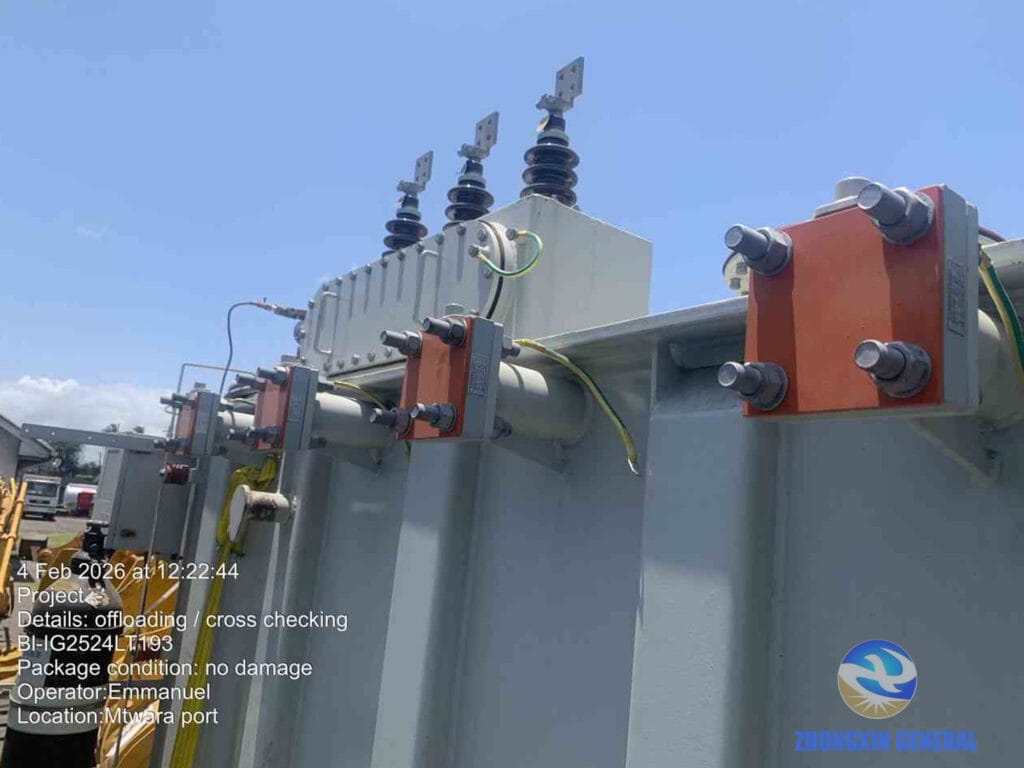
The receiving logistics team conducted a full offloading and cross-checking inspection on arrival, verifying unit identity against documentation and physical integrity after the sea voyage. The inspection record, completed by operator Emmanuel at Mtwara Port, confirmed the unit was received in good condition — validating both the export packaging specification and the nitrogen transport preparation that protected the internal insulation system throughout the journey.
This outcome matters because it demonstrates that even when the logistics journey does not go exactly to plan, a well-prepared and well-packaged transformer can arrive intact. The additional time caused by the rerouting was frustrating, but it did not compromise the product.
Practical Recommendations for International Buyers
Based on this experience and our broader export history, here is what we recommend to international buyers and EPC procurement teams sourcing large power transformers from China:
Start logistics planning early — before the transformer is manufactured. The dimensional and weight data needed for accurate vessel space booking should be confirmed with your supplier at the time of order, not when the unit is ready to ship. For a transformer in the 15-30 tonne range, you need to know: main tank dimensions (L×W×H) with and without bushings, transport weight in nitrogen-filled vs oil-filled configuration, and crating/packaging dimensions for accessories.
Work with a freight forwarder who has specific experience with heavy-lift and OOG cargo from China. General freight forwarders who mainly handle containerised cargo may not have the relationships and knowledge needed to secure appropriate vessel space for a large transformer. This is a specialised niche — use a specialist.
Confirm vessel space with accurate dimensional data, not estimates. The situation we encountered — allocated space insufficient for actual cargo dimensions — is avoidable with rigorous pre-booking verification. Insist that your forwarder confirms the vessel booking against the actual certified dimensions and weight from the factory shipping documentation, not against preliminary estimates.
Plan for the possibility of split shipments. If your project schedule depends on transformer and switchgear arriving together, build contingency into your timeline for the possibility that they may arrive on different vessels. For most projects, this is manageable — but it needs to be planned for, not discovered on site.
Verify nitrogen pressure on arrival. Before your receiving team accepts the transformer at the destination port, ensure nitrogen pressure is checked and documented. This is the primary indicator that the insulation system has been protected during the voyage. Any significant pressure loss warrants investigation before the transformer is moved to site.
Factor transit port logistics into your planning. For destinations in Central Africa — including the Democratic Republic of Congo — most shipments transit through East African ports such as Mtwara (Tanzania), Dar es Salaam (Tanzania), or Mombasa (Kenya) before onward overland delivery. Each transit point adds handling, time, and potential risk. Make sure your logistics plan covers the full journey from Chinese port to final installation site, not just to the first port of arrival.
What We Learned
Every export project teaches us something. This one reinforced several things we now discuss with every international customer at the logistics planning stage:
Dimensional verification between booked vessel space and actual cargo must be confirmed with certified factory documentation — not preliminary estimates. The difference between a smooth export and a two-month delay can come down to a few centimetres of discrepancy.
Port selection for heavy-lift cargo deserves as much attention as ocean freight rate. Lianyungang ultimately provided the right solution for this shipment. We now factor port-specific heavy-lift availability into our logistics recommendations from the start.
Separated shipments — main tank and accessories on different vessels — require careful documentation management to ensure everything is correctly identified and reconciled at the destination. Our documentation package for this project enabled the receiving team at Mtwara Port to cross-check everything accurately on arrival despite the split shipment.
The extra two and a half months added to this project’s logistics timeline was a real cost — in time, in additional freight coordination, and in the patience required from our client. We are grateful for the client’s understanding, and we are committed to ensuring that future projects benefit from this experience.
Planning to Import a Large Power Transformer from China?
If you are at the procurement stage for a large power transformer — whether for a power station, industrial substation, or grid infrastructure project in Africa, the Middle East, Southeast Asia, or elsewhere — we are happy to discuss the logistics considerations specific to your project alongside the technical specification.
We can provide: certified dimensional and weight data for logistics planning, guidance on nitrogen vs oil-filled transport options, port selection recommendations based on your destination, and a complete documentation package to support customs clearance and port handling at your destination.
→ Contact Our Engineering & Export Team → Read the Full DR Congo Project Case Study → → Browse All Case Studies →