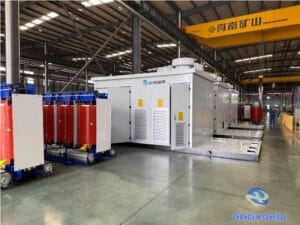
Choosing between a dry-type transformer and an oil-immersed transformer is one of the first decisions any project has to make — and it affects everything from installation cost to long-term maintenance. Both technologies are mature, reliable, and widely used around the world, but they serve different needs. Below, we break down how each type works, their strengths and weaknesses, and how to decide which one is right for your project.
Part 1: Features
Dry-Type Transformers
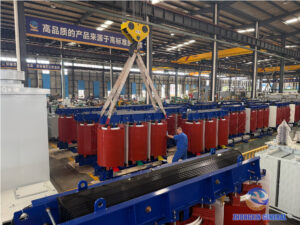
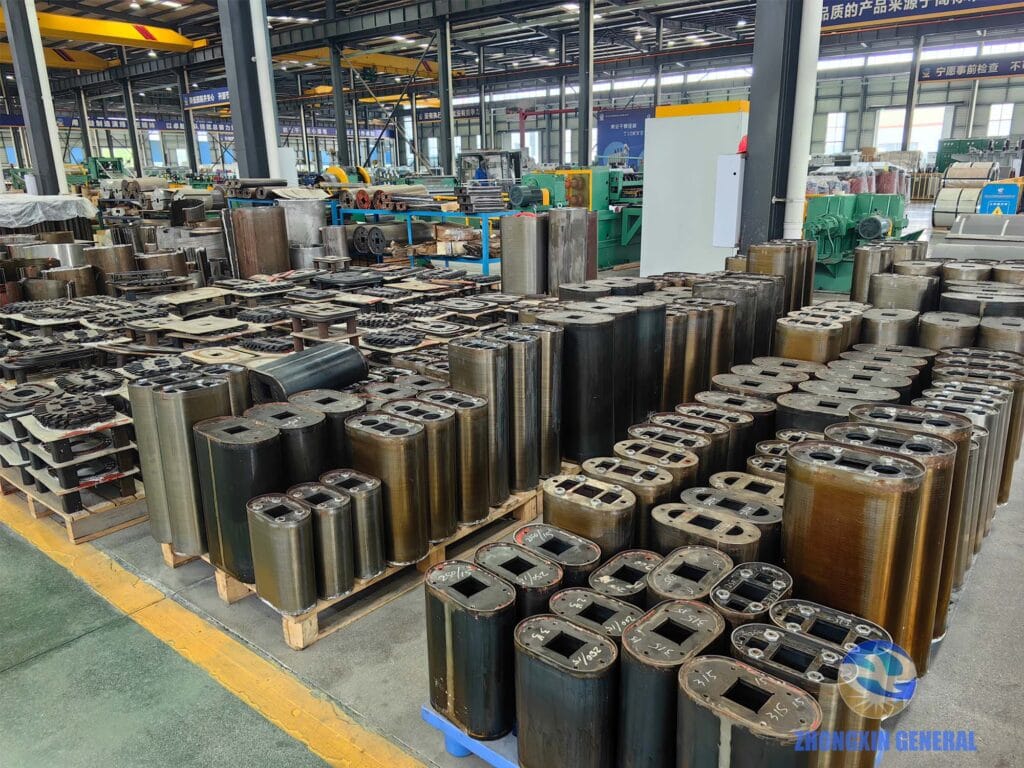
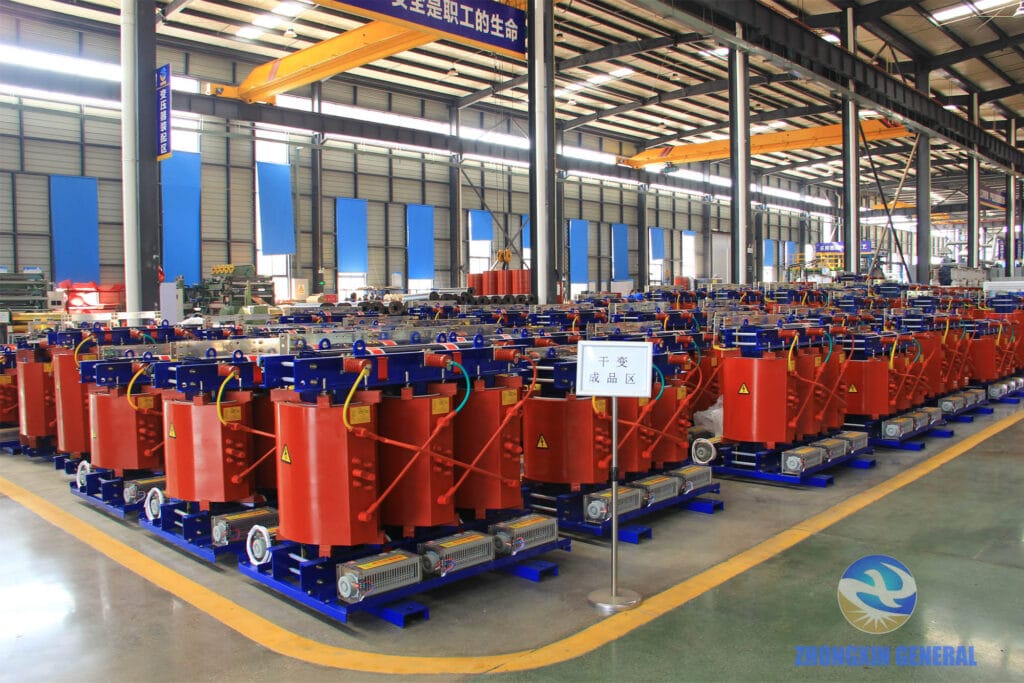
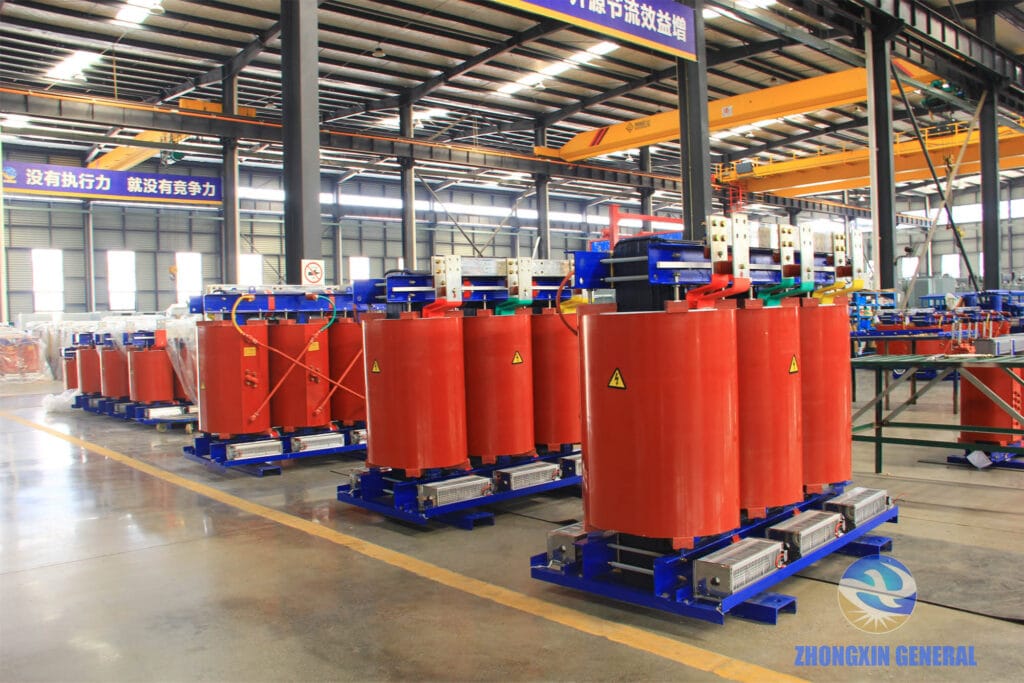
Dry-type transformers use resin-cast solid insulation instead of oil, which makes them a natural fit for indoor and fire-sensitive environments.
Advantages:
- Excellent fire and explosion resistance — no flammable liquid involved
- Low maintenance: no need to test or top up insulating oil, just periodic cleaning of the windings and an insulation check
- More environmentally friendly, with no risk of oil leaks or contamination
- Lower partial discharge levels and strong short-circuit withstand capability
- Can be installed directly at the load center, saving space and cable runs
- Good overload capability
Disadvantages:
- Heat dissipation is weaker than oil-immersed types
- More vulnerable to moisture and dust, so it typically needs a protective enclosure or a dedicated switchgear room
- Higher unit price for the same capacity
- Slightly higher operating noise
- Insulation and voltage-withstand levels are generally lower than oil-immersed units
Dry-type transformers generally do not have cooling fans installed. Many manufacturers add a cooling fan to dry-type units, since it’s a cheaper way to handle occasional overload than building a larger core and coil from the start. It’s worth noting, though, that fans typically only last 3–5 years, while a dry-type transformer itself is designed for around 30 years of service — so a fan means extra maintenance visits over the transformer’s lifetime. Our dry-type transformer coils use a fully sealed casting process, so even in the event of flooding, the coil doesn’t need replacing — it simply needs to dry out before returning to service.
Oil-Immersed Transformers
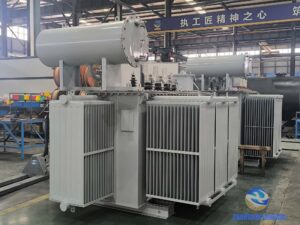
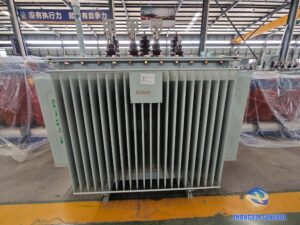
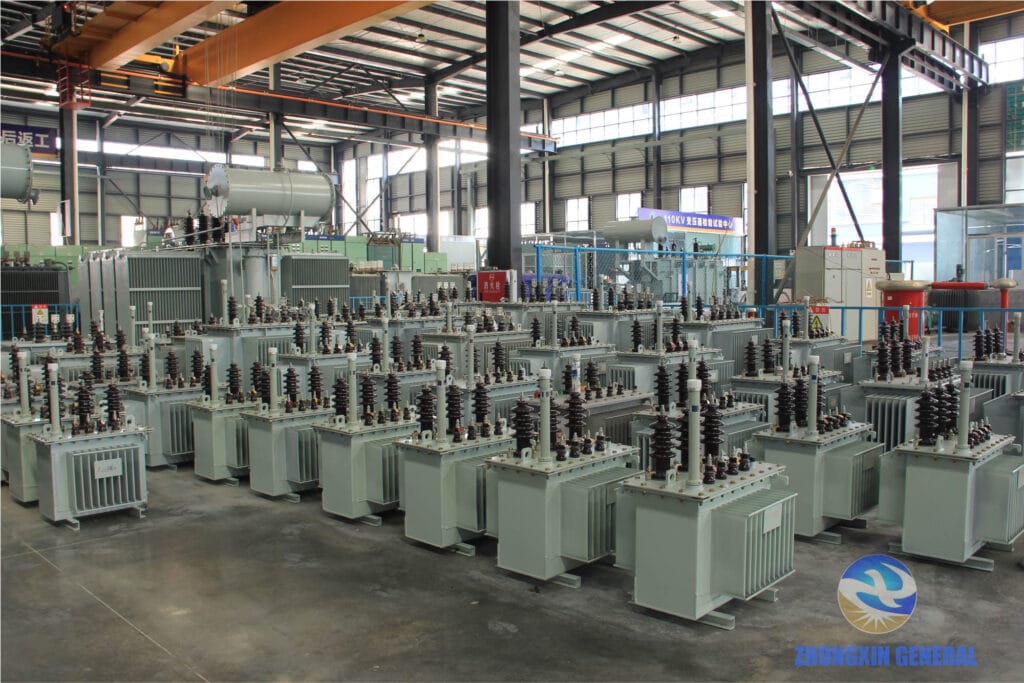
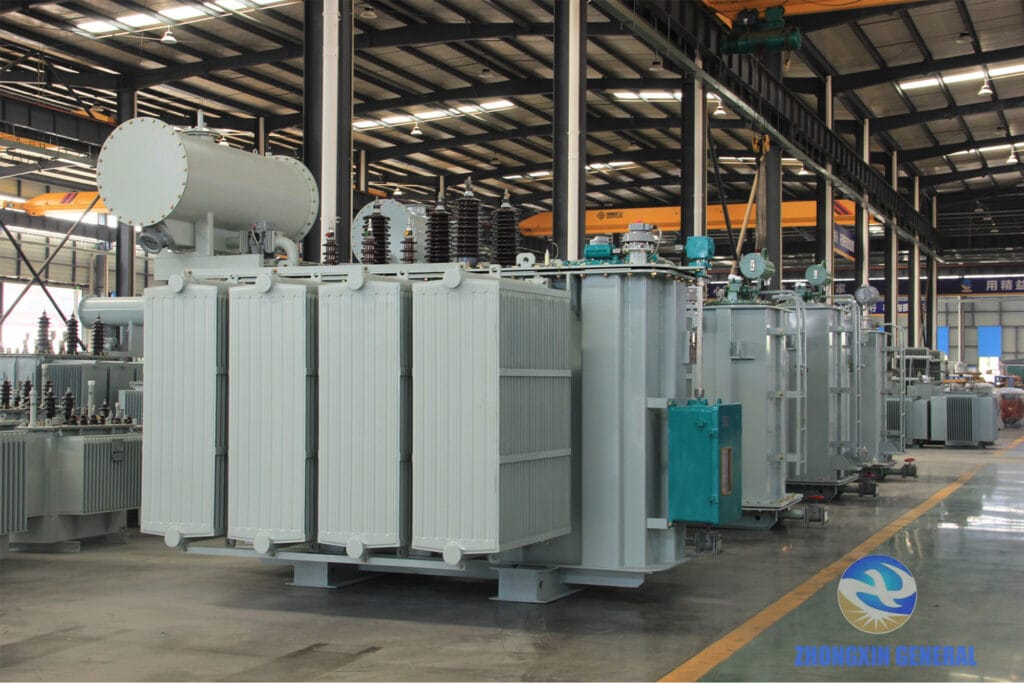
Oil-immersed transformers use insulating oil for both cooling and dielectric insulation — similar in principle to liquid cooling in a computer. The oil can circulate through an external radiator, sometimes assisted by fans, to dissipate heat more efficiently.
Advantages:
- Superior insulation and heat dissipation performance
- Long service life and high operational reliability
- Generally lower cost for the same capacity
- Available across a very wide range of voltage classes and capacities
- Strong overload capability
Disadvantages:
- Fire and explosion risk due to the insulating oil
- Environmental risk if oil leaks or isn’t disposed of properly
- Higher maintenance workload — regular oil level and oil quality checks are required
- Larger footprint
- Not ideal for indoor use or crowded spaces
Oil-immersed transformers are built to withstand outdoor exposure — sun, rain, and everything in between, which is why most of the transformers you see along roadsides are oil-type. Their main vulnerabilities are fire risk and oil leakage, the latter being the most common transformer fault in the field. That said, more 35kV substations are now moving their main transformers indoors even though oil-type units can handle outdoor conditions, simply because an indoor installation is safer when the option is available.
Part 2: Key Differences
Comparison Table
| Factor | Dry-Type | Oil-Immersed |
|---|---|---|
| Best for | Indoor, fire-sensitive, space-constrained sites (basements, high-rises, hospitals, prefabricated substations) | Outdoor or standalone sites, harsh environments (construction sites, mines, open-air plants) |
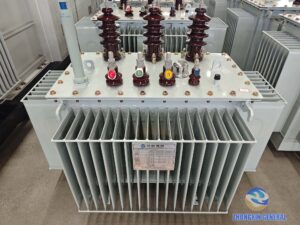
| Appearance | Coil and core visible from outside | Fully enclosed in a tank; coil not visible |
| Price (same capacity) | Higher | Lower |
| Capacity / voltage range | Typically ≤1,600 kVA, ≤10 kV (some up to 35 kV) | Full range of capacities and voltage classes |
| Bushings | Usually silicone rubber | Usually porcelain |
| Cooling | Natural air cooling, fan-assisted for larger units | Oil circulation, sometimes with external radiator fans |
| Overload capacity | Should run at rated capacity | Better overload tolerance |
| Environment needs | Requires forced air cooling equipment; heat dissipation weaker | Performs well even in humid, hot climates |
| Environmental impact | No liquid waste, more eco-friendly insulation materials (e.g., epoxy resin) | Insulating oil may contain harmful substances (e.g., PCBs) if not handled properly |
| Maintenance | Lower cost and complexity — periodic insulation resistance testing | Higher cost and complexity — oil level, oil quality, and seal checks |
Where Each Type Is Typically Used
- Dry-type transformers are the standard choice for indoor spaces within larger buildings (basements, upper floors, rooftops), for crowded areas such as residential and office complexes, for prefabricated substations, and for any site where space is tight or fire/explosion protection is a strict requirement — think large or high-rise buildings.
- Oil-immersed transformers are typically used at standalone outdoor sites or in harsh environments — construction sites, open-air factories, mining areas. They can be installed both indoors and outdoors, and are the default choice for temporary outdoor power. Because a fault can release or leak oil and create a fire hazard, oil-type installations are usually paired with a dedicated “accident oil containment pit” when placed outdoors.
Which One Should You Choose?
If your project is indoor, in a densely populated area, or has strict fire-safety requirements — think residential complexes, office towers, hospitals, subways, or airports — a dry-type transformer is usually the better fit. If your site is outdoors, in a harsh or remote environment, or you need a wide range of capacity and voltage options at a lower cost, an oil-immersed transformer is typically the more practical choice.
About Zhongxin General
Sichuan Zhongxin General Electric Energy Co., Ltd. (formerly known as ZX Transformer) is a China-based manufacturer of dry-type transformers, oil-immersed transformers, HV/MV/LV switchgear, prefabricated substations, and energy storage substations, headquartered in Xinjin District, Chengdu, Sichuan Province.
Our products are widely used in State Grid networks, hydropower and thermal power plants, renewable energy projects, urban and rural distribution networks, and industrial and mining facilities across China and abroad. Every unit is backed by our in-house engineering expertise and rigorous factory testing.
We manufacture both types in-house. If you’d like to see our full product range, take a look at our dry-type transformer lineup or our oil-immersed transformer products — both pages include detailed specifications for each model we produce.