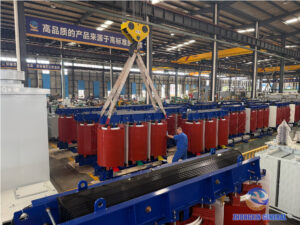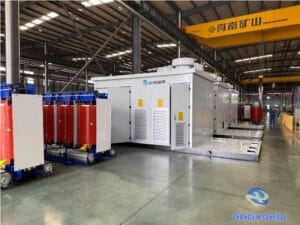
China produces roughly 19.5 billion kVA of transformer capacity a year, and high-voltage units at 66kV and above account for over 12.8 billion kVA of it. Only a small group of manufacturers can build at 500kV and above, the equipment that moves power between provinces rather than within them.
The problem for buyers is separating real capability from marketing. Many Chinese transformer companies claim they can produce 500kV to 1100kV units, and some overstate their capacity to look stronger than they are. Search results, company websites and social media posts rarely tell you who has actually shipped.
To cut through this, we searched Bing, industry reports and WeChat public accounts for Chinese transformer companies with reported 500kV–1100kV deliveries, including exports. We investigated nearly 20 manufacturers that say they can build at this level. Only nine turned out to have a documented record of actual shipments, and this directory covers those nine. They are ranked from the highest voltage class each company can produce down to the lowest.
For each company, we list its AC and DC voltage range, its landmark products, and how it reached its current position, including recent ownership changes.
Most of the source material is in Chinese, and information on Chinese 500kV–1100kV manufacturers is hard to find on English-language websites. To help readers around the world understand this market, we have gathered that information in this article and listed all references at the end.
These nine companies are part of the wider development of China’s transformer industry, which took roughly a century of trial, import substitution and steady technical progress. For that bigger picture, see our piece on the history of China’s transformer industry.
We will keep following the market and update this directory as new suppliers show verifiable delivery records.
| Company | Voltage Range |
| TBEA | 10kV–1100kV |
| XD Electric | 10kV–1100kV |
| Shandong Electric Power Equipment | 110kV–1000kV; ±200kV–±1100kV DC |
| Baoding Electric | 110kV–1000kV AC; up to ±1100kV DC |
| Changzhou Dongzhi | Up to 1000kV AC, ±800kV DC |
| Shandong Taikai | Up to 1000kV AC, ±800kV DC |
| Jiangsu Huapeng | 0.4kV–850kV |
| Chint Electric | Up to 750kV |
| Shanghai Electric | Up to 500kV |
Who makes up China’s 500kV-and-above supplier base?
TBEA: 10kV–1100kV
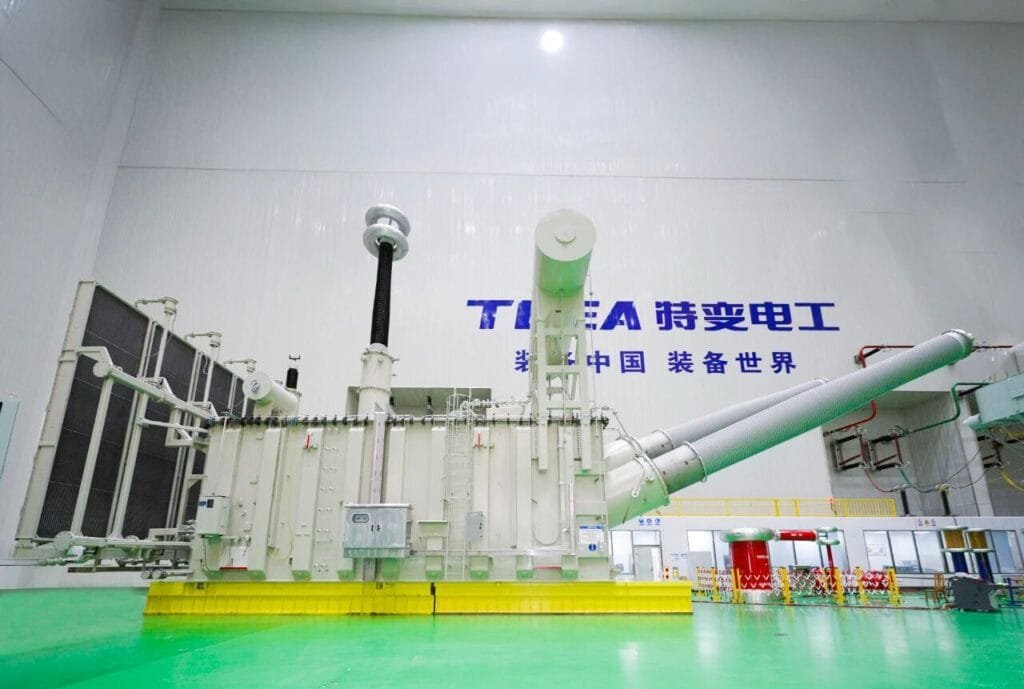
TBEA covers the full 10kV–1100kV range and built China’s first entirely self-designed, self-sourced, self-manufactured ±800kV converter transformer — at the time, the highest voltage class and largest capacity of its kind produced in batch.
The company’s history is a testament to its deep roots. TBEA was founded in 1938 as a small transformer repair shop in Xinjiang, and in 1993 it became the first company in the industry to convert to a joint-stock structure. Its subsequent milestones read like a timeline of Chinese UHV development: the world’s first 1000kV UHV AC transformer in 2006, the world’s first ±800kV DC converter transformer in 2009, and in 2018, the world’s first ±1100kV converter transformer for the Changji–Guquan line — still the highest DC voltage class in commercial operation anywhere in the world.
Today, TBEA’s transformer output now runs at roughly 240 million kVA per year, a figure that alone places it among the largest single producers globally. Moreover, its products have reached the Belo Monte project in Brazil, marking the first time Chinese UHV standards were deployed in South America.
XD Electric: 10kV–1100kV
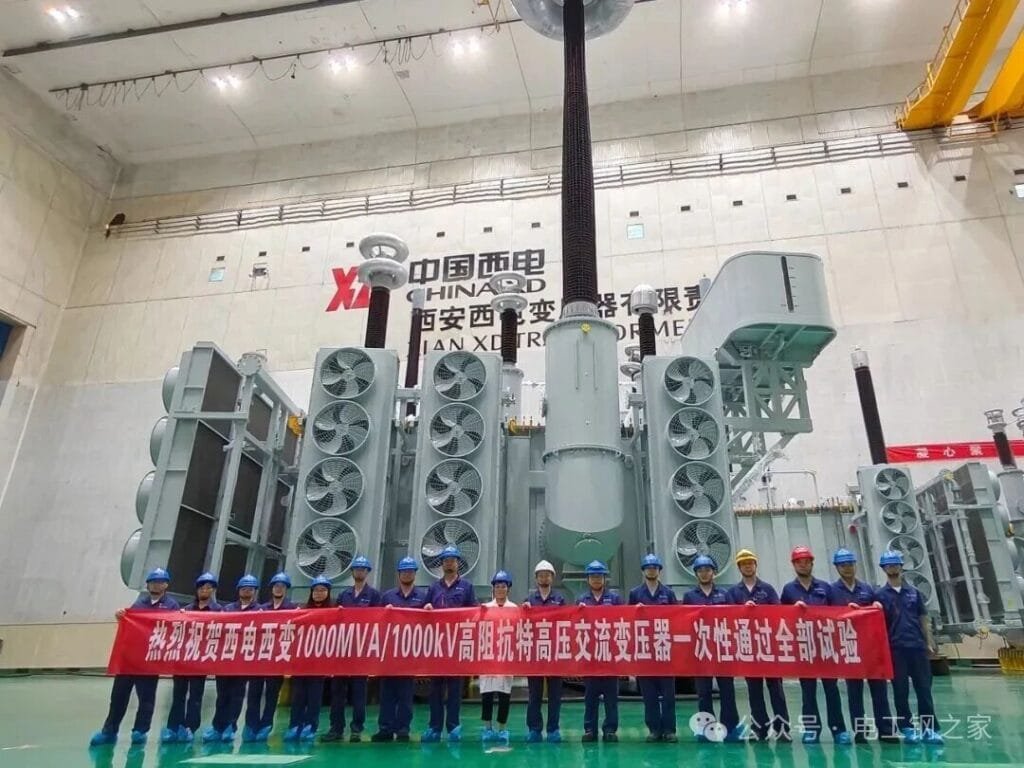
XD Electric shares TBEA’s full 10kV–1100kV range and traces its origins to 1958, when more than a thousand workers from Shanghai’s electric furnace and motor plants relocated west in five successive groups to build the company from nothing.
Over nearly seven decades, XD Electric has led essentially every major voltage milestone in Chinese transformer history — 330kV, 500kV, 750kV, 1000kV, and 1100kV, in both AC and DC configurations. Its parent group’s bid share in State Grid’s UHV equipment tenders reached 20% in 2024, the highest of any single group in the industry, and its converter transformer market share sits at around 27%.
Earlier technology partnerships with companies in Japan, Switzerland, Sweden, Germany, and France gave XD a foundation it later built on independently, particularly after further collaboration with ABB and Siemens during the Three Gorges era.
Shandong Electric Power Equipment: 110kV–1000kV AC; ±200kV–±1100kV DC
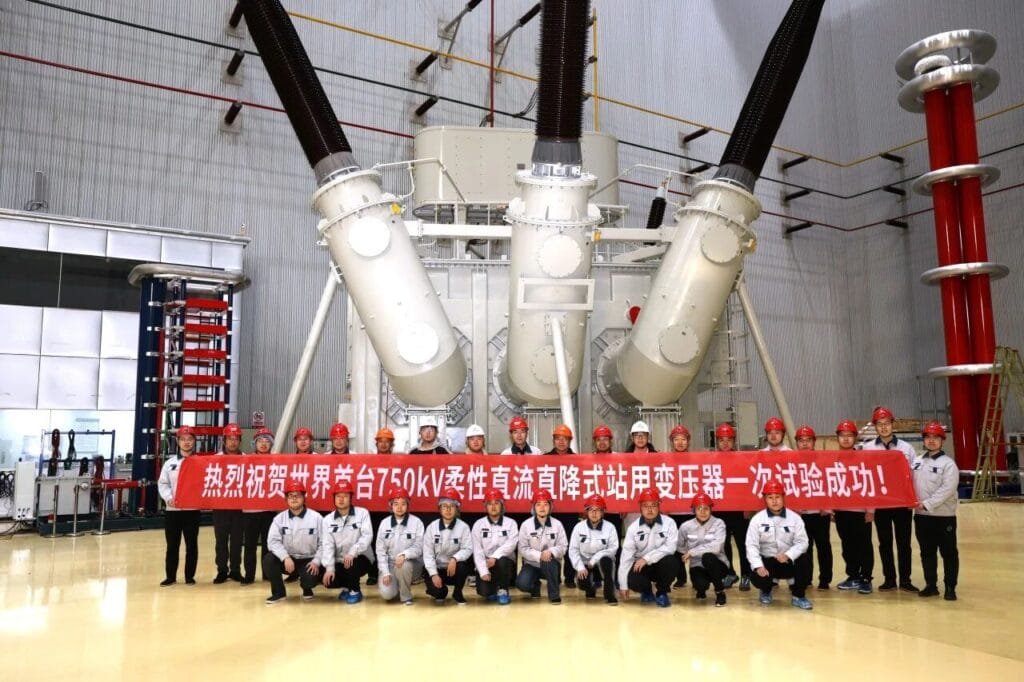
Shandong Electric Power Equipment, part of Shandong Electric Power Group under China Electric Equipment Group, covers 110kV–1000kV AC transformers and ±200kV–±1100kV DC converter transformers. Since 2017, its converter transformers built for three separate UHV lines — Shanghai Temple to Shandong, Zhalute to Qingzhou, and Changji to Guquan — passed first-attempt testing 28 consecutive times, a run that is still referenced across the industry as something close to a manufacturing record.
The company also developed the world’s first 750kV flexible DC step-down station-service transformer, and in 2023 it produced China’s first fully domestically sourced 500kV transformer, supporting what is now the country’s first fully self-controlled substation at that voltage class. As a result, it remains State Grid’s largest single supplier of high-voltage and UHV transformers by volume.
Baoding Electric: 110kV–1000kV AC; up to ±1100kV DC
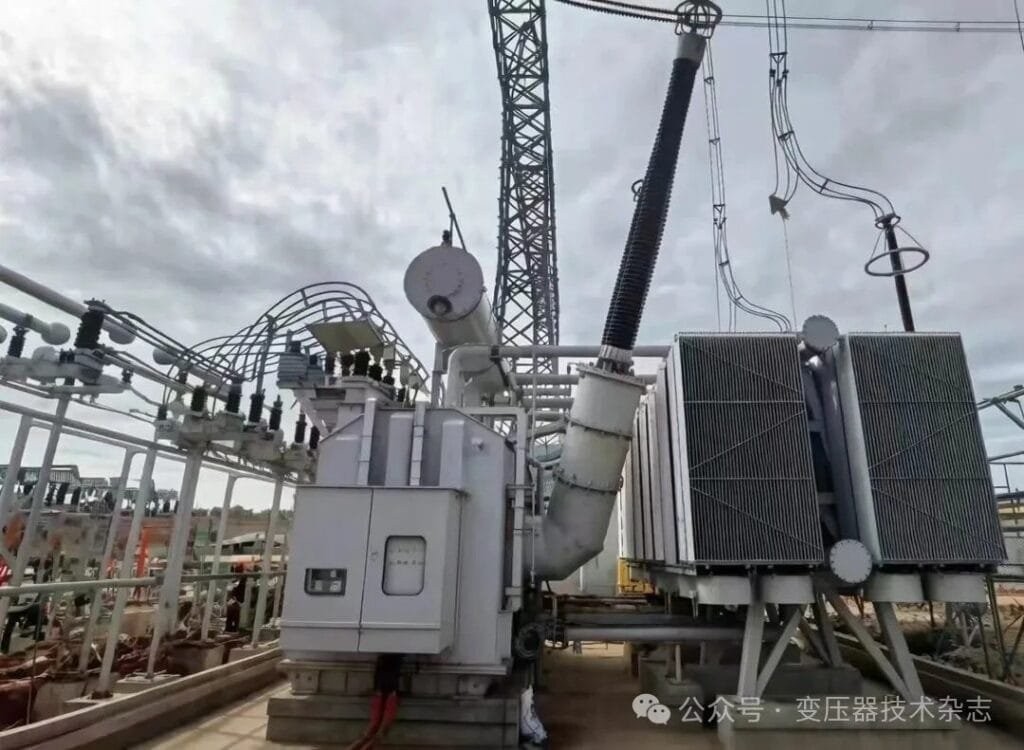
Baoding Electric’s core AC range runs 110kV to 1000kV, with DC converter transformer capability extending up to ±1100kV for specific project classes. This is the company that supplied the 500kV main transformers for the Three Gorges left-bank power station in 2004, working from an original Siemens design that Baoding Electric then localized using domestically sourced processing techniques and materials.
Building on this expertise, in 2008, the company built the world’s first 1000kV UHV autotransformer, and it later became deeply involved in the Baihetan hydropower project and other national transmission corridors.
In terms of corporate structure, Baoding Electric’s controlling ownership has shifted twice in recent years, moving from China North Industries Group between 2008 and 2015 to China Electric Equipment Group in 2025, a transition that consolidated its transmission and transformation equipment business under the newer national grouping.
Changzhou Dongzhi: Up to 1000kV AC, ±800kV DC
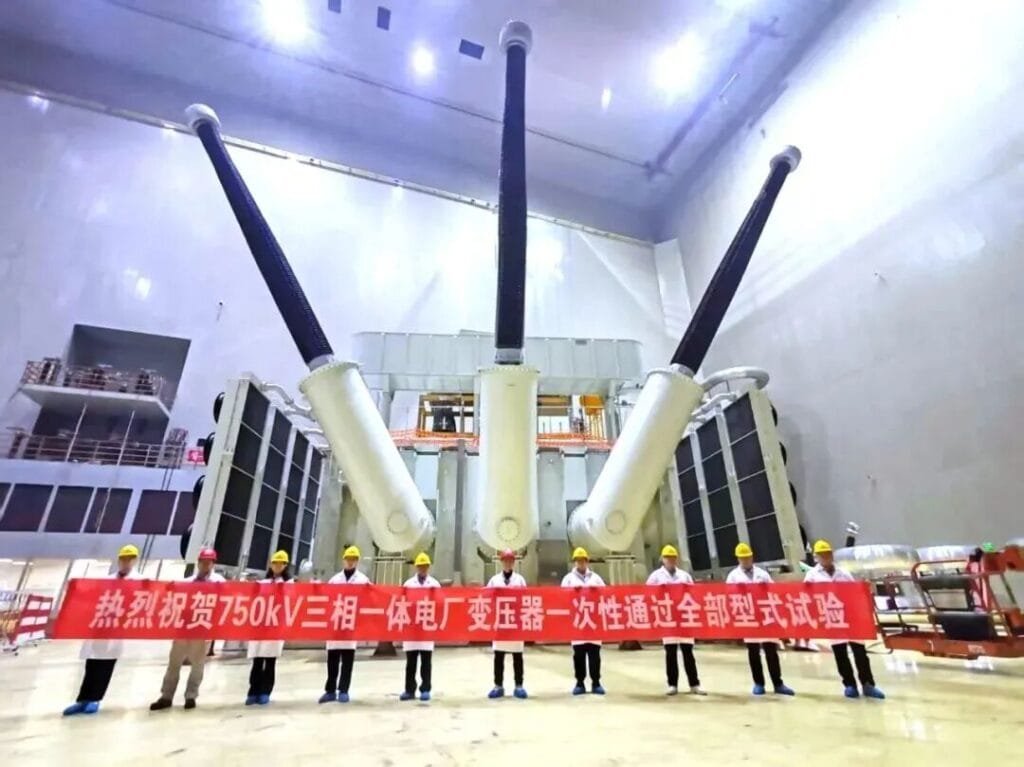
Changzhou Dongzhi, formerly Changzhou Toshiba, was established in 1995 as a Sino-Japanese joint venture and became the first company in China to localize 500kV transformer production using licensed Toshiba technology. Its capability today extends to 1000kV AC and ±800kV DC, and in 2023 the company completed a 750kV three-phase-in-one power plant transformer that passed all required type tests in a single attempt.
In 2024, Shandong Electric Power Group acquired the remaining Japanese shareholding, completing the company’s transition from a technology-transfer joint venture into a wholly domestic operation. This shift mirrors how much of China’s high-voltage equipment sector has moved from licensed foreign designs toward independent development, a pattern also visible in the broader history of transformer technology worldwide.
Shandong Taikai: Up to 1000kV AC, ±800kV DC
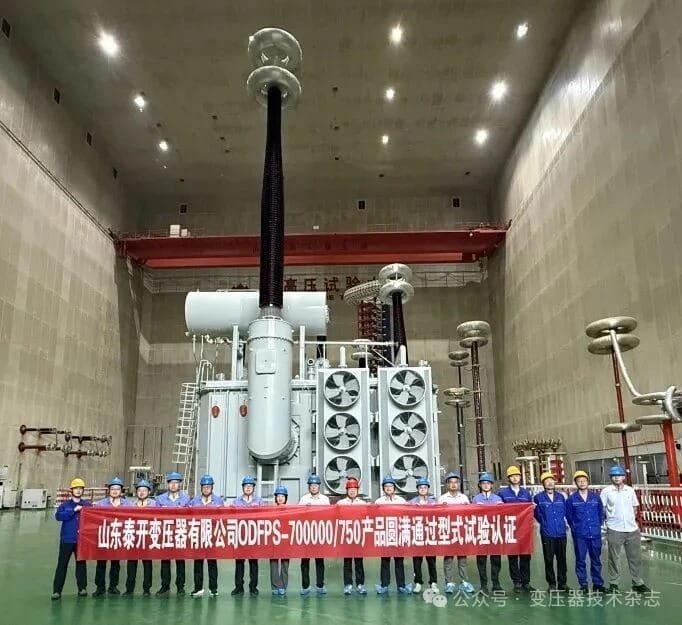
Shandong Taikai Transformer, a wholly owned subsidiary of Taikai Group founded in 2004, manufactures AC transformers up to 1000kV and DC converter transformers up to ±800kV from a 500-mu campus with roughly 100,000 square meters of production floor.
The parent group traces back to a 1970s state-owned high-voltage switchgear factory in Tai’an that nearly collapsed in 1983 before a change in leadership refocused it on its core switchgear business and turned it profitable; the group converted to private ownership in 2001 and adopted the Taikai brand in 2002. Taikai Transformer itself started in 2004 producing 110kV-and-below units, then scaled up sharply in 2010 when its second-phase “double million” production facility came online for 220kV-and-above transformers and reactors.
In 2017, its self-developed ODFPS-1000000/1000 UHV transformer passed national-level technical certification, confirming the company’s ability to build transformers at the world’s highest commercial voltage class. Taikai’s 110kV transformer output has led the country for five consecutive years at over 700 units annually, and its 35kV–500kV output has ranked in the national top three for three straight years, with equipment supplied to 19 UHV lines including the Jindongnan–Nanyang–Jingmen demonstration project and Brazil’s Belo Monte ±800kV line.
Jiangsu Huapeng: 0.4kV–850kV
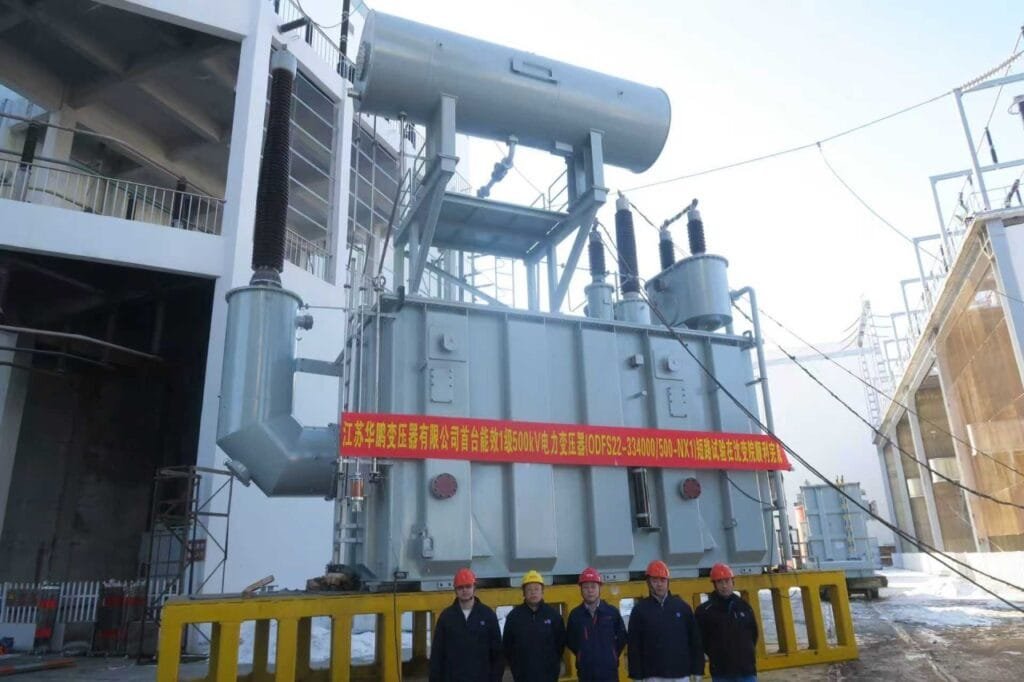
Jiangsu Huapeng’s product range spans 0.4kV to 850kV, making it one of the broadest voltage ranges of any manufacturer on this list, with capacity reaching up to 2,400 MVA per unit. The company started life in 1967 as a struggling electric motor factory in Liyang and was taken over in 1986 by new private ownership that turned it profitable within a year.
It developed China’s first domestic 500kV-class transformer in 2009, ODFS22-334000/500-NX1, breaking a foreign monopoly at that voltage class, and its transformers now serve as core components supplied directly to Siemens and ABB for their own systems.
By 2025, Huapeng’s overseas orders accounted for roughly half its total revenue, and the company holds the distinction of being the only Chinese brand among North America’s top ten transformer manufacturers.
Chint Electric: Up to 750kV
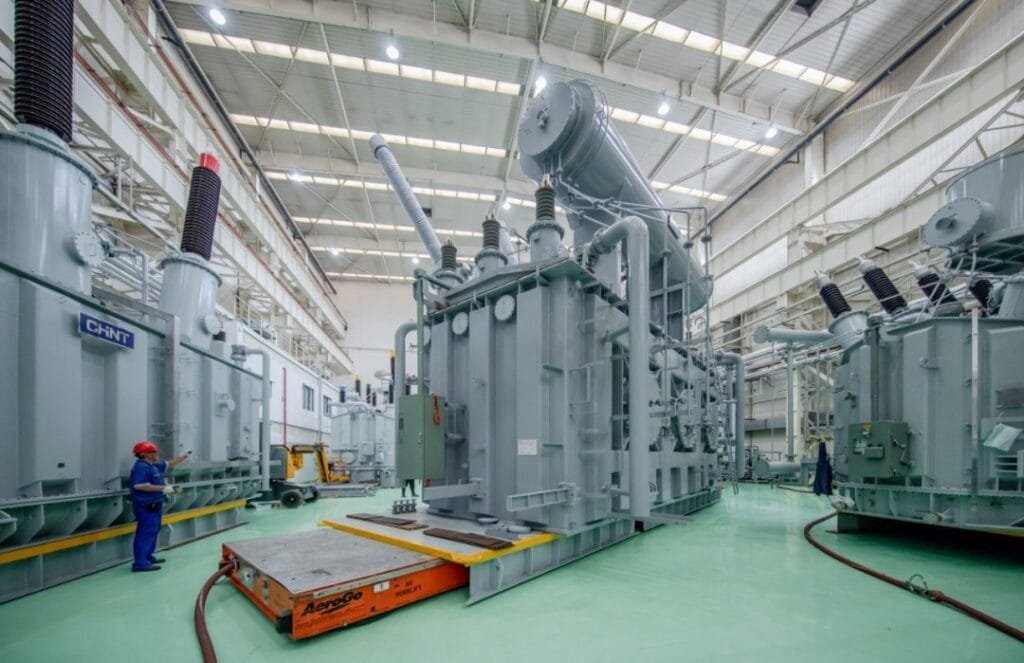
Chint Electric is better known for low-voltage switchgear, but its transformer manufacturing capability extends up to 750kV, with annual production capacity around 35,000 MVA. In 2024, Chint’s natural-ester 750kV transformer passed national-level product certification — a genuinely uncommon achievement, since very few manufacturers anywhere have qualified natural-ester insulation systems at that voltage class.
The company’s 750kV natural-ester transformer was developed jointly with the Wuhan branch of the China Electric Power Research Institute, and more than a dozen of Chint’s 110kV-class natural-ester units have already been exported to Australia, the UK, Brazil, and Ecuador.
Shanghai Electric: Up to 500kV
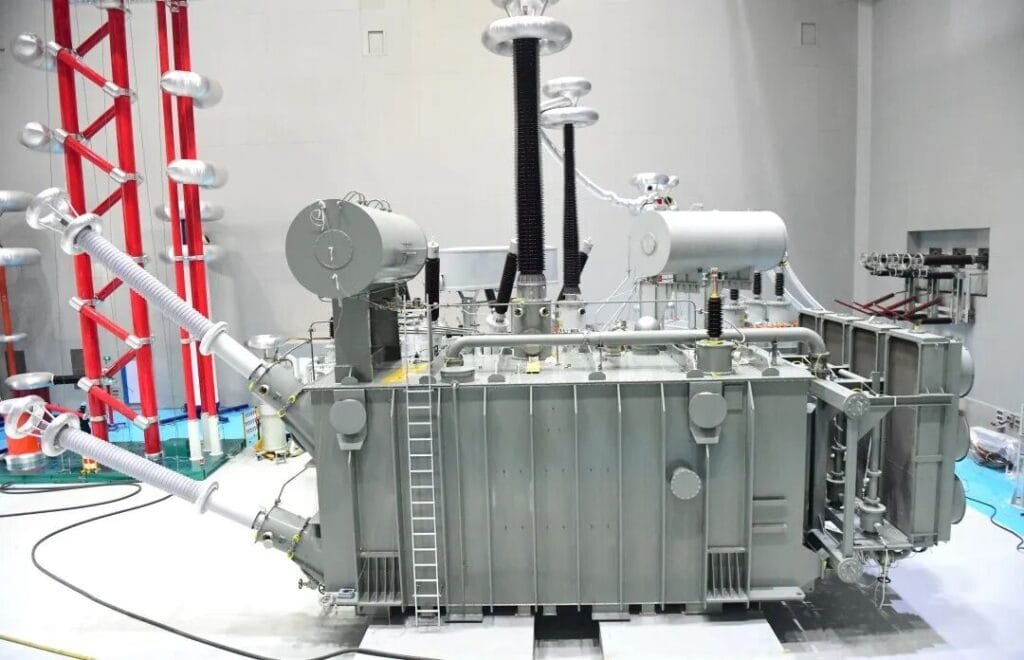
Shanghai Electric rounds out this list with a transformer business capped at 500kV, but the group’s broader relevance comes from its scale and history rather than its voltage ceiling alone. With roots dating back to 1880, Shanghai Electric is currently ranked first in China’s machinery industry by sales, and its self-developed ZZDFPZ-283700/500-250 converter transformer has passed national-level technical certification.
The company’s transformer joint venture with Hitachi Energy — historically linked to ABB’s technology base — keeps it connected to international standards for dry-type transformer manufacturing, and Shanghai Electric’s transmission equipment has recently been deployed in Malaysia, Uzbekistan, and several other markets along the Belt and Road corridor.
What to Know About China’s 500kV+ Transformer Makers
Looking across these nine companies in order of voltage capability, one thing becomes clear: the top and bottom of the range are not separated by all that much distance in terms of technical sophistication. A company capped at 500kV is not necessarily behind the times — it may simply have chosen to specialize in a segment with deep, steady demand rather than chase the capital-intensive UHV market.
What varies more than voltage capability is how each company arrived at its position. Some, like XD Electric and TBEA, built capability through decades of state investment. Others, like Jiangsu Huapeng, did it as private competitors on cost and export reach. Changzhou Dongzhi only became fully domestically owned in 2024 — a reminder that parts of this industry are still completing a transition that began with foreign technology transfer.
That range of paths matters for sourcing decisions. A transformer from TBEA or XD comes with a state-backed track record but longer lead times and less pricing flexibility. A transformer from a lower-tier player might mean faster turnaround and better pricing, at the cost of a shorter track record at top voltage classes. Neither is automatically right — it depends on the project’s risk tolerance, timeline, and requirements.
References
- https://www.ccidreport.com/dzyj/1103736.jhtml
- https://mp.weixin.qq.com/s/xRx-qb2a8zlsLLqVE6oyNg
- https://company.cnstock.com/company/scp_gsxw/201809/4276484.htm
- https://ceeia.com/JSQY/d/201206/37454.html
- https://caifuhao.eastmoney.com/news/20260518103242681099810
- https://ln.chinadaily.com.cn/a/201911/23/WS5dd8fa06a31099ab995eda95.html
- https://finance.sina.com.cn/wm/2026-05-08/doc-inhxfamx2107059.shtml