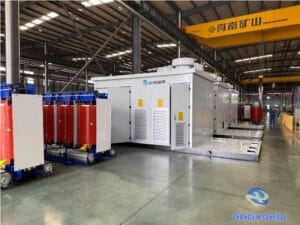
The transformer is one of the quiet workhorses of modern civilization — a device so fundamental to power distribution that most people never think about it, yet nothing on the grid works without it. Every time electricity steps up for long-distance transmission or steps down for safe use in a factory, home, or data center, a transformer is doing the work behind the scenes.
Its story spans nearly two centuries, from a curious laboratory experiment in 1830s London to the high-efficiency, smart transformers powering today’s data centers. Understanding that history also explains why buyers today still choose between two fundamentally different transformer types — oil-immersed and dry-type — each shaped by a different chapter of this story. Here’s how it happened.
Stage One: The Invention of the Transformer
Faraday’s Discovery
In 1831, Faraday built what he called an “induction ring” — two coils of wire wound around opposite sides of an iron ring, with no direct electrical connection between them. When he switched current through one coil, a brief current appeared in the other, even though the two windings never touched. This was electromagnetic induction: the principle that a changing magnetic field can generate current in a nearby conductor. Faraday’s simple ring, built from little more than iron and copper wire, is now recognized as the first transformer prototype — every transformer built since, from Stanley’s original unit to today’s smart grid transformers, still relies on this same core mechanism.
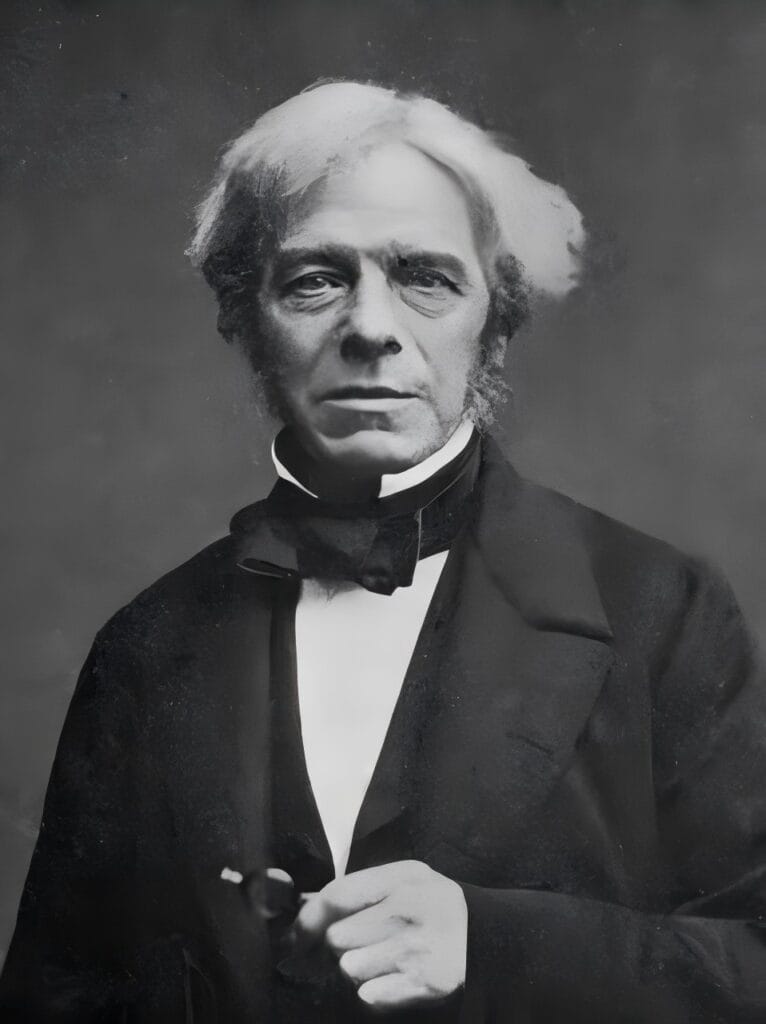
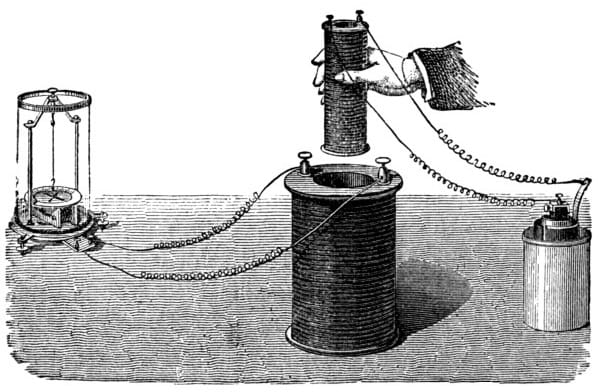
It took another 14 years for the mathematics to catch up. In 1845, Franz Neumann and Wilhelm Weber formalized Faraday’s discovery into the equations we now call the law of electromagnetic induction, giving future engineers a rigorous theoretical foundation to work from rather than relying on trial and error.
From Laboratory to Commercial Device
Practical devices followed decades later. In 1881, Lucien Gaulard and John Dixon Gibbs unveiled a “secondary generator” in London and sold the rights to the technology to Westinghouse in the United States. Three years later, in 1884, they demonstrated an improved version at the Turin Exhibition in Italy, in a city that had just adopted electric lighting — one of the first real-world showcases of transformer technology, and a genuine technical breakthrough for its time.
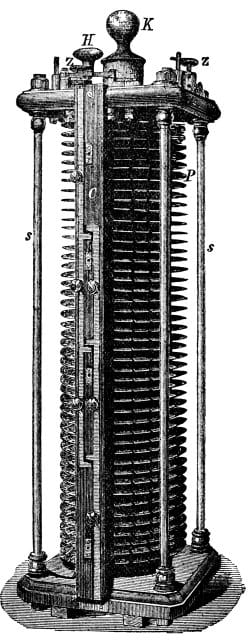
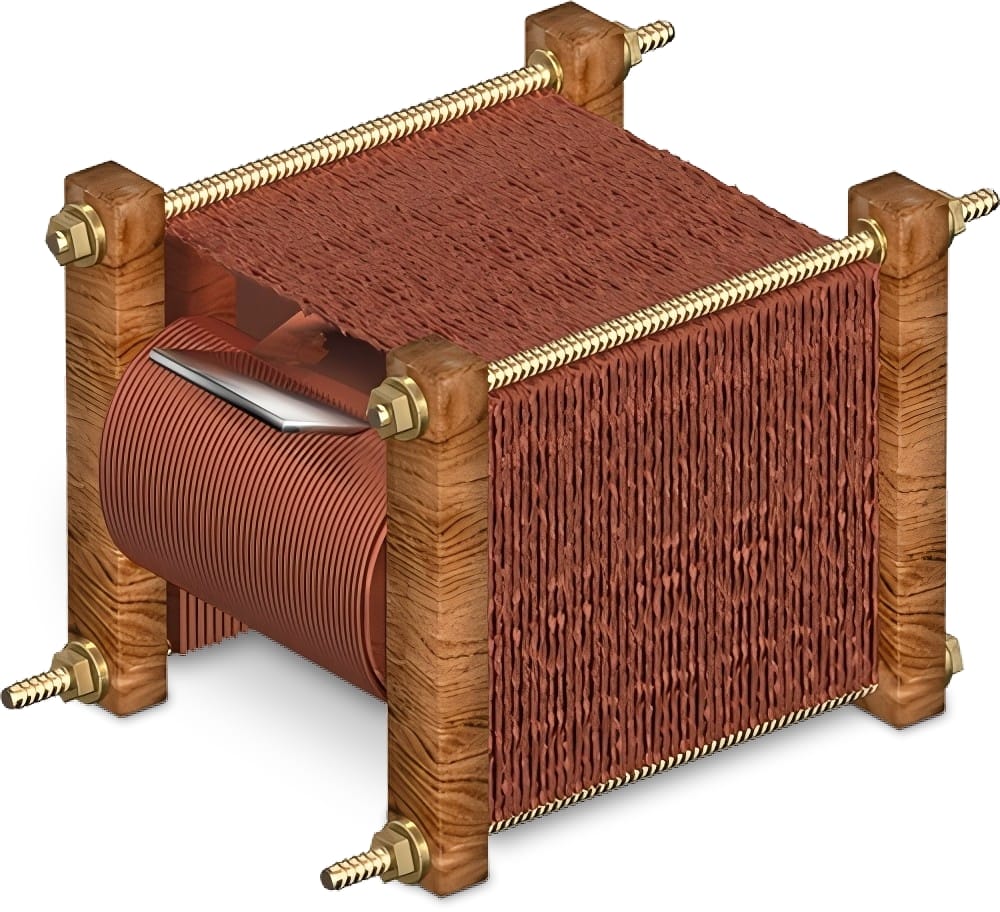
The Gaulard-Gibbs system had a serious flaw, though: every customer needed their own dedicated transformer, and the distribution network had no way to self-regulate — it couldn’t draw power from a continuously self-adjusting shared line the way a modern grid does. That problem wasn’t solved until 1885, when Ottó Bláthy, Miksa Déri, and Károly Zipernowsky designed a true self-regulating distribution system, meeting every requirement a practical grid needed. It was the first genuinely workable solution to large-scale AC power distribution. Soon after, Westinghouse engineer William Stanley purchased a transformer patent and built the world’s first commercially deployed transformer.
Stage Two: The Development of Transformers
Stanley’s Breakthrough
Stanley refined his design in 1886, introducing a working prototype for parallel-connected transformers. This was a turning point: it proved that high-voltage transmission was both practical and safe, and that connecting transformers in parallel could keep voltage stable across a network rather than degrading as more customers were added. Combined with Nikola Tesla’s advances in alternating current, Stanley’s work opened the door to the commercial transformer industry as we know it — the moment AC power distribution stopped being an experiment and became infrastructure.
From Dry-Type to Oil-Immersed — and Back Again
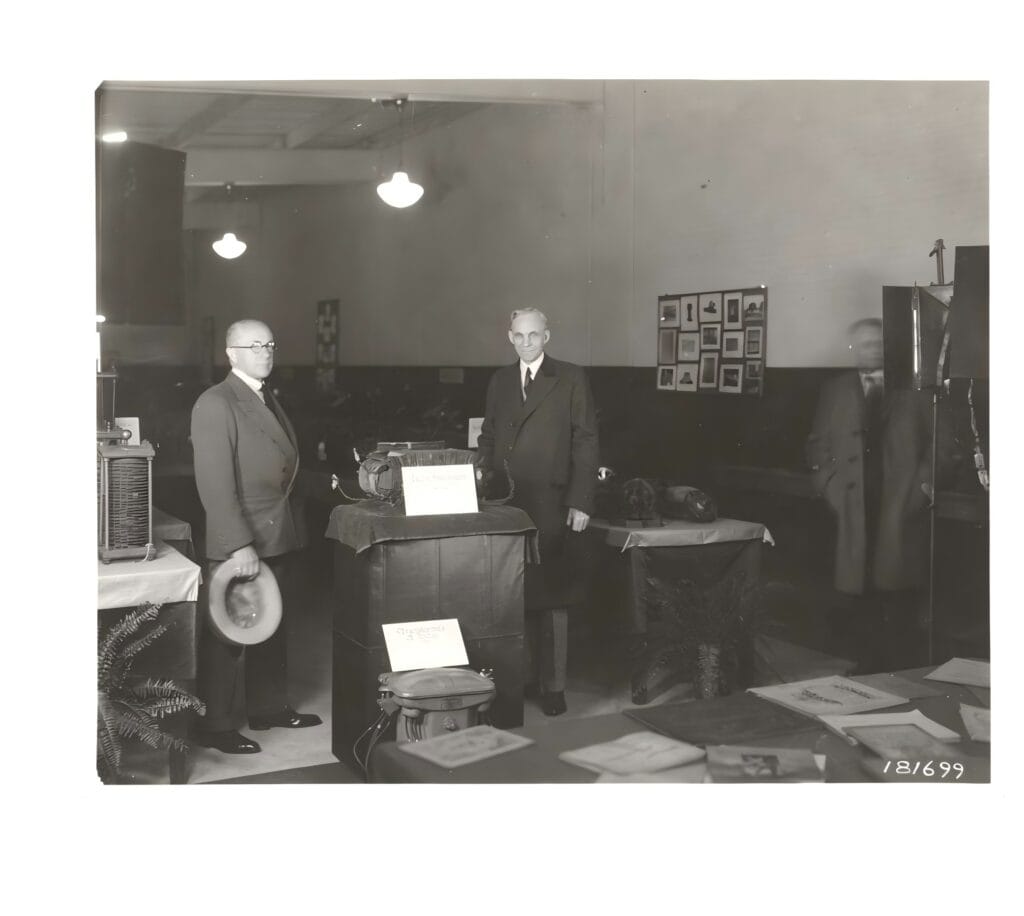
Early distribution transformers — and those built for years afterward — were air-insulated dry-type units. Given the insulation materials available at the time, dry-type designs simply couldn’t handle high voltage or large capacity; air alone couldn’t dissipate heat or resist electrical breakdown well enough as transformers scaled up.
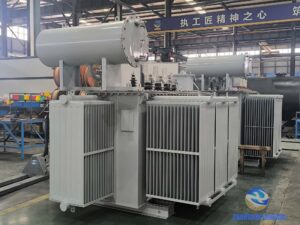
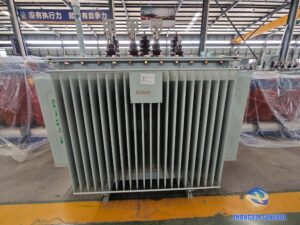
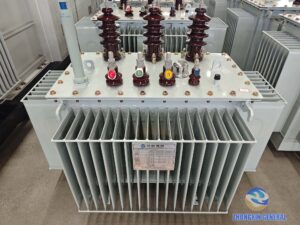
So from the late 19th century onward, as power systems expanded and voltage levels climbed, engineers turned to transformer oil, which offered markedly better insulating and cooling performance than air. Oil-immersed transformers gradually became the industry standard, a position they still hold today across grid-scale and heavy-duty applications precisely because liquid insulation handles high voltage and high capacity so efficiently.
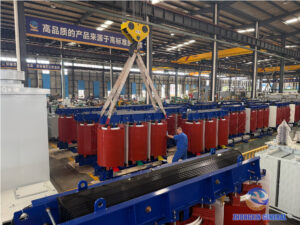
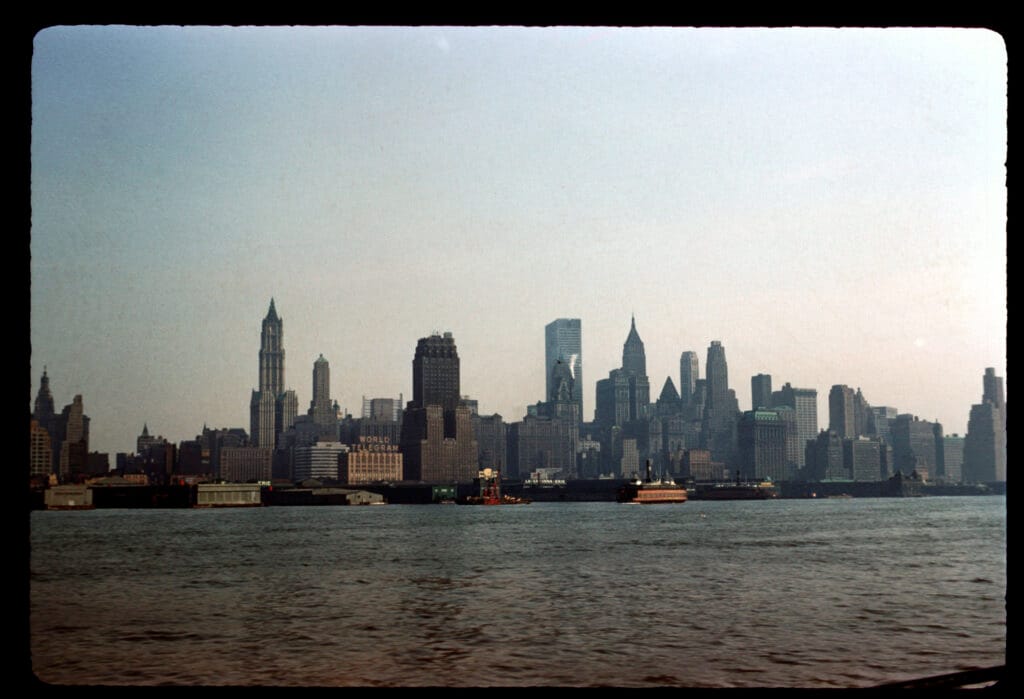
That balance shifted again in the 1960s. As cities modernized at breakneck speed, high-rises, subway systems, and mines multiplied — and with them came far stricter fire-safety requirements in enclosed, densely occupied spaces, environments where oil-filled equipment posed real risk. Manufacturers around the world searched for alternatives to mineral oil, but for years none proved fully satisfactory. It was this sustained search for a safer substitute that ultimately drove renewed investment in dry-type transformer technology, pushing it from a legacy design used mainly for low-capacity units into a serious engineering discipline suited to demanding, fire-sensitive environments.
Stage Three: China’s Transformer Industry Today
Data Infrastructure Is Driving New Demand
China’s transformer industry has entered a new growth phase, driven largely by data infrastructure and grid modernization. China’s data center market is projected to reach roughly RMB 318 billion in 2025, fueled by the “East Data, West Computing” initiative and surging AI compute demand, with rack counts and power loads climbing sharply alongside it. Because data centers are high-reliability, high-density power users, this growth is translating directly into strong demand for dry-type, high-efficiency, and smart specialty transformers.
Production Scale and Competitive Landscape
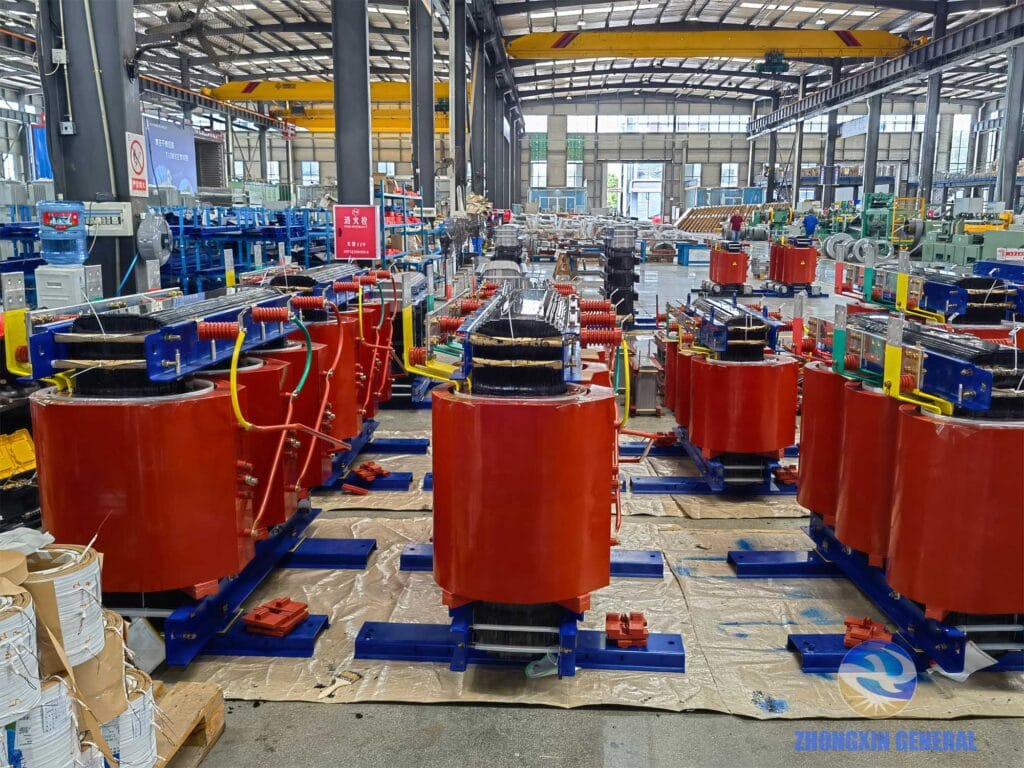
On the production side, China’s total transformer output reached approximately 2.106 billion kVA in 2025, supported by grid investment, renewable energy buildout, and data center construction — making China the world’s largest transformer producer. The industry’s product mix continues shifting toward higher voltage classes, greater energy efficiency, and smarter designs, with high-end products taking a growing share of output.
The competitive landscape reflects this maturity. TBEA, China XD Electric, and Baoding Electric form the first tier, dominating the ultra-high-voltage segment where technical and qualification barriers are steep. Companies like Jinpan Technology and Sieyuan Electric have carved out strength in dry-type and renewable-energy niches, while the mid- and low-voltage distribution segment remains crowded and highly competitive. Overall, leading manufacturers are consolidating share by leaning into high-voltage, data center, and renewable energy applications — the same trends reshaping demand across the industry.
Key Milestones at a Glance
- 1831 — Michael Faraday builds the induction ring, the first transformer prototype
- 1845 — Neumann and Weber formalize the law of electromagnetic induction
- 1881–1884 — Gaulard and Gibbs demonstrate the “secondary generator” in London and Turin
- 1885 — Bláthy, Déri, and Zipernowsky design the first self-regulating AC distribution system
- 1886 — William Stanley builds the first commercially deployed transformer and refines it for parallel connection
- Late 19th century — Oil-immersed transformers begin replacing air-insulated dry-type units as voltage and capacity requirements grow
- 1960s — Rapid urbanization drives renewed demand for fire-safe dry-type transformers
- 2025 — China’s transformer output reaches roughly 2.106 billion kVA, with the industry shifting toward high-voltage, high-efficiency, smart designs
Frequently Asked Questions
How are oil-immersed and dry-type transformers related historically? Both trace back to Faraday’s original induction principle. Dry-type (air-insulated) designs came first but were limited to low voltage and capacity. Oil-immersed transformers emerged as the industry’s answer to higher-voltage, higher-capacity needs starting in the late 1800s, while dry-type technology saw a resurgence from the 1960s onward as fire-safety requirements in cities intensified.
Does a modern transformer work the same way as Faraday’s 1831 device? Yes, at the core. Every transformer — from Faraday’s induction ring to today’s smart-grid units — still relies on electromagnetic induction: a changing magnetic field in one winding inducing current in another. What has changed is the engineering around that principle: insulation materials, cooling systems, voltage ratings, and now digital monitoring.
Why has China become the world’s largest transformer producer? Sustained grid investment, an expanding renewable energy sector, and surging data center construction — driven partly by the “East Data, West Computing” initiative and rising AI compute demand — have pushed China’s transformer output to roughly 2.106 billion kVA in 2025, with product lines increasingly shifting toward high-voltage, high-efficiency, and smart designs.
From Faraday’s Ring to Today’s Grid
Nearly two hundred years separate Faraday’s induction ring from the smart transformers running today’s data centers, but the underlying principle hasn’t changed — only the materials, the voltages, and the precision have. Understanding that history helps explain why today’s buyers face a real choice between oil-immersed and dry-type designs, each suited to different applications, environments, and safety requirements.
If you’re evaluating which type fits your project, our oil-immersed transformer range offers proven reliability and energy efficiency for grid, industrial, and renewable applications, while our dry-type transformer line delivers the fire safety and low-maintenance performance required in hospitals, airports, subways, and high-rise buildings. Our engineering team, led by veterans with decades of hands-on transformer manufacturing experience, can help you find the right fit.
References
- Gutenberg — Early Electrical History Archive: https://www.gutenberg.org/cache/epub/56365/pg56365-images.html#FNanchor_7_7
- National MagLab — Stanley Transformer (1886): https://nationalmaglab.org/magnet-academy/history-of-electricity-magnetism/museum/stanley-transformer-1886/
- Zhihu — Transformer Industry Discussion: https://www.zhihu.com/question/548648668/answer/3194452119
- Sina Finance — 2026 China Transformer Industry Market Outlook and Investment Research Report: https://finance.sina.com.cn/stock/relnews/cn/2026-02-25/doc-inhnzmmk7910041.shtml