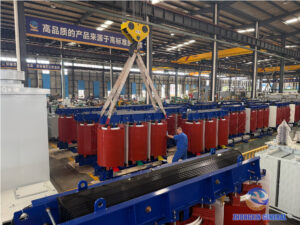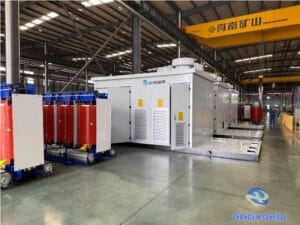
TBEA is a global leader in power transmission and new energy, with a deeply rooted corporate culture and a unique spiritual core. For generations, its people have lived by the “Four Specials” spirit: endure hardship, fight hard, dedicate selflessly, and keep learning. This spirit carried the company from a small local transformer factory on the brink of collapse to a modern industrial enterprise known around the world. Over decades, TBEA has stayed rooted in industry, shouldered its responsibilities, and served the nation through industrial development. Its journey vividly embodies the valuable spirit of hard work and pragmatic entrepreneurship that drives Chinese real-economy enterprises.
Currently, international English-language media have not covered Chairman Zhang Xin’s classic essay TBEA, My University. This work carries the company’s original mission, its entrepreneurial history, and its spiritual heritage, and it fills a clear gap in overseas public discourse. To bridge this gap and share TBEA’s culture, history, and spirit with global readers, this article presents an edited translation of the original text. It serves only positive cultural promotion, public-interest inspiration, and international communication of corporate culture.
The following is the original report published by Changji Daily via People’s Daily Online, March 15, 2023, 15:47
Reference:https://www.peopleapp.com/column/30039381852-500004370126
Zhang Xin has served as a deputy to the 11th, 13th, and 14th National People’s Congresses, and as a delegate to the 18th National Congress of the Communist Party of China. Elected four times as a national representative, he regards this as both a responsibility and a mission. Drawing on first-hand materials and the author’s own experience, this essay tells the story of TBEA’s founding and reveals the secrets behind its remarkable rise. It holds significant historical value.
Editor’s Note
History is made by working people and shaped by countless innovators and entrepreneurs. TBEA grew from a small neighborhood factory in Changji into a major enterprise group in China’s equipment manufacturing industry. It is the pride of the western region, the pride of Xinjiang, and above all the pride of the people of Changji.
Thirty-five years have passed — thirty-five years of struggle like a stirring song. The people of TBEA blazed a trail of innovation and transformation and composed a magnificent entrepreneurial anthem. No matter how far we travel, we must never forget the road we came from or our starting point. We look back so we can go further; let history light the way forward, for the journey has no end. Zhang Xin, TBEA’s leader, fondly recounts these 35 years and reminds us that staying true to our original aspiration is how we reach our goals. This essay tells TBEA’s story in the founder’s own words and reveals the secrets behind its rise. Let us revisit that journey through TBEA · My University and draw strength to move forward.
TBEA · My University
Zhang Xin
A Fateful Transfer Order
On February 21, 1988 — the fifth day of the Lunar New Year — I walked down the empty, muddy streets of Changji, clutching a transfer order from the Urumqi Chemical Factory and feeling overjoyed. Before the holiday, the factory director had come to my rented room on the edge of Changji and offered me a job as an electrical engineer. Seeing my hesitation, he simply pushed me into his car and drove me to the plant. It was the first time I had seen such a large factory.
He led me to an electrical workshop several times bigger than my entire workplace, pointed at brand-new equipment, and said: “Technician Zhang, you’ll run all this. I know you make 75.63 yuan now. We’ll give you two raises — 100 yuan a month.” Then he took me to a new dormitory building, up to the third floor. It was a two-bedroom apartment of over 60 square meters, still smelling of fresh paint. “This is yours,” he said. “Much bigger than that 20-meter room you share with someone else, right?” I thought about moving to the provincial capital, about becoming a cadre at a big state-owned enterprise, and I could not have been happier. But first I had to tell two people: Liu Detian, the party secretary who had introduced me to the Party, and Wang Xiuzhi, my master on the winding line.
Farewell
Secretary Liu Detian was a Korean War veteran and a senior city cadre. When he heard I was leaving for Urumqi Chemical, he was thrilled. “Young Zhang,” he said, “all the capable people at your factory have left. Yesterday’s snow collapsed the old workshop and buried the equipment. The city will start bankruptcy proceedings after the holiday. You stayed there all these years — that wasn’t easy. I’m so glad you’ve found a good place.” He insisted I stay for lunch and brought out a fine bottle of liquor he had kept for years to see me off.
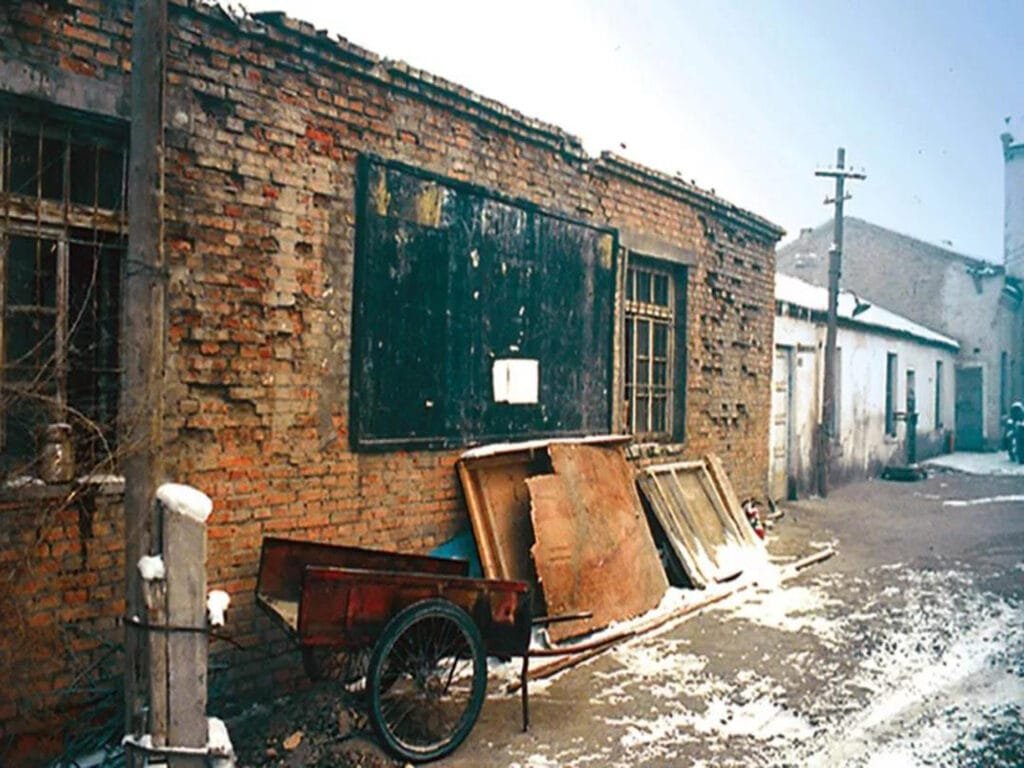
After lunch, I walked slightly tipsy toward Master Wang’s home. I stumbled along the muddy road to a low house beside a pit full of melted snow. She greeted me warmly and led me inside. The afternoon sun was bright outside, but the room was so dark it took me a while to see. An old table and a few broken chairs were all they owned. A plastic sheet hung from the ceiling, and basins on the floor caught dripping snowmelt. I paid my New Year respects and said I would start work in Urumqi the next day.
I expected her to wish me well. Instead she cried: “All you capable people are leaving. How will the rest of us eat? Look at our home.” I sobered up at once. If we all left, what would happen to the veteran workers? This was the first time I had stepped inside a coworker’s home. I looked at her tears and did not know what to say.
A Heavy Choice
I tried to leave, but she would not let me. She cooked a bowl of noodles and sliced some pickled vegetables — the best meal her family had for the New Year. I sat in the drafty room and ate in silence, my heart heavy. She looked at me with hope and said: “Technician Zhang, if you stay and lead us, maybe we can still eat.” I lowered my head and could not speak. I fled her house and walked straight to the factory, where I stood for a long time before the pile of rubble. Holding the transfer order, I thought seriously for the first time about the factory’s future.
I did not sleep that night. Early the next morning I went to see Secretary Liu. He told me nearly every family was in the same shape — the factory had not paid wages for over six months, and people survived by selling sheepskins. Some children had dropped out of school. I could not believe it, so I visited several more homes myself. What I saw stunned me. Every house was cold, many doors would not close, and families huddled around charcoal basins for warmth. It was the New Year, but there was almost no food. I never knew city life could be this hard. My family lived in the countryside, but we never went hungry or cold.
The Decision to Stay
I tossed and turned all night. The next morning I went back to Secretary Liu and told him things were even worse than he had said. I was single with no ties — what if I could help them eat? The old secretary said: “Think carefully. This is your choice. That other factory is excellent — it would be a shame to give it up. What you’re taking on is incredibly hard, and you might fail. Your factory has gone through several directors already. Last year alone, two came and went, and things only got worse.
Now the workshop has collapsed. How can you succeed?” I said: “You’re right. But if I try, maybe I can save it. If I leave, what happens to everyone else? Even one attempt would be my answer to Master Wang and the others.” He said: “Young man, well done! If you’re going to do this, I’ll throw my old bones in with everyone. I’ll tell the government this factory must not go bankrupt. Its technician wants to run it. The equipment stays. I’ll transfer over from the Switchgear Factory and work beside you!”
Thanks to Secretary Liu’s relentless efforts, the government agreed not to liquidate the factory — but on one condition. It would become Xinjiang’s first lease-contracted enterprise, with a democratically elected director. On March 3, in the biting wind, before the ruins and under the eyes of creditors, a city official presided over the election. I thought: if they don’t pick me, I’ve tried and kept my word, and I can leave without regret. Of the 53 workers, everyone but me voted. I won 51 votes — a landslide.
Speech as Director
Amid their expectant eyes, I gave my first speech. “You all know me. I’m a technician here. Honestly, I don’t know how to be a factory director. But I know heaven won’t drop pies and there are no saviors. We can only rely on our own hands. I have no savings. I’m a state cadre — while you went unpaid for half a year, I still drew my 75.63 yuan. Starting today, I won’t take a salary either. I’ll borrow living money from my parents. Let’s rebuild the workshop with our own hands and get production back. If we work hard, we’ll earn our food. Right now, let’s pick up bricks and rebar and rebuild.
Then we’ll have a foundation to grow on.” I told everyone: “I’m single and have nothing. Go home today and bring every tool you can — wrenches, pliers, shovels, even a cleaning rag. Bring them tomorrow.” I said sincerely: “The city offered a three-year lease. I asked for five. We need time to recover. Three years isn’t enough. I’ll spend five years working with you to turn this around. When our people can walk Changji’s streets and say proudly they work at the transformer factory, when everyone eats well, when kids go to school, when young people find spouses — then I’ll leave. I’ll have done my job.”
Facing Creditors, Starting Over
Creditors soon came to haul away equipment for debt. I told them: “You can’t take this equipment. We need it to restart production. Trust me — give me three years and I’ll repay every debt. If you won’t wait, here’s the truth: we owe you 500,000 yuan and the bank 230,000 yuan. If you seize equipment, the bank gets paid first — and there isn’t enough even for them. So where’s your share?” The creditors had no choice but to leave. That was my first day. I took office with my workers’ trust, with my family’s puzzled looks, and with a promise to put food on everyone’s table.
The will to survive and grow bound us together. We bought plastic sheeting from a scrap yard and put up simple shelters. Within a week, in the dead of winter, everyone was working at full pitch. Transformer parts are heavy iron, and we had no cranes or hoists. Everything was moved by hand and shoulder — the labor was brutal. But we needed a workshop, so our top priority was to build one fast.
Clearing Rubble, Hunting for Rails
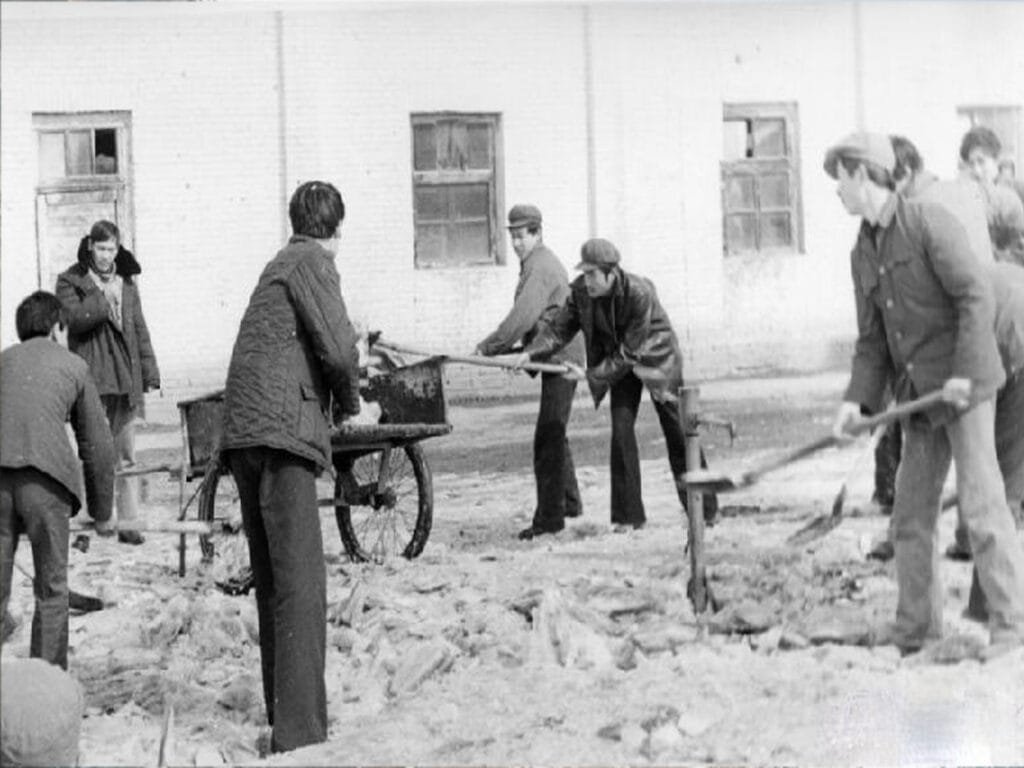
We cleared the rubble in our spare time. Since we had no money to rent trucks or tractors, the factory’s only means of transport at the time was a dilapidated flatbed handcart that could carry just 200 kilograms per trip. Load by load, we hauled away soil and broken stones, then brought back the better bricks and rebar we had salvaged.To end the backbreaking manual work, we decided to lay rails inside the new workshop. New steel rail cost 1,000 yuan a ton, while scrap cost just 100.
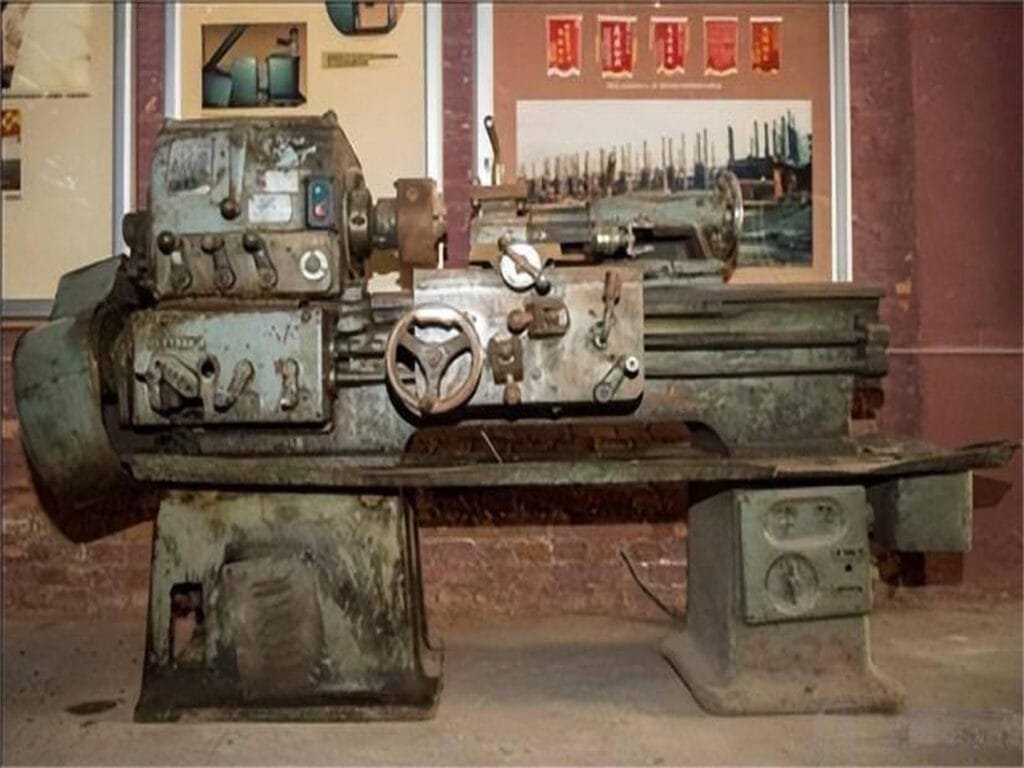
We checked the Urumqi Railway Bureau and scrap yards in Urumqi and Changji. We found good rails at one yard in Urumqi, but transport was too expensive. Eventually we found two rails over ten meters long at a scrap yard in Toutunhe, and we also picked out cement, steel, and other materials. But the factory account was empty — where would the money come from?
The Battle for a 30,000-Yuan Loan
From day one, my first task every morning was the bank. For over a month I waited at the door for the loan officer, asking for 30,000 yuan. At first he brushed me off. “You already owe the bank 230,000 yuan,” he said coldly. “Even all your broken equipment wouldn’t cover it. Nobody will lend to you. Forget it.” I kept going back. “That 30,000 yuan will let us rebuild and restart production,” I said. “Then we can repay the 230,000 we already owe.” Eventually he let me meet the section chief in early April. I told the chief: “Lend us 30,000 yuan and the 230,000 debt has hope. We aren’t even taking wages. If we wanted wages, we’d sell the equipment.
Instead we get up before dawn to pick bricks — just to rebuild and restart.” The chief frowned: “How do you build a house with 30,000 yuan?” I broke it down for him: we make our own roof beams, salvage bricks and rebar, work for free. The 30,000 buys cement, steel, and rails. He was moved by our sincerity and reported to the bank president. The president, the deputy mayor for industry, and the trade commission director held a special meeting. After two months, the loan finally came through.
Pulls the Cart
In early May we took the check to buy materials. However, no supplier would accept it — past checks had bounced, and they demanded cash. We went back to the bank, but cash was tightly controlled and the bank did not trust us. They refused to hand over cash. Instead they sent a bank officer with our accountant to pay suppliers directly — money went straight from the bank to the seller on a dedicated-funds basis.
One day I walked back from the bank along Beijing Road. From far away I saw Secretary Liu roped to the flatbed cart, straining to pull it while workers pushed from behind, shouting in rhythm. Over ten meters of rail and rebar sat on the cart, and the wheels were crushed flat. Sweat poured down Liu’s face, and the ropes had cut two deep bloody welts through his thick coat. I ran to help. “Old Secretary, why didn’t you rent a truck? It’s five kilometers — did you pull it all the way?” He smiled: “Renting costs over ten yuan. We pulled it.
Besides, all the loan money went to the scrap yard. There’s nothing left for a truck.” My voice broke: “You’re a state cadre. Didn’t anyone you know see you?” He laughed: “Everyone in Changji knows me. I ran into acquaintances the whole way. They asked if I was building my own house — why not rent a truck? I told them no, this is for our factory. We’re restarting production. Every cent counts.” Secretary Liu passed away years ago, but I can still see him pulling that cart. I will never forget it.
Workshop Built, Wages Reformed
In this way, we finished the workshop for just 20,000 yuan. The remaining 10,000 bought raw materials. By mid-June — without paying a single yuan in wages — we had hit the year’s contract target in three months. From July onward, wages resumed.Reform and the Fire That Forged Us
In 1988 China still ran on a planned economy. Workers fell into rigid tiers: state cadres, state employees, collective workers, large-collective workers, small-collective workers, the self-employed, and temps. Each tier had different pay and benefits, which led to unequal pay for equal work. Doing more or less, working or not — it made no difference. Over time this crushed motivation. After consulting with Secretary Liu and other leaders, we decided to reform the pay system first.
We declared everyone equal, no matter their status. Pay depended on product quality, work quality, and contribution. We rewarded the hardworking and penalized the lazy. A temp who excelled could become a manager; a cadre who failed could be demoted to the line. Pay and benefits followed contribution, and status followed performance. Smashing the “three irons” — iron chair, iron wage, iron rice bowl — risked breaking national rules at the time. Nevertheless, it unleashed a wave of productivity and creativity, and workers’ fates became tied to the factory’s success.
A Business Trip South
Business boomed and morale soared. To lock in next year’s raw materials at low cost, I took a southbound train in early November with a section chief from the city trade commission, heading to inland China to buy supplies. With government references and the trade commission’s help, we purchased smoothly from the Zhengzhou Electromagnetic Wire Factory and the Nanjing Bushing Factory. But on day five I got an urgent call from Secretary Liu. He asked where I was and told me to fly home immediately. I was confused — flying was expensive. On the way down I had bought my colleague a sleeper berth and taken a hard seat myself. I kept asking what had happened, but he would not say. He just wanted me back fast.
The Devastating Fire
I sensed trouble. On the seventh morning I flew back to Xinjiang. Secretary Liu and the union chairman waited at the airport in tears. They choked out the news: on the third day after I left, a fire had swept through the winding workshop. The building, equipment, tools, and raw materials were mostly destroyed. I was heartbroken. I comforted them and went to the factory, but everything looked fine — the burned building had been rebuilt, blackened walls were freshly painted, and ice hung from the eaves in the cold.
Secretary Liu’s hands were black and purple with burns. He told me what happened. Workers rushed from their homes to fight the fire. Some burned their legs pulling out equipment; others lost their trousers saving copper coils; some singed their eyebrows grabbing parts from the flames. To save burning transformer oil, they rolled barrels outside, then scooped the hot oil off the ground with bare hands — many burned their hands badly. The next day they bought lumber and rebuilt around the clock. Every usable machine was fixed, and production restarted the day before I returned. Furthermore, the workers voted: no wages until year-end — donate everything to rebuilding. I was so moved I could not speak.
The Fire That Forged Our Team
At the staff meeting the next day, I took the blame first. As legal representative, I bore full responsibility for the fire. Then I praised everyone. The fire cost 170,000 yuan — a heavy blow to a factory just getting back on its feet. But it forged our team. People risked their lives to save equipment and cut losses. In them I saw our factory’s future. With a team like this, what obstacle can’t we overcome? What crisis can’t we weather? If we stand together, think as one, and work as one, we will build a better future with our own hands. I wasn’t born tough or fearless — my colleagues and my team taught me. Years later I still see them fighting that fire, disregarding their own safety. They moved me, taught me, and drove me to do right by them.
From Survival to Expansion
When the first contract period ended in 1992, our hard work had paid off. The lease deal entitled us to a 1.97 million yuan bonus. All of Changji knew we had money. If we split it, we would have created a crowd of “ten-thousand-yuan households” — the richest people in the city. What a happy thought. But if we spent it all, where would future growth come from? I called a meeting. “We’re better off than before,” I said, “but don’t compare us to our old poverty. Compare us to the motor factory, to the best companies in China.” I proposed putting every cent back into the business, and I led by example by taking nothing. The money funded expansion — the merger with the Changji Electrical Equipment Factory, our first modern plant at 98 North Beijing Road, and everything that followed.
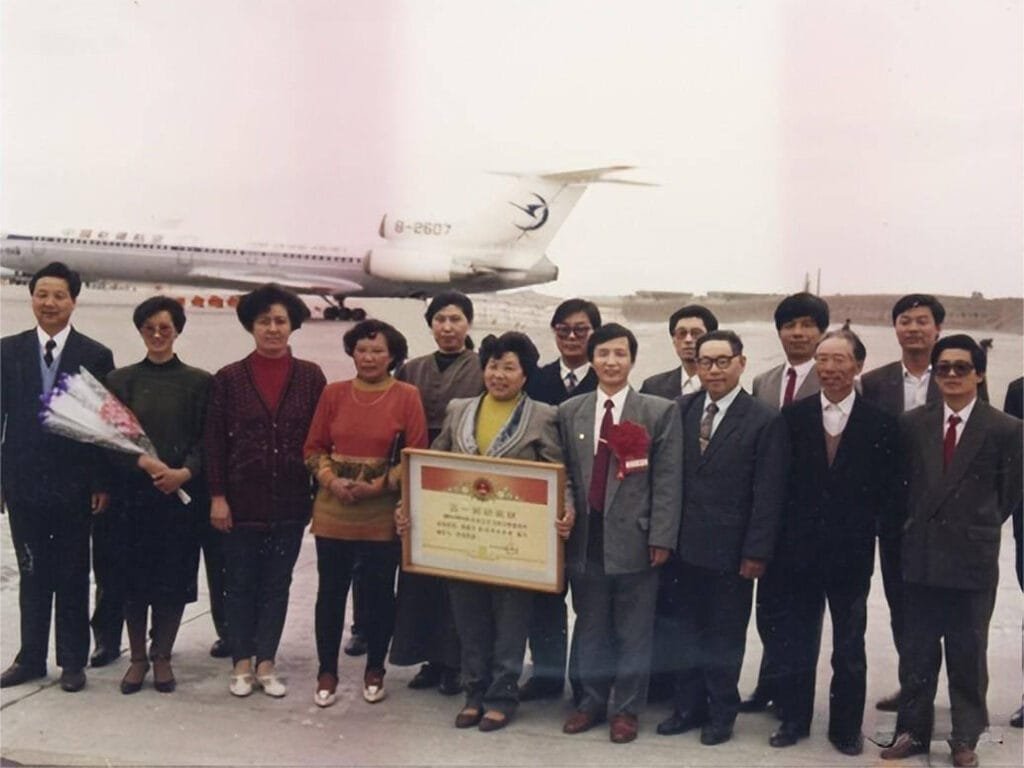
Thanks to Customers, Hardship, and Innovationindividuals.
As TBEA grew stronger and its name spread, friends and reporters often asked: what explains TBEA’s leapfrog growth? First, I thank the great era of reform and opening up, and our great nation. This era and this country gave us a platform to experiment, to innovate, and to grow — as a company and as individuals.
Second, I thank leaders at every level, our customers, our shareholders, and society at large. From our first 10,000-yuan order, won through sincerity, to today’s multi-billion-yuan contracts for ultra-high-voltage systems and million-kilowatt supercritical units from State Grid, China Southern Power Grid, and the five major power generators — every order carries your trust. That trust drives us to innovate faster, build better, work more efficiently, and serve beyond expectations.
Third, I thank the hardships we endured. TBEA was born in western Xinjiang, where our environment, industrial base, talent pool, market access, and resources could not match those in developed regions. Those disadvantages gave us a fierce will to survive and grow. That conviction let us build through hardship, fear no obstacle, change our fate with sweat, and create a better environment through entrepreneurship. Recognizing our weaknesses also helped us attract talented people from across society to join our cause.
Fourth, I thank creation and innovation. Innovation defines high-quality development in the new era. When General Secretary Xi Jinping visited Xinjiang, he called for building the core area of the Silk Road Economic Belt and turning Xinjiang from a closed inland region into an open frontier. Xinjiang has become China’s resource and energy base, and a strategic hub for Central and South Asia. Plans to make Urumqi an international metropolis for this region are fully underway. This national strategy gave TBEA a historic chance to build its three strategic industries: high-end power transmission equipment, silicon-based new energy, and aluminum-based new materials — “one high, two new.”
Cherish the Platform
Today’s TBEA people have the best platform they have ever had. If you don’t cherish it, build it, and grow it, what better place could you want? Beijing is great. Shanghai is beautiful. But what does that have to do with you? If you didn’t help build its yesterday, do you deserve to share its tomorrow? If we don’t strive, create, and build our home with our own hands, how will we share in its progress 10 or 20 years from now?
TBEA is a platform where talented people can build and grow — a platform we built over many years.
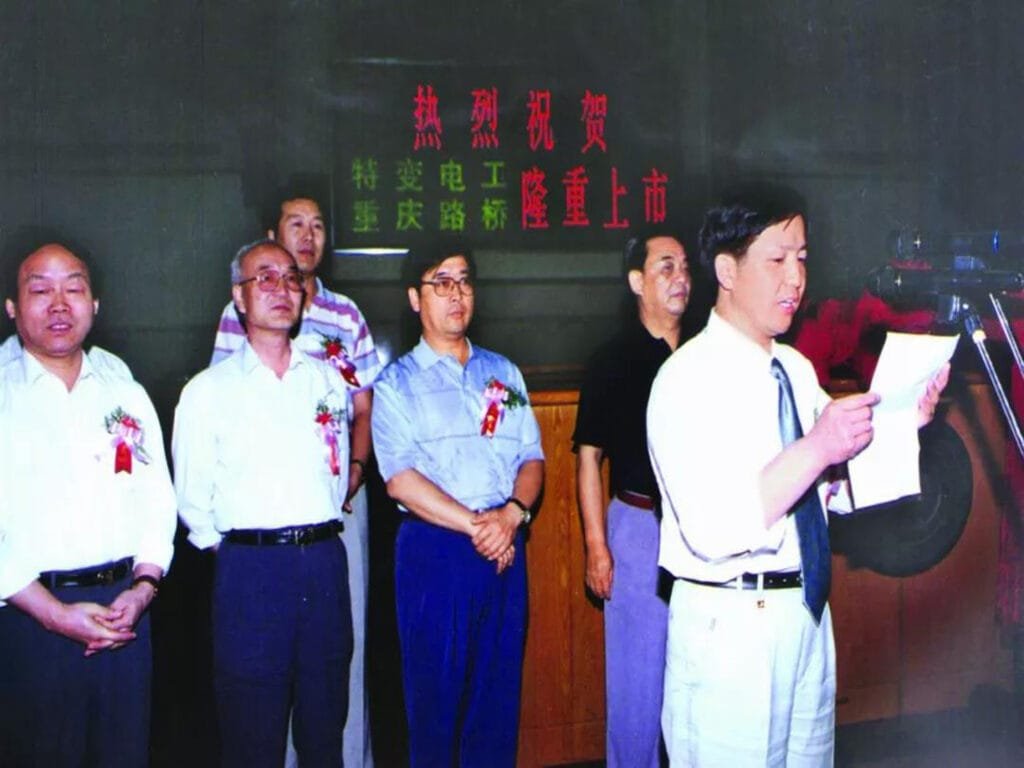
Fifth, I thank my colleagues, my family, and TBEA itself. From the founding team to the thousands who joined from across China, you have shown boundless entrepreneurship. Everyone forges ahead with enterprising spirit to pursue boundless entrepreneurship; everyone unites and collaborates to shoulder heavy responsibilities courageously; everyone manages their life with commitment to pursue excellence; everyone transcends themselves to pursue innovation and change.
Through practical actions, they embody the “Four‑Special Spirit”: being especially hard‑working, especially combat‑ready, especially dedicated, and especially eager to learn. Putting collective interests above personal families, they devote themselves selflessly and fearlessly to the development of TBEA.. Your actions moved me, taught me, and helped me grow from an ordinary person with no ambition into someone responsible for tens of thousands of employees, their families, and hundreds of thousands of investors. Your loyalty — sharing TBEA’s fate, never giving up — made TBEA what it is. I feel confident, fulfilled, and warm walking this road with you, serving our nation and innovating together.
Gratitude to Family and TBEA
I also thank my parents, my wife, and my son. Through every storm, you stood by me. Over the years I rarely had time to chat or share a meal with my parents. When my wife was ill, I could not stay at her side. When my respected father-in-law died, I could not attend his funeral or say goodbye — I was restructuring the Xinjiang Wire and Cable Factory. Seasons came and went, and my son grew up in a blink. When he took his college entrance exam, I was in Beijing pitching a refinancing deal.
Your quiet sacrifice and support give me endless strength to keep going. Likewise, I thank every TBEA employee’s family. Your sacrifices built TBEA. Its achievements belong to you, and the medals of honor rightly hang on your chests.
Above all, I thank TBEA — my university, my starting point, my cradle. Riddled with thorns, you forged my will and character as hard as steel; steeped in hardship, you taught me to persevere and fear no difficulty. You are the platform where ten thousand TBEA people strive side by side. Here, we changed our fate with sweat and kindled our lives with passion. On this very stage, we scaled the heights of science and technology with wisdom, served our nation, and fulfilled our dreams. And now, as we devote our youth to revitalizing national industry, building a world-renowned brand, and becoming a globally trusted service provider, you represent yet another new starting point for entrepreneurship.
The hardships we endured planted gratitude, courage, and deep in every TBEA person’s heart. They drive us to serve our nation selflessly and remind us that global trust is a long journey. This university called TBEA raised me, nurtured me, and made me who I am. Without it, without this team, I would have no platform to grow.
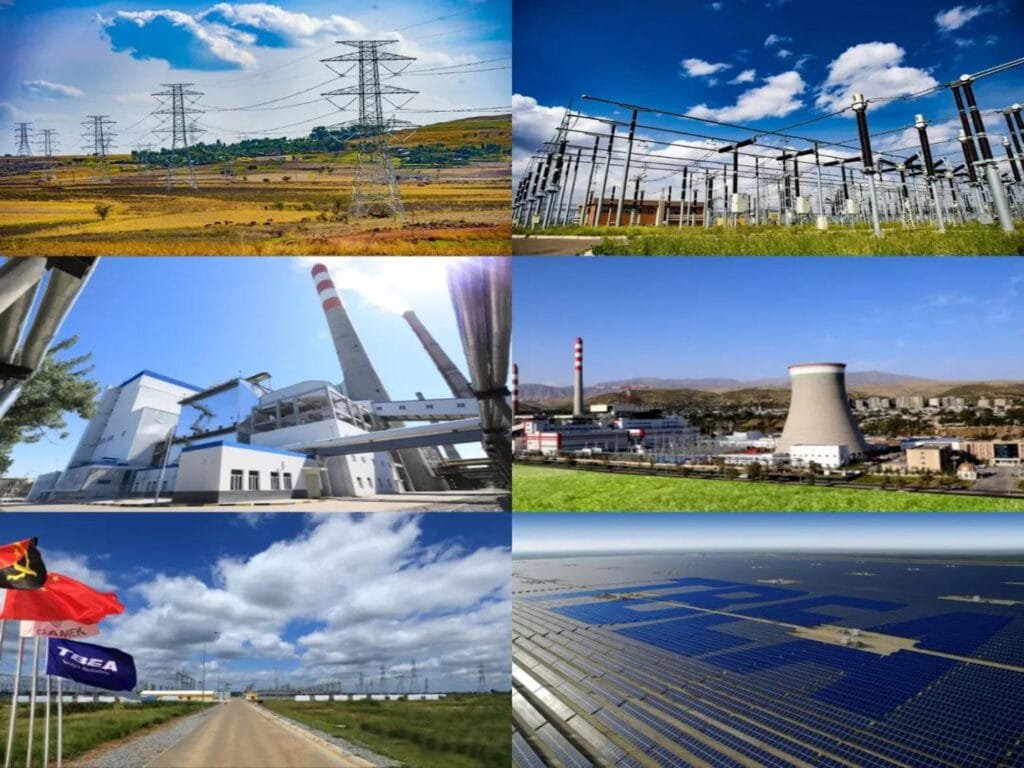
TBEA, Our Shared Home
TBEA, you are the shared home of all TBEA people and the starting point of our innovation. In this special university, we will always remember our hard beginnings, our mission to serve the nation, and our pursuit of global trust. TBEA, you are a university of passion, a university of struggle, and you will surely produce generations of talent. From our new starting point as a multi-hundred-billion-yuan enterprise, my partners and I will march toward a new goal: a Xinjiang-based Fortune Global 500 high-tech group with 200 billion yuan in revenue. We will carry gratitude in our hearts. We will spend our lives passing on the “Four Specials” spirit, staying true to our entrepreneurial roots, and walking the endless road of innovation and sustainable growth. On this platform we will keep writing the song of TBEA, keep creating miracles, keep building a century-old TBEA. We will strive, and strive again.
Conclusion
“An enterprise is a school, hard work is the curriculum, and the market is the examination hall.”
This essay uses no flowery language. It truthfully records TBEA’s journey: from a failing small factory, through a generation’s perseverance and refusal to accept mediocrity, step by step rising from the ashes and reaching the world.
Looking at TBEA’s story, what carries a company across eras and cycles is never equipment or technology. It is the spirit of people who stay true to their mission, face hardship, keep learning, and dare to push forward. In today’s fast-changing world, the “Four Specials” spirit is more than a slogan — it shows the resilience of Chinese manufacturing and Chinese industry. Sharing this story with the world records one company’s history and shows the down-to-earth, enduring strength of China’s real economy.
Copyright Disclaimer
This article adapts and translates publicly available corporate culture materials under the principle of fair use. It serves only non-commercial cultural communication, positive promotion, and educational purposes. The article preserves the original work’s core spirit and theme while using independent narrative and new structure. All original ideas and content belong to the author and TBEA Co., Ltd. This article has no commercial purpose. It aims to share the struggle and positive spirit of Chinese real-economy enterprises with the world.
If copyright issues arise, please contact us and we will remove the content immediately.