For international buyers sourcing power transformers from China, one question comes up again and again: how does China’s energy efficiency grading actually compare to the EU’s Ecodesign requirements? The two systems use different classification logic, different loss-measurement bases, and different regulatory language — which makes direct comparison confusing even for experienced procurement teams.
This guide breaks down China’s GB 20052-2024 against the EU’s Commission Regulation (EU) No 548/2014 (issued under Ecodesign Directive 2009/125/EC), with real loss data, so you can evaluate a Chinese-made transformer on its actual technical merits rather than guesswork.
Why This Comparison Matters
Transformer losses fall into two categories that directly affect a buyer’s total cost of ownership:
- No-load loss (core loss): constant loss that occurs whenever the transformer is energized, regardless of load — driven by core material and design.
- Load loss (copper loss): loss that varies with the current flowing through the windings — driven by winding design and conductor material.
Both the EU and China regulate these losses because they compound over a transformer’s 20–30 year service life. A transformer with lower no-load loss saves money every single hour it’s connected to the grid, even at zero load — which is why efficiency class matters as much as upfront price when comparing quotes from different countries.
How the EU Classifies Power Transformers
Under Regulation (EU) No 548/2014, transformers are grouped by highest voltage for equipment (Um) and rated power:
- Small power transformers — Um ≤ 1.1 kV
- Medium power transformers — 1.1 kV < Um ≤ 36 kV, rated power 5 kVA to <40 MVA
- Large power transformers — Um > 36 kV (any power ≥5 kVA), or any Um with rated power ≥40 MVA
Most 10 kV–35 kV distribution transformers used in commercial, industrial, and utility applications fall into the medium power transformer category — the segment most relevant to buyers comparing Chinese and European products.
Matching Chinese Voltage Classes to EU Categories
China’s standard voltage classes don’t map 1:1 onto the EU/IEC system, because the two systems define “rated voltage” and “highest voltage for equipment” slightly differently.
| China Rated Voltage (GB 20052-2024) | China Um (GB/T 156-2017) | EU/IEC Um (IEC 60071-1) | Equivalent |
|---|---|---|---|
| 10 kV | 12 kV | 12 kV | ✅ Equivalent |
| 35 kV | 40.5 kV | 36 kV | ❌ Not equivalent |
| 110 kV | 126 kV | 123 kV | ❌ Not equivalent |
10 kV is the one class where a clean, apples-to-apples comparison is possible — both systems land on Um = 12 kV, so loss limits can be compared directly. 35 kV and 110 kV transformers require conversion using the EU’s own capacity/voltage formulas before an equivalent European benchmark can be established. This is a calculation our engineering team performs case-by-case for buyers who need EU-equivalent documentation.
10kV Oil-Immersed Distribution Transformers: Loss Comparison
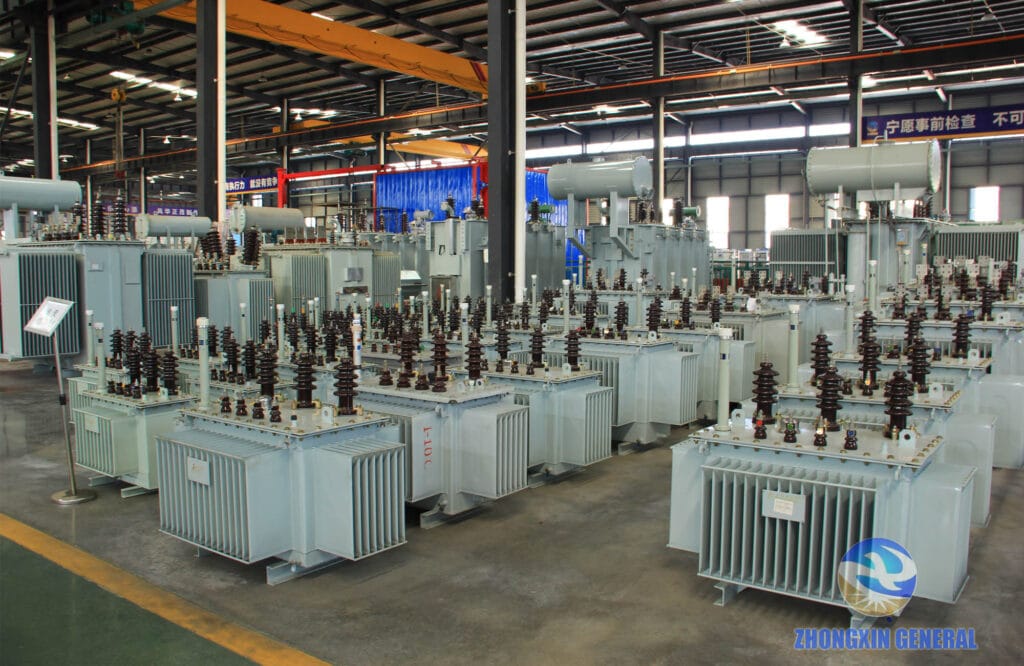
Oil-immersed transformers remain the backbone of medium-voltage distribution networks worldwide, prized for their reliability and lower cost-per-kVA at higher capacities.
No-Load Loss (W)
| Capacity (kVA) | EU 548/2014 | China Tier 1 (GB 20052-2024) | China Advantage |
|---|---|---|---|
| 100 | 130 | 120 | -7.7% |
| 250 | 270 | 230 | -14.8% |
| 500 | 459 | 385 | -16.1% |
| 1000 | 693 | 665 | -4.0% |
| 1600 | 1080 | 940 | -13.0% |
| 2000 | 1305 | 1085 | -16.9% |
| 2500 | 1575 | 1280 | -18.7% |
Load Loss (W)
| Capacity (kVA) | EU 548/2014 | China Tier 1 (GB 20052-2024) | China Advantage |
|---|---|---|---|
| 100 | 1250 | 1140 | -8.8% |
| 250 | 2350 | 2300 | -2.1% |
| 500 | 3900 | 3900 | 0% |
| 1000 | 7600 | 7415 | -2.4% |
| 1600 | 12000 | 10440 | -13.0% |
| 2000 | 15000 | 13180 | -12.1% |
| 2500 | 18500 | 15270 | -17.5% |
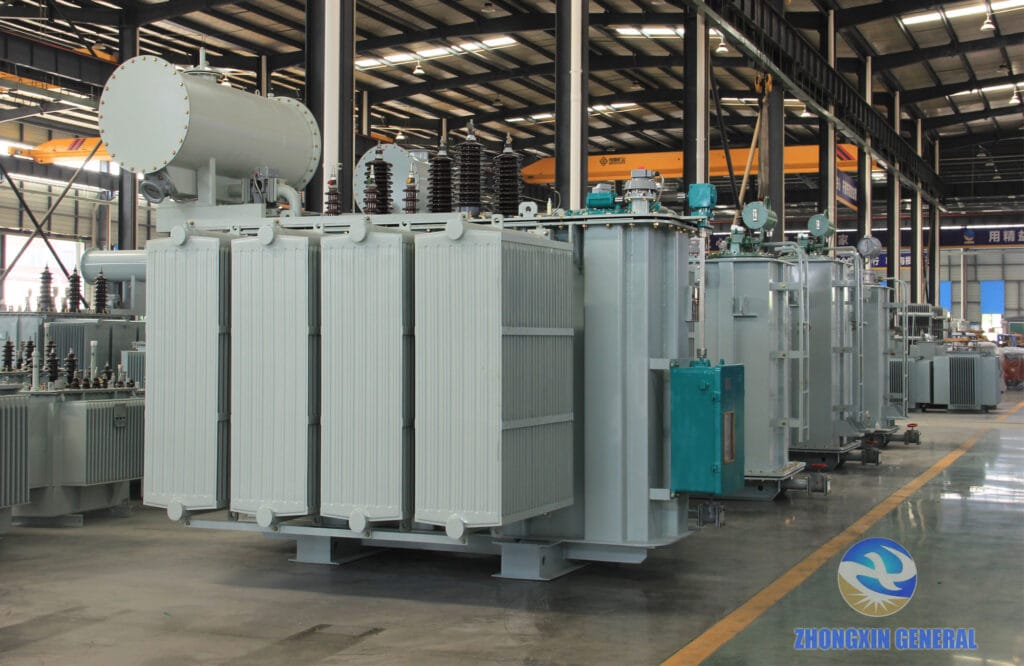
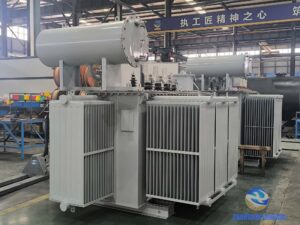
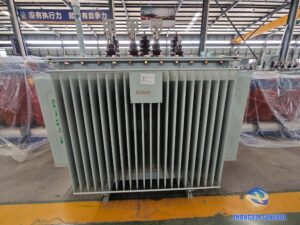
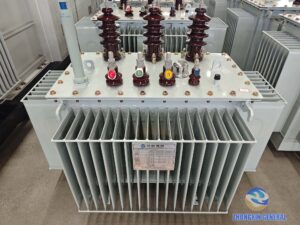
Across nearly every capacity band shown, China’s Tier 1 grade under GB 20052-2024 meets or beats the EU’s 548/2014 limits — often by a meaningful margin at larger capacities. Our oil-immersed transformer range, including units like the 12500 kVA SZ22-12500/35 and the 8000 kVA S20-8000/35, is manufactured to GB 20052-2024 Tier 1, comfortably exceeding EU Tier 2 (2019) requirements.
10kV Dry-Type Distribution Transformers: Loss Comparison
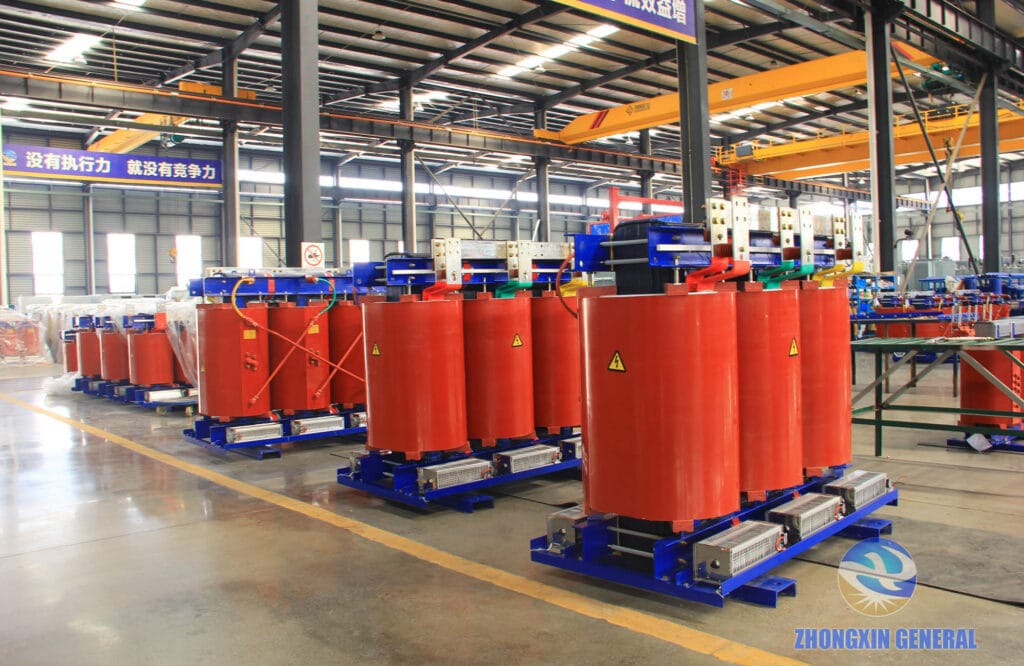
Dry-type transformers are the standard choice for indoor applications — hospitals, subways, high-rise buildings, and data centers — where fire safety and low maintenance matter more than raw cost.
No-Load Loss (W)
| Capacity (kVA) | EU 548/2014 | China Tier 1 (GB 20052-2024) | China Advantage |
|---|---|---|---|
| 100 | 252 | 230 | -8.7% |
| 250 | 468 | 415 | -11.3% |
| 400 | 675 | 570 | -15.6% |
| 1000 | 1395 | 1020 | -26.9% |
| 1600 | 1980 | 1415 | -28.5% |
| 2000 | 2340 | 1760 | -24.8% |
| 2500 | 2790 | 2080 | -25.4% |
Load Loss (W, H-class 145°C reference)
| Capacity (kVA) | EU 548/2014 | China Tier 1 (GB 20052-2024) | China Advantage |
|---|---|---|---|
| 100 | 1800 | 1520 | -15.6% |
| 250 | 3400 | 2665 | -21.6% |
| 400 | 4500 | 3850 | -14.4% |
| 1000 | 9000 | 7885 | -12.4% |
| 1600 | 13000 | 11320 | -12.9% |
| 2000 | 16000 | 14005 | -12.5% |
| 2500 | 19000 | 16605 | -12.6% |
For dry-type units, China’s efficiency advantage over the EU baseline is even more pronounced than for oil-immersed transformers — particularly on no-load loss, where the gap widens to 25–28% at larger capacities. Our dry-type transformer line, such as the 1600 kVA SCB18 series and the 8000 kVA SCB11-8000/35, meets the EU’s current Tier 2 (2019) requirements while also complying with GB 20052-2024 domestically.
What This Means for 35kV and 110kV Buyers
Because Um values don’t align at these voltage classes (see table above), we don’t publish blanket loss tables the way we can for 10 kV. Instead, our technical team applies the EU’s own capacity-scaling formulas from Regulation 548/2014 to your specific kVA rating and voltage combination, producing an EU-equivalent loss benchmark you can use for tender comparison or compliance documentation. This is a standard part of our quotation process for 35kV and 110kV projects.
Key Takeaways for International Buyers
- At 10 kV, comparison is direct — Um = 12 kV in both systems, so loss tables can be compared line-by-line.
- China’s Tier 1 grade generally outperforms EU 548/2014 on both no-load and load losses, with the advantage most visible in dry-type transformers and larger oil-immersed capacities.
- 35 kV and 110 kV require conversion — don’t assume a “35kV Chinese transformer” and a “36kV EU large transformer” are spec-equivalent without doing the math.
- Ask for the calculation — a reputable supplier should be able to walk you through the EU-equivalent figures for your specific project, not just hand over a GB-standard datasheet.
About Zhongxin General
Sichuan Zhongxin General Electric Energy Co., Ltd. (formerly ZX Transformer) is a China-based manufacturer of oil-immersed and dry-type power transformers, switchgear, and prefabricated substations, serving grid operators, renewable energy projects, and industrial customers worldwide. Our engineering team is led by Mr. Li Xianming — 45 years in the transformer industry, including direct technology-transfer experience with German dry-type transformer specialists — and designs products to GB, IEC, and EU efficiency standards. Learn more on our Contact our engineering team page.