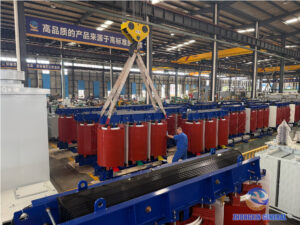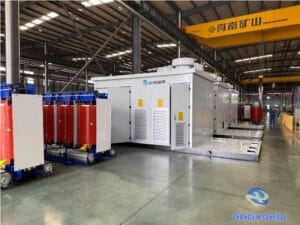
China’s transformer industry has grown from complete reliance on imports to becoming the world’s largest producer. In fact, this happened in just over a century. The transformation unfolded across three distinct phases: an early formative period (1912–1978), a launch period (1979–2000), and a high-speed development era (2001–present).
Formative Period (1912–1978)
From Foreign Import to First Domestic Unit
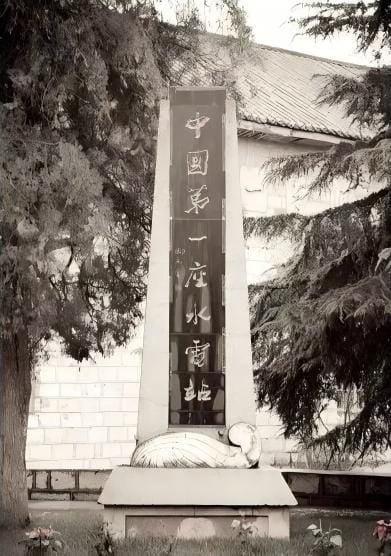
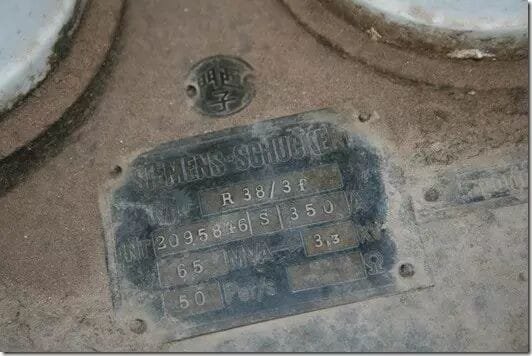
In 1912, the Shilongba Hydropower Station in Yunnan Province was completed. The entire project was built by Germany’s Siemens company. This marked the first time transformers were introduced into China.
In 1917, China’s first transformer was successfully manufactured at Shanghai’s Huasheng Electrical Manufacturing Works. This marked the formal start of China’s domestic transformer manufacturing industry.
Shenyang: Learning from Soviet Engineers
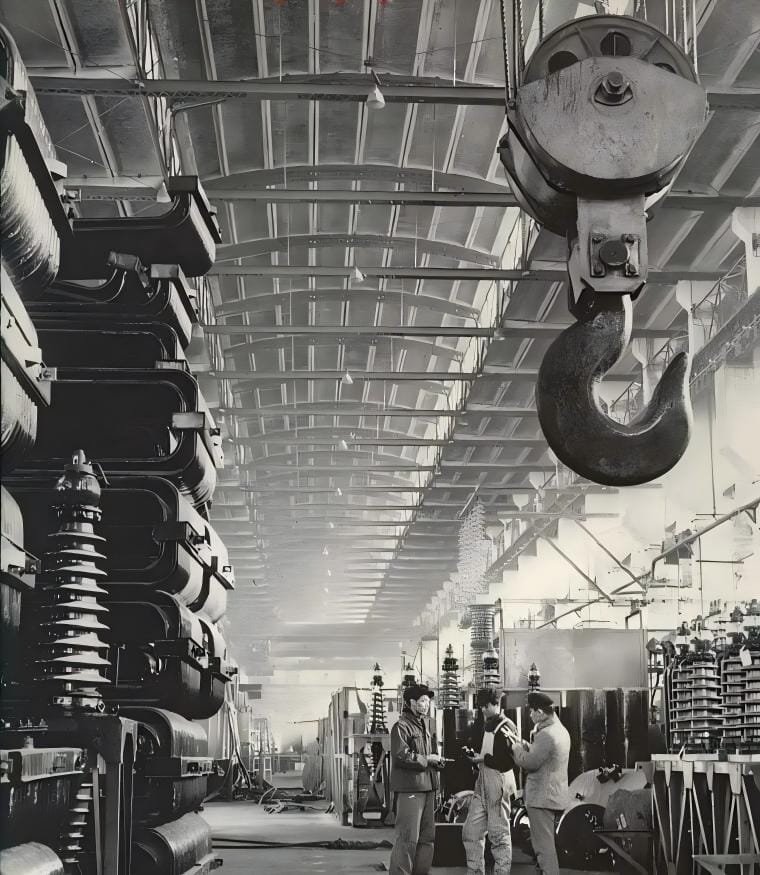
From 1951 to 1956, Shenyang Transformer Works sent five successive groups of technicians and workers to Moscow Transformer Works and other Soviet factories. There, they studied product design, manufacturing processes, and product testing.
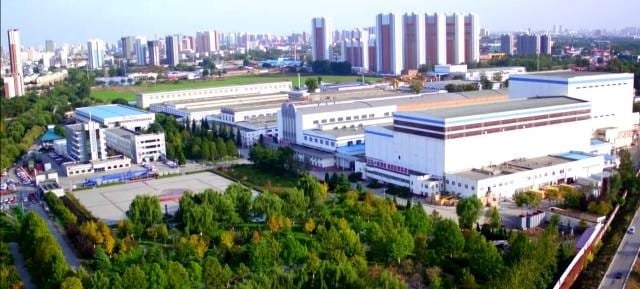
In 1951, Shenyang Transformer Works began production. This gradually built the plant’s foundational systems.
To learn from the Soviet Union, the plant produced its first 560–5,000 kVA transformers in 1952 with the help of Soviet experts. By 1953, it began manufacturing 10,000 and 13,500 kVA transformers. And by 1954, it had manufactured 20,000 kVA transformers.
Baoding and Xi’an: Scaling Up Domestic Production
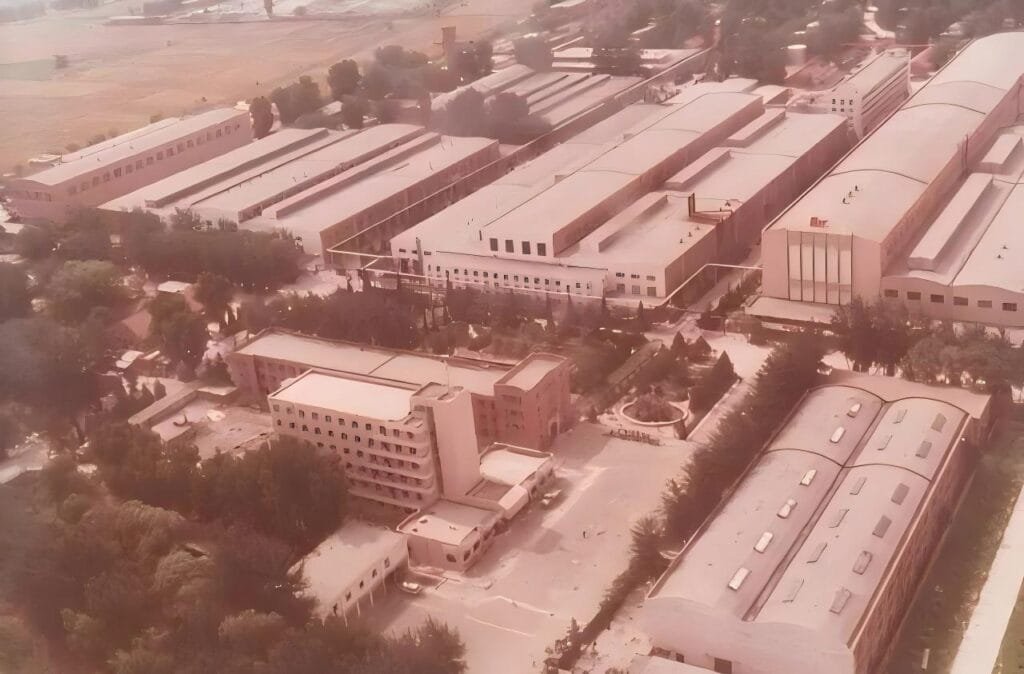
Baoding Electric was founded in 1958, focusing primarily on transformer production.
In early 1959, with approval from the Tianjin Municipal Committee, Tianjin’s Second Transformer Factory was relocated to Baoding. It was then merged into Baoding Transformer Works, bringing a total of 461 workers.
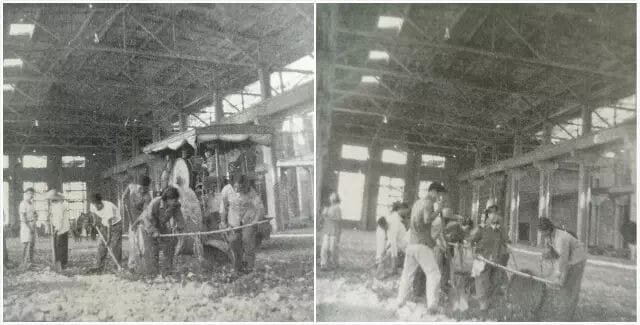
The plant gradually mastered transformer design and manufacturing technology in its early years by replicating Soviet-style products. Then, in 1960, Baoding Transformer Works formally began operations, launching a new phase of large-scale production.
By 1969, the factory had produced China’s first domestically made 220kV transformer, and its product range had expanded to include power transformers, rectifier transformers and other types, with applications extending into urban power grids and basic industrial fields.
Xi’an Transformer Works was founded in 1958. Its production facilities were delivered for use in the first half of 1959.
In 1970, the 330kV transformer independently developed by Xi’an Transformer and Electric Furnace Works passed all tests. This marked the birth of China’s first 330kV transformer. This early mastery of core electromagnetic principles laid the foundation for the transformer core manufacturing processes still used across the industry today.
Through this period, China’s transformer industry moved from foreign imports to independent production. This achieved a historic breakthrough from nothing to something in transformer manufacturing.
This broke the country’s complete pre-1949 dependence on foreign equipment. It also built China’s initial transformer industry production system and talent pool, providing critical equipment support for the nation’s early industrialization and urban power infrastructure construction.
Launch Period (1979–2000)
Breaking Voltage Records
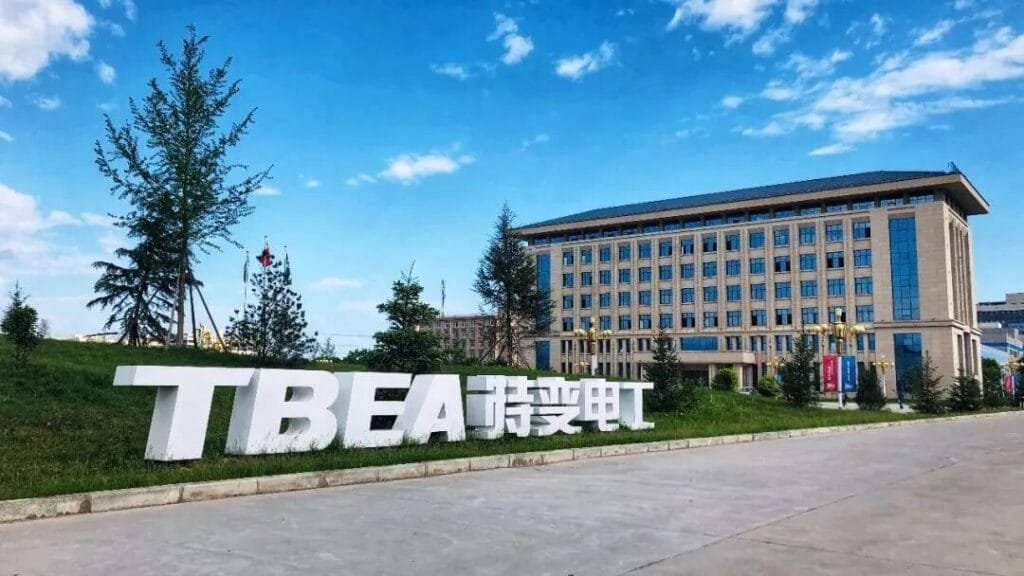
Shenyang Transformer Works successfully developed China’s first large-capacity ultra-high-voltage 500kV transformer in 1979.
Four years later, in 1983, Baoding Electric’s products achieved a breakthrough in key technology. This made it one of the first companies in China to master 500kV ultra-high-voltage transformer technology.
Then, in 1993, TBEA took the lead in the industry by implementing a shareholding system reform. This made it the first joint-stock company in China’s domestic transformer industry.
Building a Market, Cutting Losses
By the end of 1990, China had a total of 41,113 transformers rated 35kV and above, with a combined capacity of 392.57 million kVA. Of this, 500kV transformers accounted for 20.69 million kVA, and 330kV transformers accounted for 4.71 million kVA. 220kV transformers accounted for 104.07 million kVA, 154kV transformers accounted for 160,000 kVA, and 110kV transformers accounted for 139.14 million kVA.
Throughout the 1990s, government policy promoted the development of energy-saving transformers. SN9 and S9 model products emerged one after another, with losses reduced by more than 48% compared to earlier products. This drove the industry’s transition toward lower-loss designs — a focus on efficiency that continues to shape how transformer efficiency standards are compared across markets today.
During this period, transformer manufacturing technology developed rapidly. This provided strong support for large-scale power grid construction during China’s industrialization and urbanization.
The rise of domestic enterprises gradually built a market-driven competitive landscape. The industry’s overall competitiveness increased significantly as a result.
High-Speed Development (2001–Present)
Three Gorges: The Turning Point
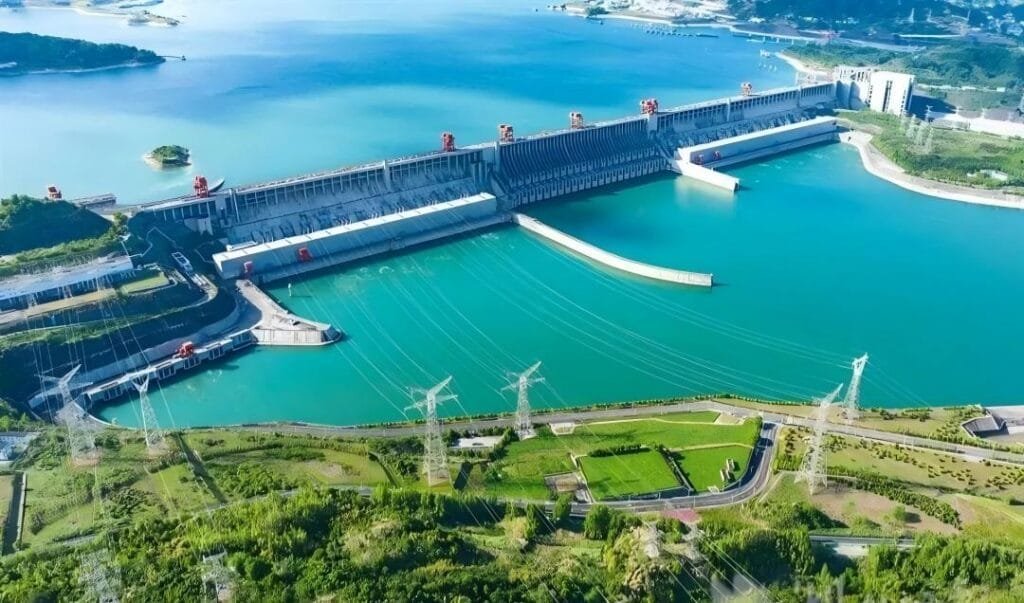
The Three Gorges Project required foreign bidding companies to form joint ventures with Chinese companies to participate. With a solid R&D foundation and excellent product quality, Baoding Electric reached a cooperation agreement with Germany’s Siemens.
Building on Siemens’ design plan, Baoding Electric carried out independent optimization and innovation in 2004 based on domestic processing and manufacturing standards.
This completed the full localization of the product, resulting in even better performance. Baoding Electric successfully supplied four 840 MVA/500kV main transformers to the Three Gorges left-bank power station. At the time, these were the highest-voltage and largest single-unit-capacity three-phase generator main transformers in China.
The UHV Era
Tianwei Baobian’s world-first UHV AC 1000 MVA/1000kV transformer passed all testing programs and was successfully developed in 2008. It was set to operate on the world’s first 1000kV UHV AC pilot demonstration project connecting Jindongnan, Nanyang, and Jingmen.
The following year, in 2009, TBEA successfully developed a ±800kV DC converter transformer. This was the highest-voltage DC power transmission product in the world at that time.
By 2012, transformers produced by Tianwei Baobian Electric Co., Ltd. had passed all testing programs, with major technical performance indicators exceeding contract requirements. This marked the birth of the world’s largest-capacity ±800kV converter transformer.
Then, in 2020, the 1000kV UHV transformer was successfully developed, achieving global technology leadership. This included breakthroughs in the first-unit transformer, ultra-high-voltage, and UHV technology, securing a leading position in global manufacturing.
By 2023, export value to Southeast Asia had grown 34% year-on-year. Products rated 500kV and above accounted for over 40% of exports for the first time, and global market share continued to expand.
Most recently, in 2024, China’s first 1000kV UHV AC transmission autotransformer for the Sichuan-Chongqing corridor was successfully developed. The full set of ±1100kV DC converter transformer technology was also mastered, reaching an internationally leading level in the UHV field.
Why China Caught Up So Fast
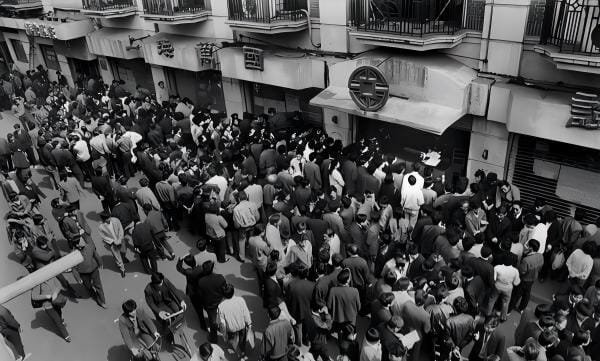
Looking back at this century-long rise, three underlying factors stand out.
First, reform and opening-up policies reignited market vitality. Once the reforms took hold, China’s market economy came alive. As a result, the transformer industry grew like bamboo after rain. Many entrepreneurs, in turn, rushed to build technical competitiveness.
Second, China learned by disassembling and rebuilding, not just importing. Whenever a foreign transformer was purchased, or a joint venture formed with Siemens, Soviet, or other international experts, domestic engineers took action. They thoroughly studied the technology. Then, they adapted it for Chinese conditions. Remarkably, this process took the country from complete import dependence to partial self-production in just five years — between 1912 and 1917.
Third, the industry consistently pushed past its comfort zone. Rather than settling for self-sufficiency in small and mid-sized units, manufacturers kept trying. Specifically, they attempted larger-capacity, higher-voltage designs. Even when failures occurred, the industry treated them as lessons rather than dead ends. Ultimately, this persistence secured China’s position at the center of the global power equipment industry.
This modern chapter, in many ways, is really an extension of a much longer global story. For the fuller arc — from Faraday’s first induction ring through to today’s Chinese factories — see our companion piece, The History of Transformers: From Faraday’s Discovery to Modern China.
References:
- https://m.bjx.com.cn/mnews/20110506/281555.shtml
- https://m.szhgh.com/Article/wsds/history/2023-11-23/341317.html
- https://news.qq.com/rain/a/20210707A01CNT00
- https://mp.weixin.qq.com/s/jUmtTXhNbuv7r3N9n4DRsw
- https://www.ceeia.com/KJXX/d/201012/19234.html
- https://ceeia.com/JSQY/d/201206/37454.html
- https://finance.sina.com.cn/roll/2025-08-26/doc-infnhksk1698399.shtml