Originally published in Chinese: “Chongqing Party History Research Materials,” Issue 4, 2013, CCP Chongqing Municipal Committee Party History Research Office. Translated and published here with contextual notes.
Original Author’s Note: The decision to site the Three Gorges transformer project in Chongqing greatly strengthened Chongqing’s industrial capacity and powerfully advanced hydropower development across western China — yet the difficult and winding path to that outcome remains little known. This article recounts in full detail the process by which the Three Gorges large transformer project came to be located in Chongqing, offering readers a thorough understanding of the circumstances.
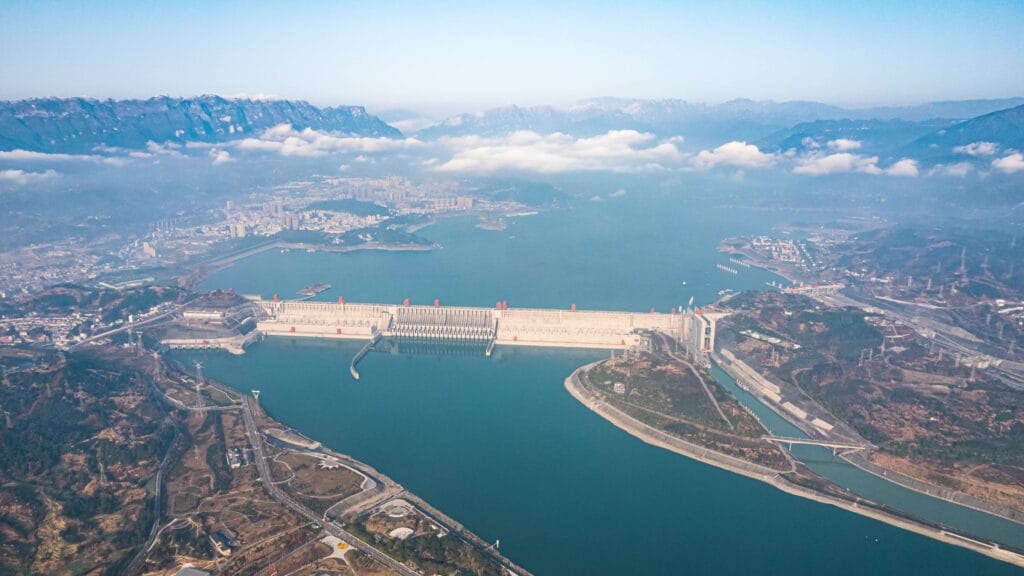
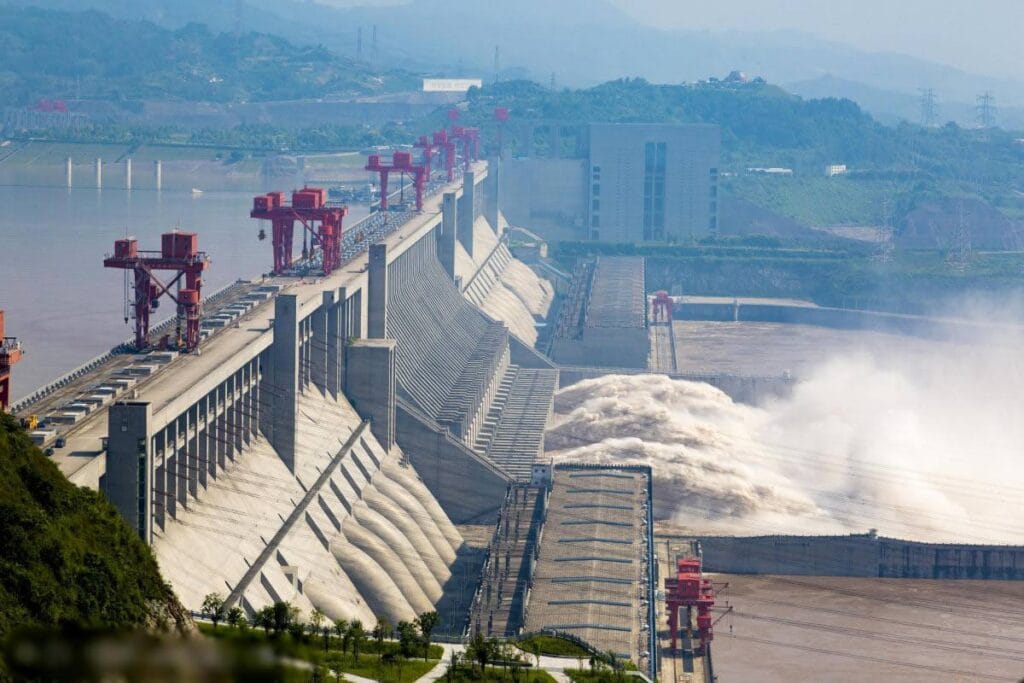
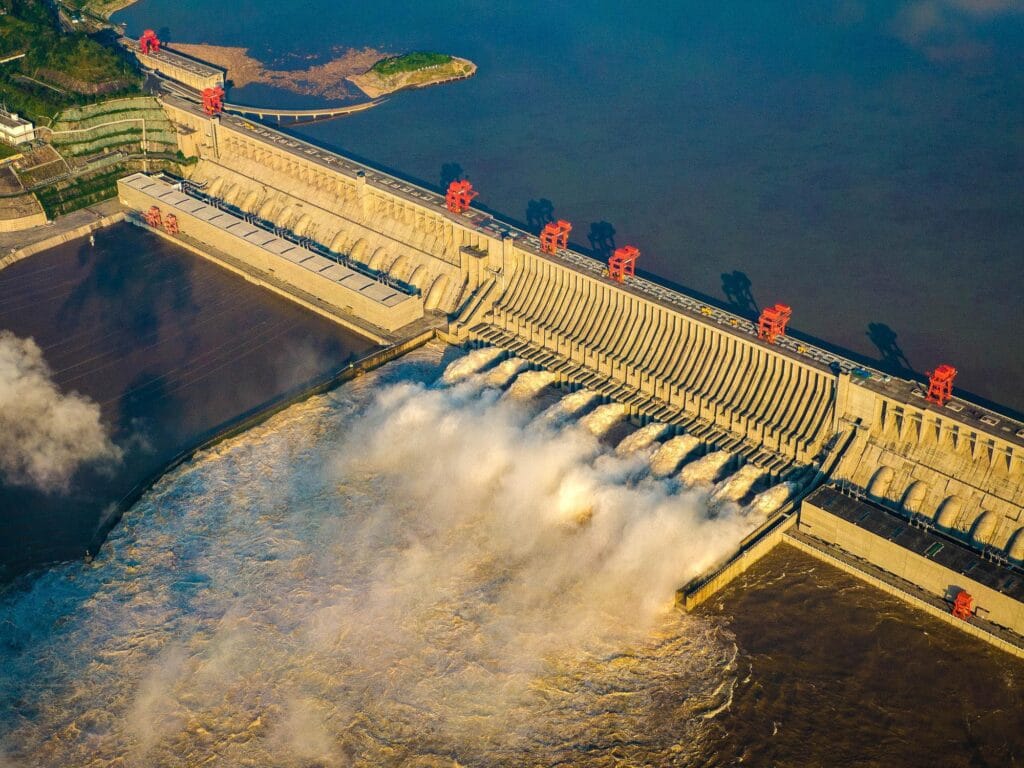
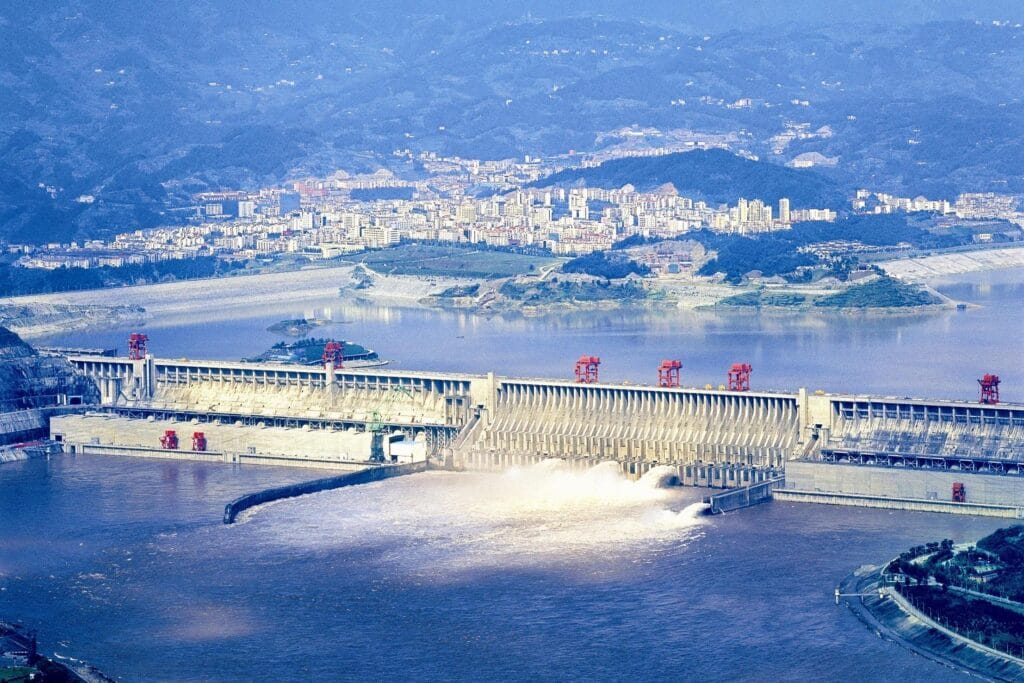
Kevin’s Words: China’s Three Gorges Hydropower Station on the Yangtze River still holds the title of the world’s largest hydropower station in terms of annual power generation. This super transformer—an engineering marvel in humanity’s utilization of water resources—raises the questions: how was it planned in its early days, and what twists and turns did it go through? For practitioners in the electric power industry or enthusiasts of science, it stands as an extremely valuable, top-tier case study. This narrative was compiled and published personally by Mr. Ma Shulin, a core figure who participated in the project’s decision-making process and a former member of the Chongqing Municipal Planning Commission. It was published in Chinese on a WeChat public account on July 27, 2021, under his pen name Bayü Lao Ma, so I noticed it and then decided to translate it into English. Salute to Mr. Ma Shulin for his contribution, which offers us an opportunity to authentically restore and immersively experience that exhilarating history and great era. The Original Title is~ Ma Shulin: How the Three Gorges Large Transformer Project Came to Be Sited in Chongqing(马述林:三峡大变压器项目落户重庆始末)
Additionally, the large transformers for three gorges project were given to two groups, the first one group is to Chongqing Transformer and ABB, the second group is to Baoding transformer and Siemens.
The Section Titles and 2020 spare main transformer shipping was added by myself when this English Version is translated.
The Project No Chinese Factory Could Build
In 1993, the Chinese state formally decided to proceed with the Three Gorges Project and planned to use the procurement of equipment for the project as a lever to drive Chinese equipment manufacturing up to a higher level. This set off competition over where the Three Gorges large transformer project would be sited.
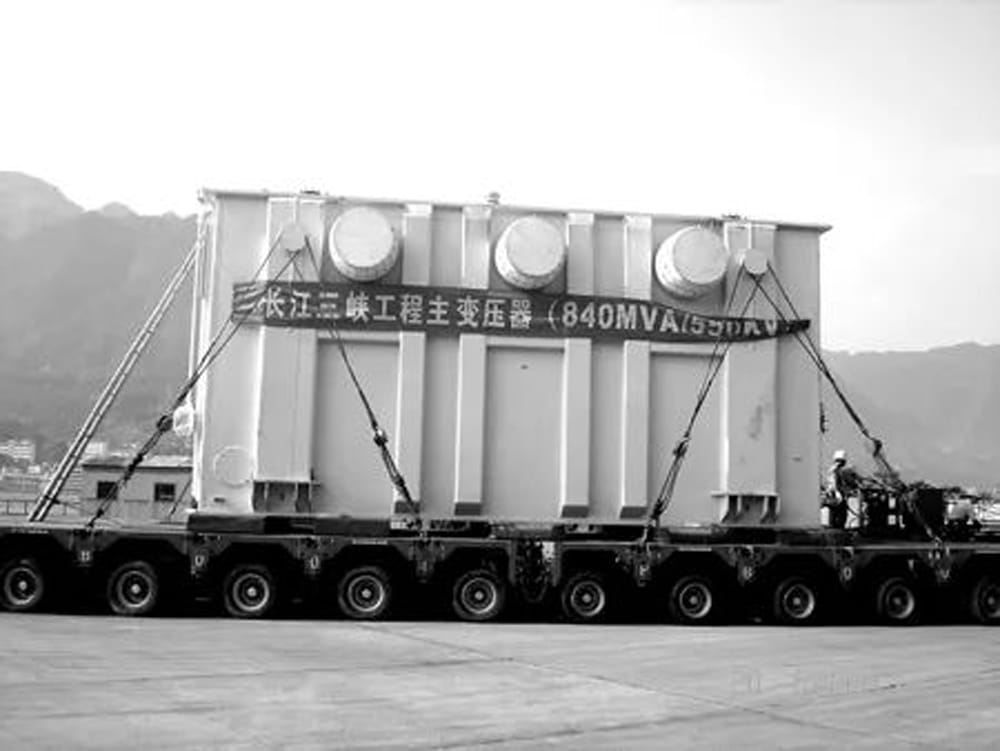
At the time, the manufacturing of Three Gorges generators was settled through a technology-for-project arrangement: production was assigned to Harbin and Deyang. The technical specification for the Three Gorges large transformers was 500 kV / 780,000 kVA — the largest transformers in the world at the time, each weighing approximately 400 tonnes. By China’s own technological capabilities at that moment, nothing of this scale could be built domestically.
China had three large transformer manufacturers: Shenyang Transformer Works, Xi’an Transformer Works, and Baoding Transformer Works — collectively known as the “Three Bigs.” The highest voltage class these three enterprises had previously produced was 220 kV. While both Shenyang and Baoding had subsequently developed prototype 500 kV transformers, quality was unstable. Shenyang had licensed technology from Japan’s Mitsubishi, and Baoding had a technical collaboration with Germany’s Siemens — but both were partial technology transfers with unresolved absorption problems, and the 500 kV units showed a high failure rate. A 500 kV transmission line is the equivalent of a power expressway: a transformer failure would affect a vast area.
The Three Gorges Corporation stated that the Three Gorges large transformers required world-class technology and that the existing output of the Three Bigs was technically insufficient. From a geographic standpoint, all three factories were in northern China, making delivery to the Three Gorges site logistically difficult. Around 1993, many large state-owned enterprises were in extremely difficult straits.
Shenyang’s Plan — and Why Chongqing Refused to Accept It
A Ten-Thousand-Worker Factory and a 400-Tonne Problem
Shenyang Transformer Works was a ten-thousand-worker factory built with Soviet assistance during the First Five-Year Plan and was the leading enterprise in China’s transformer manufacturing industry. Industry consensus held that if the Three Gorges transformers were to be produced domestically, Shenyang was the natural and uncontested choice.
However, production in Shenyang would require shipping by sea from Huludao or Dalian, through a combined river-and-sea route, with final offloading at Yichang. The trans-shipment costs along the way were enormous — a single crane lift cost four to five hundred thousand yuan. Beyond cost, there were serious safety concerns. Rail transport was also problematic: a 400-tonne piece, already over three metres tall on its own, would exceed clearance limits when loaded onto a rail car, making most tunnels impassable. Baoding and Xi’an faced the same technical and transport problems.
In light of this, Shenyang proposed a solution: build a large transformer assembly plant at Yichang, manufacture the major components in Shenyang, ship them to Yichang for assembly, and then transport the finished units to the Three Gorges site nearby. The Ministry of Machinery approved of this approach — it was eager to use such a large project to rescue Shenyang Transformer Works — and both Hubei Province and Yichang were enthusiastic. The proposed assembly plant would require an investment of over 200 million yuan; including the construction of large crane facilities at the port, total investment would reach over 300 million yuan, which was a substantial project at the time. The matter had been discussed and approved at a full ministerial meeting of the Ministry of Machinery and was essentially settled.
Chongqing Enters the Fight
“You’ve Barely Learned to Crawl”
Chongqing learned of this development around September 1993, when I was in Beijing for meetings. At the time I served as Deputy Director of the Municipal Planning Commission, responsible for medium and long-term planning and industrial affairs. Zhao Guangxing, Deputy Director of the Municipal Machinery Bureau, and Jialin, Director of Chongqing Transformer Works, came to find me and the Director of the Industrial Division, Xiao Guangbi. They informed us that the Three Gorges large transformer plant had been provisionally sited at Yichang and hoped that through the Planning Commission’s channels, the matter could be reopened. We were genuinely keen to win this project.
Chongqing Transformer Works had originally been a workshop of Chongqing Electric Machine Factory. In the early 1980s it was spun off as an independent transformer works. Its main products had previously been transformers below 35 kV; it had subsequently produced 110 kV transformers. Because it had steady state procurement orders, it never lacked for sales. After Chongqing became a separately planned city, urban grid upgrades created demand for 110 kV substations at high-load locations throughout the city, and the factory’s business was in good shape.
After entering the 1990s, the factory began developing 220 kV transformers on a trial basis. Within the transformer industry, a rough analogy by technical level would be: the ability to produce 110 kV transformers is secondary-school level; 220 kV is university level; 500 kV is doctoral level. Very few manufacturers anywhere in the world could produce 500 kV equipment. For this reason, neither the Municipal Machinery Bureau nor the transformer factory dared raise the matter with the ministry. As they put it: “They might laugh us out of the room — you’ve barely learned to crawl, and already you want to fly.”
Taking the Case to Beijing
Nevertheless, after learning about the Three Gorges transformer siting, Jialin and Zhao Guangxing came to the Planning Commission, and we decided to make a fight of it. Deng Xiaoping had stated that major projects should be placed in the Three Gorges reservoir area, but this had not yet been acted upon. We felt it was necessary to press the case. We reported upward to the Planning Commission Party Group and to city leaders. Vice Mayor Qin Changdian (who oversaw the Planning Commission), Mayor Liu Zhizhong, and Party Secretary Sun Tongchuan all took the matter very seriously and directed the Planning Commission to pursue it with full effort.
We subsequently reported to the Ministry of Machinery and sought out a vice minister, who said the matter had already been decided by the Ministry’s Party Group and that it was not appropriate for him to reopen it. Our only hope was intervention by the State Planning Commission, since approval authority for projects of this scale rested there. The Chongqing Municipal Planning Commission formally submitted documents to the State Planning Commission requesting that the project siting be reconsidered. Under the project approval procedures then in place, evaluation by the China International Engineering Consulting Corporation (CIECC) had been added as a step for major projects.
The Expert Group Visits — and Votes Against Chongqing
In late October of that year, commissioned by the State Planning Commission, CIECC dispatched an expert working group to evaluate candidate sites for the Three Gorges large transformer project. They came to Chongqing first, then travelled by boat to Yichang. The group was led by Hong Jiahe, Deputy General Manager of CIECC, who had previously served as Director-General of the State Planning Commission’s Integrated Department — we knew each other well.
The Transport Scheme That Won on Points
In Chongqing, the team examined principally transport conditions, factory premises, and room for expansion. Before the expert group arrived, Vice Mayor Qin Changdian had organised a thorough preparation effort by all relevant parties. The Planning Commission led the reception and briefing effort. Technical matters were handled by the Machinery Bureau, which commissioned Xi’an Electric Power and Electrical Design Institute to develop a construction scheme. The transport plan was handled by the Planning Commission, which commissioned the Second Survey and Design Institute of the Ministry of Railways to develop a combined water-and-land transport scheme.
The scheme had three components. First, starting from the factory site and following a route through Baqiao, Xinshanhe, the Zoo, Yangjiaping, and Huangjueping to the port — upgrading the existing urban road network to heavy-cargo road standards, time-efficiently and cost-effectively. Second, upgrading the heavy-cargo berth at Jiulongpo Port. This berth dated from the Third Front construction era and housed the largest floating crane on the upper and middle Yangtze, with a 180-tonne lifting capacity — the entry point for many large imported pieces of equipment for southwest China. A new floating crane with 400-tonne lifting capacity would need to be added. Third, a dedicated heavy-cargo transport fleet: Chongqing had the largest heavy-cargo transport fleet in southwest China, already equipped with German-made prime movers and heavy flatbed trailers. This transport scheme, led by the Second Survey and Design Institute with input from the Transport Bureau and Port Bureau, was detailed and comprehensive.
Eight Against, One Abstention
The CIECC assessment team found this to be the strongest scheme presented. In their feedback to Vice Mayor Qin Changdian, they said Chongqing’s transport scheme was the best of all — absolutely watertight. But they were frank: Chongqing had essentially no technical foundation for producing 500 kV transformers. If production was to go forward, international cooperation would be required. While the other candidate locations also needed foreign partnerships, they at least had some basis to build on; Chongqing had almost none.
When the expert group returned and voted, eight of the nine experts voted against siting in Chongqing; one abstained. Accordingly, the Ministry of Machinery formally submitted documents to the State Planning Commission on November 11th, proposing that the Three Gorges large transformer project be sited with Shenyang Transformer Works building an assembly plant at Yichang.
It was later learned that although not a single technical vote had gone to Chongqing, on the question of the transport scheme, those who supported Chongqing were in the majority — the assessors felt Chongqing had experience moving heavy equipment and found the proposed transport and port upgrade plans sound and reliable. By contrast, Yichang’s transport scheme had serious problems: it proposed excavating a large harbour basin on the riverbank and building gantry cranes, which drew opposition from Yangtze River navigation authorities on the grounds that it might impede shipping. It appeared that the project was essentially settled — yet at the national level, the situation remained delicate.
The Decision Unravels — and the Politics Get Complicated
The Three Gorges Corporation leaned toward Chongqing. From their perspective, major projects should be placed in Chongqing, because Chongqing had made sacrifices for the Three Gorges Project. They also felt that all three of the domestic “Three Bigs” fell short on quality and lagged well behind international standards — since a new factory would have to be built from scratch regardless, the case for supporting Chongqing from a reservoir-resettlement perspective was compelling.
The State Power Ministry held that domestically produced 500 kV transformers were all problematic, with excessively high failure rates, and that since the domestic factories were all at roughly the same starting point and foreign procurement would be necessary in any case, it made little difference where the project was sited. In fact, the expert who had cast the abstention vote was the director of the State Power Ministry’s UHV Research Institute — who later became the chairman of Chongqing ABB Transformer Factory, Wang Naiqing. Guo Shuyan, then Director of the Three Gorges Office and a Vice Chairman of the State Planning Commission, also leaned toward Chongqing, but since the Ministry of Machinery had already submitted its formal documents, his hands were somewhat tied.
Premier Li Peng’s Strategic Calculus
Chongqing was still determined to make one more push. On January 8, 1994, Xiao Yang — formerly Chongqing’s Party Secretary, now serving as Governor of Sichuan Province — wrote to State Council Vice Premier and State Planning Commission Chairman Zou Jiahua, requesting that the State Planning Commission conduct on-site inspections of both candidate schemes under its standard project management procedures, carry out thorough analysis, and select the better option — so as to ensure the Three Gorges Project was completed on schedule and to promote prosperity in the reservoir area.
Municipal Party Secretary Sun Tongchuan also wrote to Zeng Peiyan, then Director of the Central Financial and Economic Affairs Office and First Deputy Chairman of the State Planning Commission, outlining Chongqing’s advantages and explicitly making the point that Chongqing was within the Three Gorges submersion zone — it had made sacrifices for the Three Gorges Project — and earnestly requesting that the State Planning Commission give full weight to this factor in its siting decision.
At the time, the large-scale western hydropower development drive had not yet begun. Premier Li Peng, thinking from a national strategic perspective, recognised that without large transformer manufacturing capacity in Chongqing, all the large transformers required for future western hydropower development would have to be transported from northeastern and northern China. Zou Jiahua and Zeng Peiyan, aware of Premier Li Peng’s support for Chongqing, instructed the State Planning Commission’s Mechanical and Electrical Department to handle the matter.
Open Competition — and a New Chance for Chongqing
Meanwhile, the Ministry of Machinery and Hubei were pressing the Planning Commission to act. The Mechanical and Electrical Department proposed in February 1994 that the State Planning Commission convene a special meeting on the Three Gorges large transformer siting. One party would consist of Shenyang Transformer Works, Hubei Province, the City of Yichang, and Liaoning Province Planning Commission; the other would consist of Chongqing Municipal Planning Commission, Hebei Province Planning Commission, Baoding Transformer Works, and Chongqing Transformer Works — forming a competitive selection process.
Baoding Transformer Works and Shenyang Transformer Works had long been rivals; Baoding had provided technical support to Chongqing during its development of 220 kV transformers. Hubei Province also viewed this matter with great importance. Guo Shuyan found himself in a delicate position — he had previously served as Governor of Hubei, yet he was also aware of Premier Li Peng’s intentions.
On June 28th, the special meeting on Three Gorges large transformer siting was convened in Beijing. The meeting announced four important decisions: first, selection would be between Hubei and Chongqing only — other locations would not be considered; second, Chongqing and Baoding would form Team A, Shenyang and Yichang would form Team B, in open competition with selection on merit; third, the transformers must be of proven quality and first-class technology; fourth, both teams should immediately begin exploring foreign cooperation and submit feasibility study reports on forming joint-venture enterprises to the State Planning Commission.
With this, the situation turned again. Shenyang Transformer Works had relied on Hitachi and Mitsubishi technology throughout, and the Power Ministry was dissatisfied with both — it wanted the most advanced ABB or Siemens technology. Shenyang’s nominal technological advantage thus became a liability. Chongqing approached both ABB and Siemens for cooperation discussions, and both were enthusiastic — both wanted to break into the Chinese market. Chongqing’s technical scheme was developed by Xi’an Electric Power and Electrical Design Research Institute, the highest-level institute in China for this work. Combined with its well-developed transport plan, Chongqing quickly completed and submitted a comprehensive proposal.
The Contract Is Secured — Now Comes the Hard Part
On June 18, 1995, the State Planning Commission formally issued its reply siting the Three Gorges large transformer project in Chongqing (Document No. 779, 1995). The document made two things clear: first, the project was formally settled — there would be no further dispute; second, cooperation was to be sought with the world’s most advanced technology companies on a competitive basis, with technical reliability as the paramount criterion. After the document was issued, no other location challenged Chongqing’s claim, and the matter was considered resolved.
To produce world-class products, world-class technology and a detailed roadmap were required. Under the chairmanship of the Municipal Planning Commission, design institutes and enterprises collaborated on a project proposal, which was compiled and submitted upward. At the end of 1995, Zhang Delin was transferred from the post of Vice Minister of Machinery to serve as Chongqing’s Party Secretary; he attached great importance to this project and personally pushed its coordination forward.
On February 29, 1996, the State Planning Commission issued Document No. 331 (1996), approving the project proposal. The document specified: the large transformer project was sited in Chongqing, to be formed jointly with Baoding Transformer Works as a Sino-foreign joint venture with Chinese majority control; the production programme required adding annual large transformer manufacturing capacity of 6 million kVA, of which 500 kV large transformer capacity was to be 5 million kVA — including capacity for annual production of four large transformers for the Three Gorges Project at the 500 kV / 780,000 kVA specification. Aside from the identity of the foreign partner, all details were essentially settled.
Negotiating with ABB
Subsequently, Chongqing entered negotiations with both ABB and Siemens; ABB was ultimately selected. The Chinese-side negotiating team was led by Wu Jianong, then Director of the Municipal Planning Commission. At the end of November 1996, State Planning Commission Vice Chairman Guo Shuyan was briefed by relevant parties. ABB raised the concern that after all the effort it had made to build the joint venture, what would happen if the Three Gorges Corporation did not actually procure the products. Premier Li Peng accordingly decided that the Three Gorges Corporation would take some form of equity stake in Chongqing Transformer Works for RMB 50 million, to put ABB’s mind at ease.
In January 1997, I led a team to Yichang’s Sandouping in bitter cold to meet with Three Gorges Corporation General Manager Lu Youmei and finalise the Corporation’s capital contribution. In October 1997, the State Planning Commission finally formally approved the feasibility study report (Document No. 1819, 1997). The approved investment rose from the original USD 60 million to USD 72.59 million — more than RMB 600 million at the then exchange rate, with the Chinese side holding majority control. The project at last began construction.
To acquire the technology, Chongqing needed to send a cohort of technicians to ABB’s Ludvika facility in Sweden for hands-on training. The foreign side insisted on actual Chinese orders as a prerequisite. China accordingly placed an order with ABB for 500 kV transformers for use in Guangxi, allowing Chongqing workers to gain experience operating production equipment. Chongqing Electric Power Bureau also ordered two 220 kV transformers from the joint venture, giving Chongqing workers practical experience to sharpen their skills.
Delivering on the Infrastructure Commitments
The more troublesome task was delivering on Chongqing’s commitments to the state regarding external infrastructure. At the time, the city’s finances were extremely tight. Upgrading the existing road network would require RMB 60 million; a new 400-tonne floating crane would require RMB 28.6 million. A floating crane of 400-tonne capacity did not exist anywhere in Yangtze River ports upstream of Nanjing. Acquiring it would substantially strengthen the port’s capabilities and improve Chongqing’s ability to serve the surrounding region.
The Municipal Planning Commission had originally envisioned the project driving an upgrade in Chongqing’s equipment manufacturing industry — the hull built by Chongqing Shipyard or Dongfeng Shipyard, and the crane by Chongqing Crane Works. But Chongqing Crane Works said it could not manufacture a floating crane of this type: a single crane lift cost four hundred thousand yuan, and if anything went wrong, a transformer loss would run into tens of millions. To ensure absolute reliability, a national tendering process was ultimately adopted; Wuchang Shipyard won the bid. But then who would pay became a new problem.
The Port Bureau said that with just four lifts per year generating RMB 1.6 million in fees, a loan of nearly RMB 30 million could never be repaid, and requested that the government fund it. The Municipal Planning Commission negotiated with the Municipal Commission for the Reform of the Economic System and granted the Port Bureau a listing indicator, allowing Chongqing Port Nine Group to raise funds through a public listing, which resolved the problem.
Then came the heavy-cargo road. The original scheme involved upgrading the existing road — strengthening the existing road base within the available right-of-way to create a heavy-cargo lane, to be handled by the Municipal Transport Bureau. But Jiulongpo District Government proposed building an entirely new road instead, to drive development of Jiulong Industrial Park. The proposed new alignment from Shuinianpan to Huayan involved complex terrain and substantial demolition. A heavy-cargo road does not need to be wide or fast — one unit transported per night is sufficient, with a carriageway of about five metres and a speed of only a few kilometres per hour. But per district requirements, the new road was to be built to urban arterial road standards — forty metres wide — at a total cost of two to three hundred million yuan. After multiple rounds of coordination, the city contributed RMB 20 million to the district, with the remainder raised by the district itself. The urban arterial road was built with a five-metre heavy-cargo lane along one side.
Additionally, the section from Shuinianpan via Yangjiaping to Jiulongpo Port was upgraded to heavy-cargo road standard by the Municipal Transport Bureau as originally planned. The heavy-cargo road and port upgrade and expansion were ultimately completed before 2002 — two years behind the commitment made to the state, but ahead of the first Three Gorges unit’s commissioning in 2003, so no critical milestone was missed.
What This Project Built — and What It Became
The siting of the Three Gorges transformers in Chongqing was a decision made by State Council leaders from the perspective of the country’s overall interests and the strategic distribution of national productive capacity. The manufacture of equipment of this extraordinary scale represents the benchmark of a nation’s manufacturing capability. The completion of this project strengthened Chongqing’s industrial power and greatly advanced hydropower development across western China.
Today, the production capacity of Chongqing ABB Transformer Factory has reached six times the original design target — with annual output of 30 million kVA, it has surpassed ABB’s Ludvika facility in Sweden to become ABB’s largest production base in the world.
Kevin’s Note: That factory — and the broader ABB power grids business of which it formed a part — would later change hands entirely. In December 2018, ABB announced the sale of its entire Power Grids division to Japan’s Hitachi, in a deal valuing the business at $11 billion. The transaction closed in July 2020, and the joint venture operated as Hitachi ABB Power Grids before being fully absorbed and rebranded as Hitachi Energy. The Chongqing factory that Chongqing’s planners had fought so hard to win in 1993 — and that had grown to become ABB’s largest transformer production base in the world — was part of that package. But that, as they say, is another story.
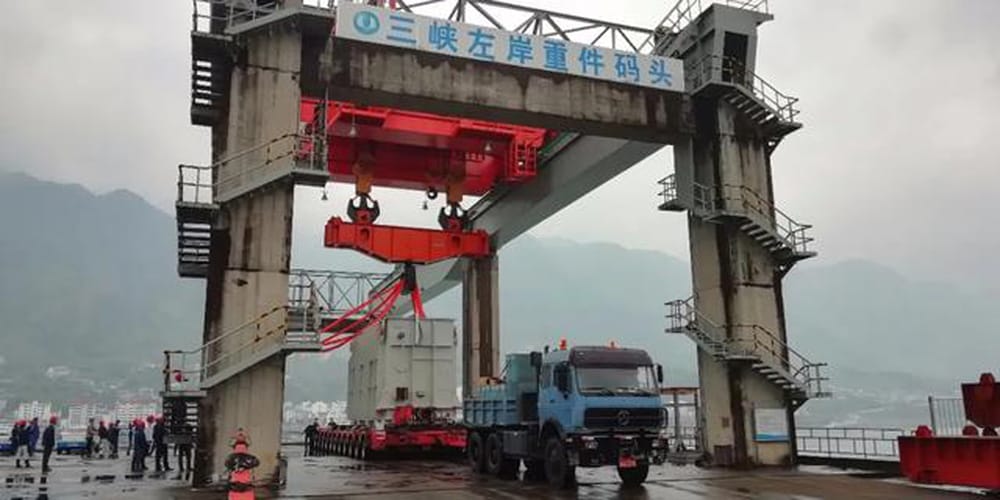
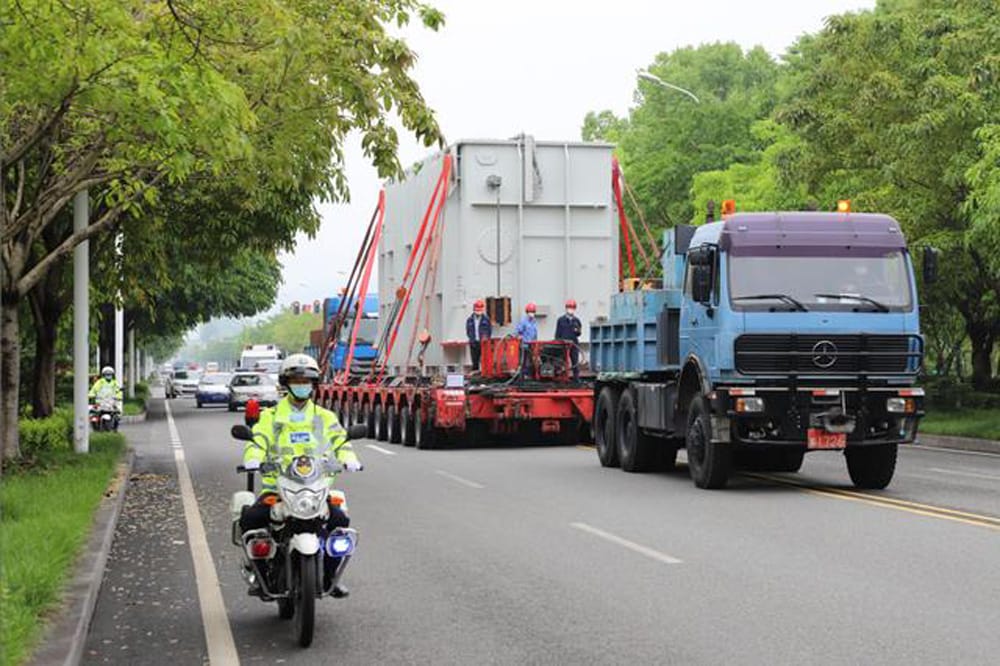
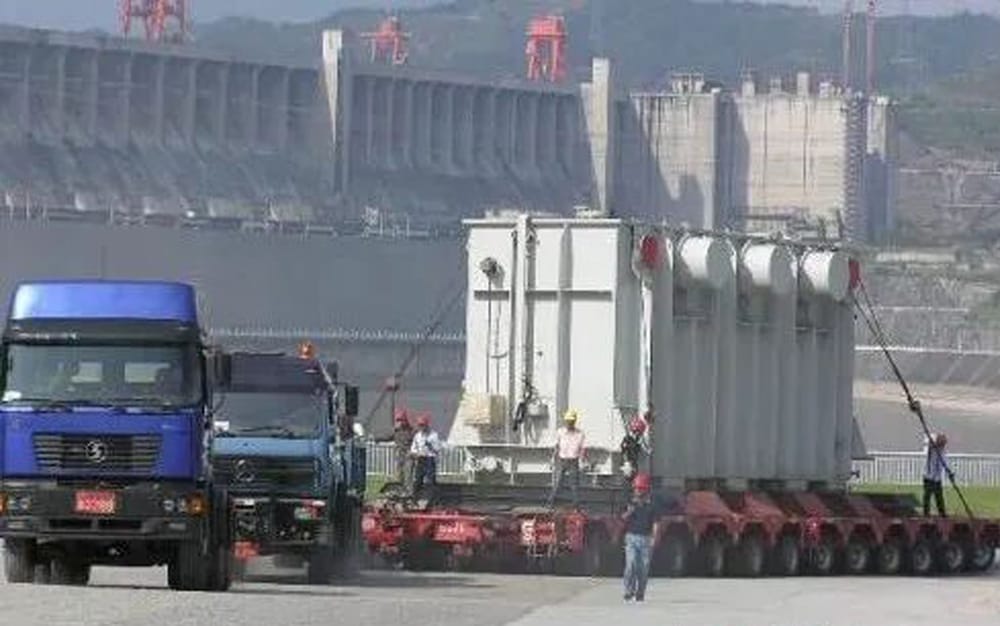
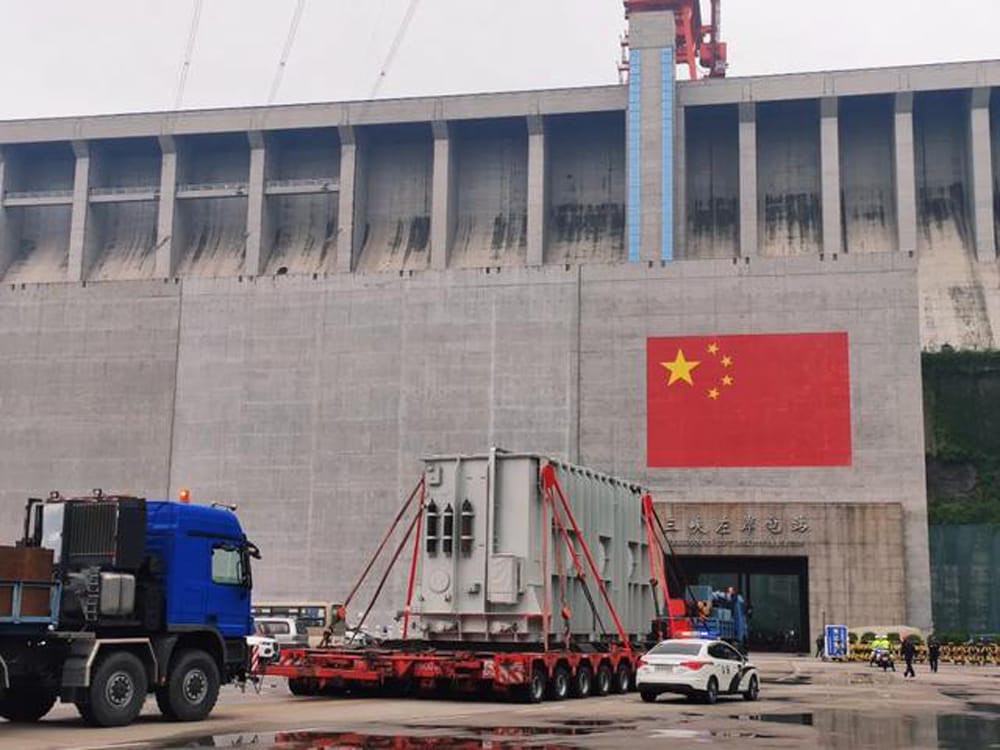
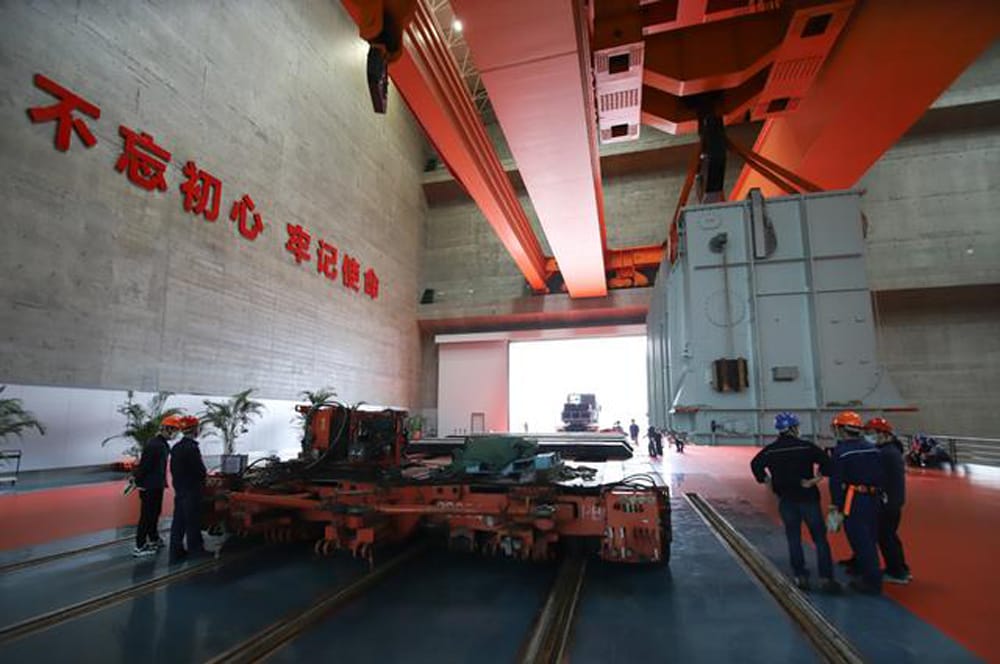
The infrastructure that made this possible — the heavy-cargo port, the purpose-built road, the floating crane — continues to serve the Three Gorges site today. In 2020, that logistics chain was put to use again when a 500 kV spare main transformer was transported to the Three Gorges Left Bank Power Station: offloaded at the heavy-cargo wharf by floating crane, escorted by road convoy to the station entrance, transferred inside by the station’s overhead travelling crane onto a rail-mounted vehicle, and moved into position in the transformer hall. It was, in other words, precisely the operation that Chongqing’s planners had designed for thirty years earlier — and it worked exactly as intended.
The Chongqing ABB Transformer Factory (now the Hitachi Energy) that emerged from this process today produces 30 million kVA annually — six times its original design capacity, and ABB’s largest production base in the world. The supply chain and manufacturing ecosystem it anchored in Chongqing and the broader Sichuan Basin has continued to grow.
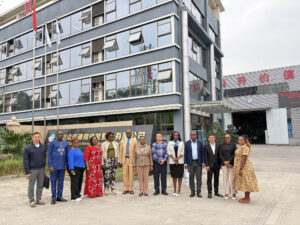
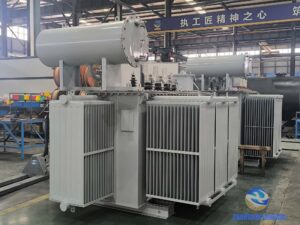
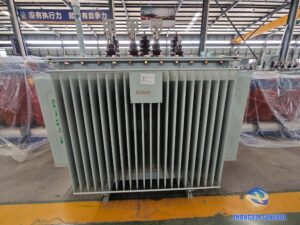
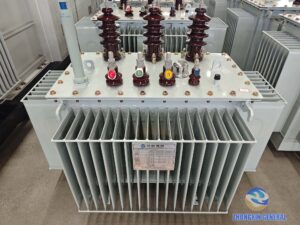
Sichuan Zhongxin General Electric Energy Co., Ltd. is part of that ecosystem — a Chengdu-based manufacturer of oil-immersed and dry-type transformers, medium-voltage switchgear, and prefabricated substations from 0.4 kV to 138 kV, with rated capacity from 30 kVA to 100 MVA. The company has delivered complete power infrastructure to industrial zones, port substations (including Kazakhstan’s Aktau container hub on the Trans-Caspian route), hospital campuses, LNG facilities, and power station projects across Africa and Central Asia.
→ View Zhongxin General’s Project Cases → Contact Zhongxin General’s Sales Team