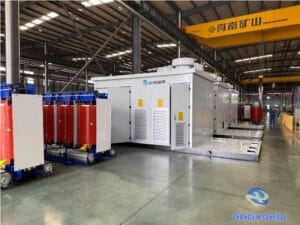
Based on the method disclosed in Chinese patent CN101794973A (2010), this article documents five live distribution transformer replacements carried out by State Grid subsidiaries across five provinces — with zero customer downtime.
Introduction
Replacing a distribution transformer has traditionally required a planned outage. Customers — whether homes, factories, or hospitals — wait 4 to 6 hours while crews disconnect the old unit, install the new one, and restore power.
Chinese grid operators have developed a method that eliminates this outage entirely. The technique, first formally described in Chinese patent CN101794973A (2010), uses a mobile box‑type substation as a temporary bypass supply. The old transformer is isolated and removed while connected loads never lose power. The new transformer is then installed, energized, and the mobile unit withdrawn. From the customer’s perspective, nothing happened.
While the patent explains the principle, this article documents five real‑world implementations carried out by State Grid subsidiaries between 2020 and 2026. All cases are compiled from publicly available reports by the respective local grid companies. To my knowledge, this is the first time such a detailed set of Chinese field cases has been presented in English.
Source note: The five cases below are summarized from official releases by State Grid subsidiaries in Zhejiang, Sichuan, Jiangsu, Fujian, and Shaanxi provinces (2020–2026). Images are credited to the original reporting sources.
Why This Method Matters
Every transformer has a service life and a capacity ceiling. As electricity consumption rises — driven by industrial growth, EV charging, and electrification of heating — many distribution transformers run at or above rated load.
The conventional solution is a planned interruption. For residential areas this is an inconvenience; for factories it means halted production lines; for hospitals and data centers it is simply unacceptable.
The “zero‑downtime” or “live replacement” method directly addresses this constraint. It does not require any change to the transformer technology being installed — standard oil‑immersed or dry‑type units are used. What changes is the sequencing of the operation and the addition of one key piece of equipment: a mobile box‑type substation.
The Core Method (Based on CN101794973A)
The patent describes a three‑step process:
- Install insulated cables at the high‑voltage and low‑voltage sides of the transformer to be replaced, connect them to a mobile transformer used for temporary power supply, and close the breakers to form an all‑insulated bypass system in parallel with the original transformer.
- Disconnect the original transformer and let the bypass system carry the full load. Replace the old transformer with a new unit.
- After the new transformer operates normally, disconnect and remove the bypass system.
In field practice, the operation proceeds through five phases:
- Phase 1 – Positioning: The mobile substation vehicle is placed at the site, and flexible HV/LV cables are laid.
- Phase 2 – Live connection: Crews in insulated bucket trucks make live connections from the overhead line to the mobile substation.
- Phase 3 – Load transfer: The mobile substation is energized and takes over the load. The original transformer is isolated.
- Phase 4 – Physical swap: The old transformer is removed and the new unit installed (using a crane).
- Phase 5 – Restoration: The new transformer is energized, load is transferred back, and the mobile substation is withdrawn.
The entire operation keeps customers supplied without interruption.
Five Real‑World Cases
Case 1 – Xinchang County, Zhejiang Province (December 2020)
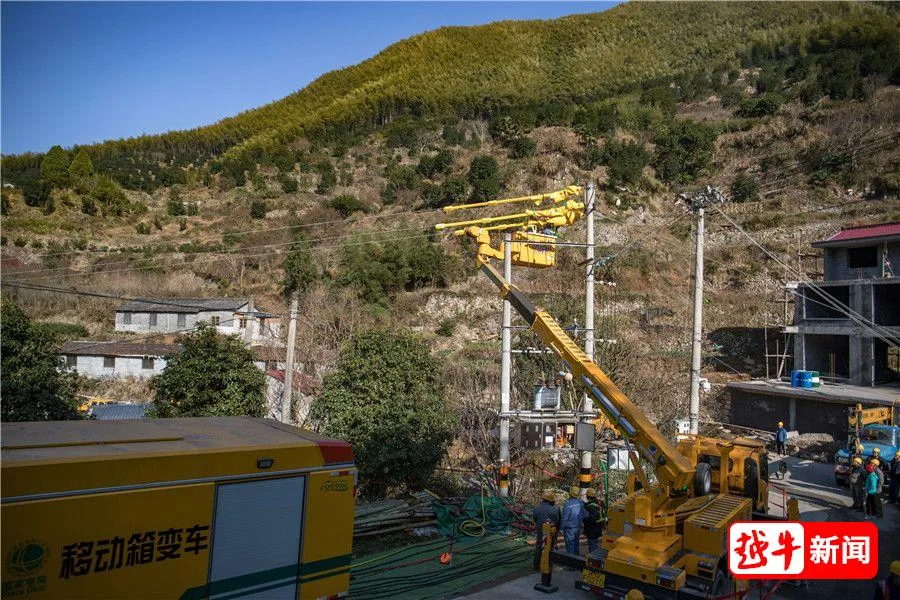
Image source: Shaoxing News Network / State Grid Xinchang County Supply Company
- Operator: State Grid Xinchang County Supply Company
- Location: Sanjiing Village, Xiaojiang Town, Xinchang County
- Original transformer: 100 kVA (overloaded, causing intermittent faults)
- Replacement transformer: 400 kVA
- Customers served: 80+ residential households
- Duration: ~2 hours
- Significance: First documented deployment of this technique in Xinchang County
Source: Shaoxing News Network (绍兴网)
Case 2 – Shuangliu District, Chengdu, Sichuan Province (June 2023)
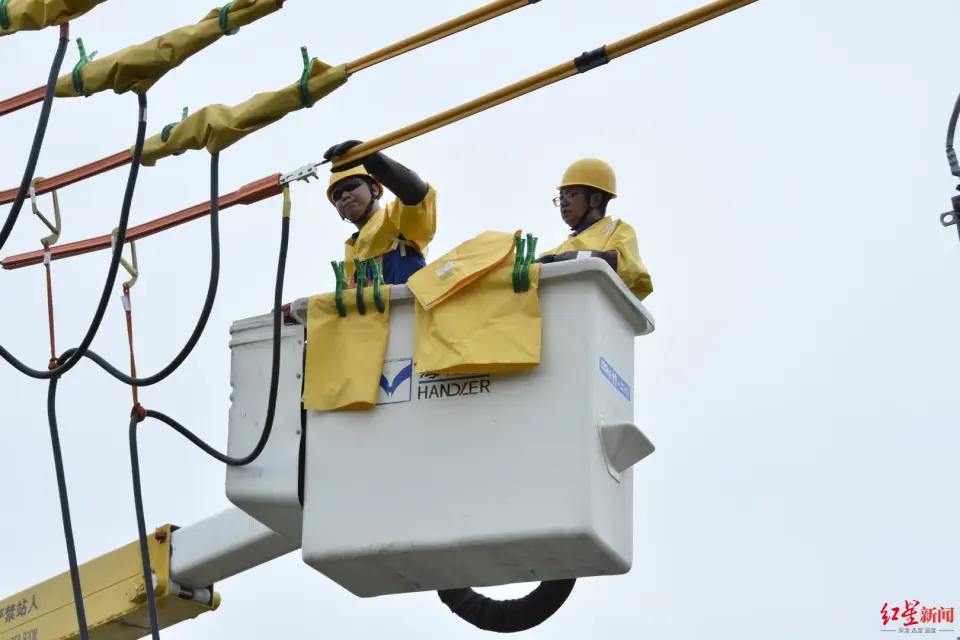
Image source: Chengdu Business Daily · Red Star News / State Grid Chengdu Shuangliu
- Operator: State Grid Chengdu Shuangliu Supply Company
- Location: Dajing Community, Jiujiang Street, Shuangliu District
- Original transformer: 50 kVA (leaking, overloaded – emergency condition)
- Replacement transformer: 200 kVA
- Customers served: 100+ residential households
- Significance: First implementation by any district‑level grid company in Sichuan Province
This case combined an emergency condition (oil leak due to overloading) with a zero‑downtime methodology. Rather than accept the inevitable outage, the team deployed the mobile substation bypass approach.
Source: Chengdu Business Daily · Red Star News via Tencent News
Case 3 – Wuxi Economic Development Zone, Jiangsu Province (March 2023)
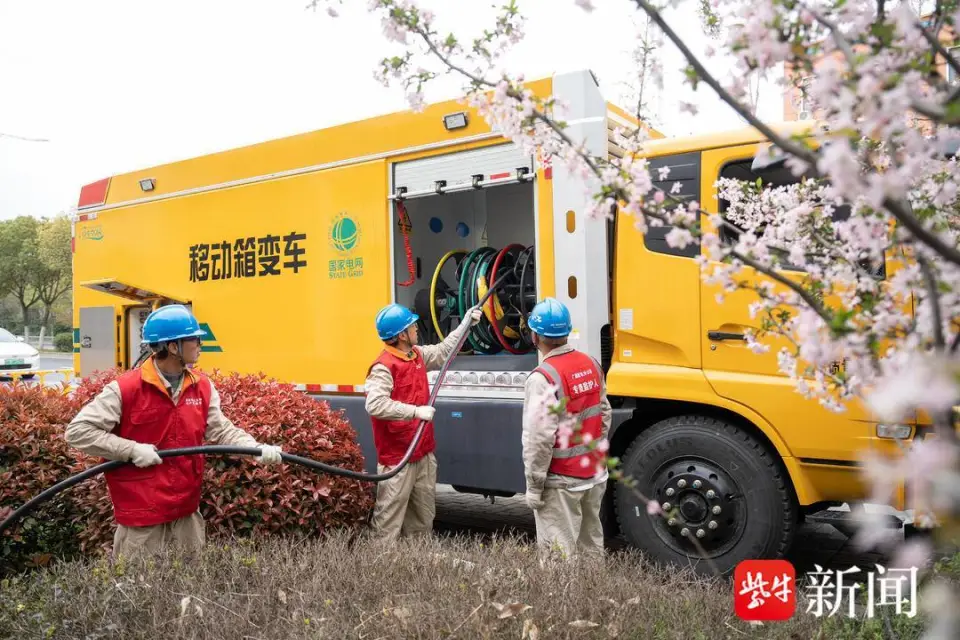
Image source: Yangtze Evening News · Purple Cow News / State Grid Wuxi
- Operator: State Grid Wuxi Supply Company, No‑Outage Operations Centre
- Location: Fenghua Line No. 21, Songxing Electronics Transformer Bay, Wuxi Economic Development Zone
- Network voltage: 20 kV (non‑standard; most Chinese networks are 10 kV)
- Customers affected if stopped: Industrial park including Japanese‑owned electronics manufacturers, medical device manufacturers, and 50+ additional users
- Duration: 5 hours
- Significance: First documented use of a 20 kV‑capable mobile box‑type substation in China
This is the most technically complex of the five cases. The transformer bay operated at 20 kV. No commercially available mobile substation at the time was capable of this voltage. The Wuxi team developed a purpose‑built unit with 20 kV / 10 kV intelligent switchable HV input and a boost capability — a domestic first.
Source: Yangtze Evening News · Purple Cow News via Tencent News
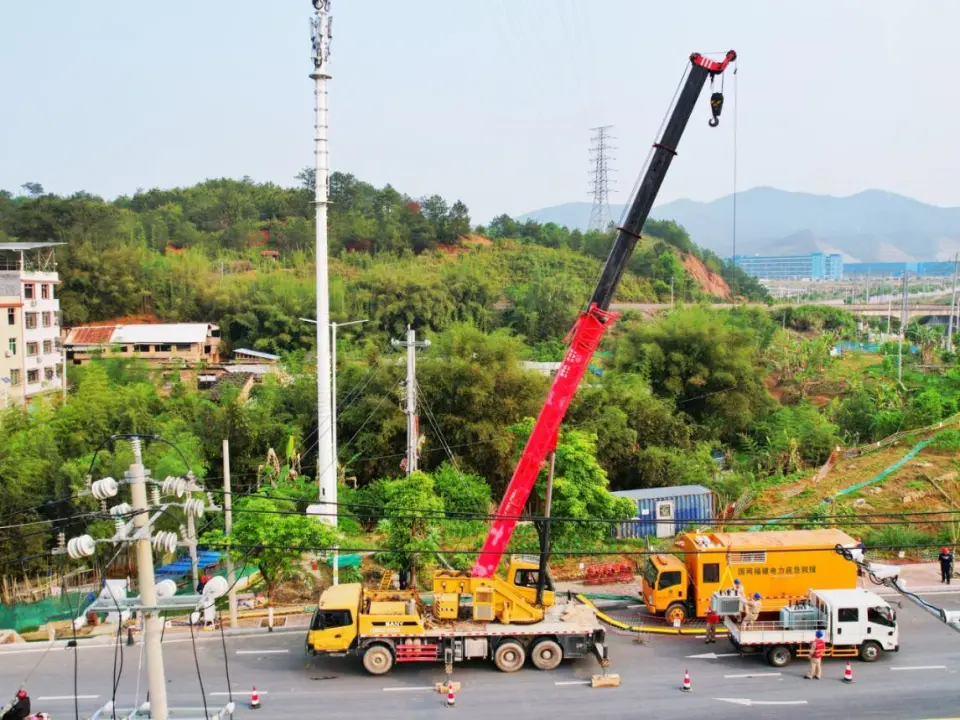
Case 4 – Yongding District, Fujian Province (April 2024)
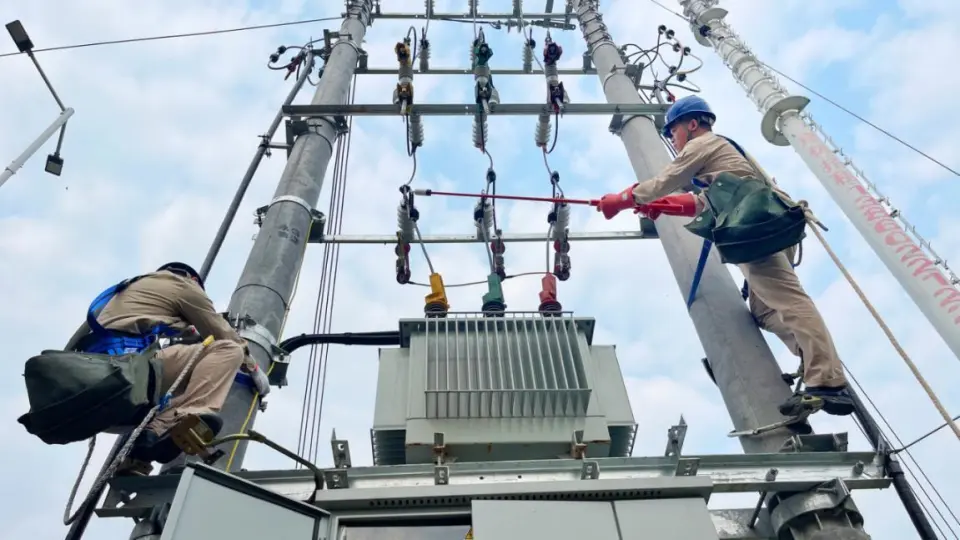
Image source: China Daily Chinese Network / State Grid Yongding District
- Operator: State Grid Yongding District Supply Company
- Location: Shuanggu Road, Sanfeng Village, Chengjiao Town, Yongding District
- Original transformer: 200 kVA (pole‑mounted on double‑pole structure)
- Replacement transformer: 400 kVA
- Customers served: 100+ residential households
- Duration: 5+ hours
- Significance: First implementation in Yongding District
The Yongding case is notable for its physical complexity: a double‑pole structure required a larger crane radius and more precise lifts. The new 400 kVA unit was transported on a dedicated flatbed and lifted directly to mounting height.
Source: China Daily Chinese Network via Tencent News
Case 5 – Qianyang County, Baoji, Shaanxi Province (April 2026)
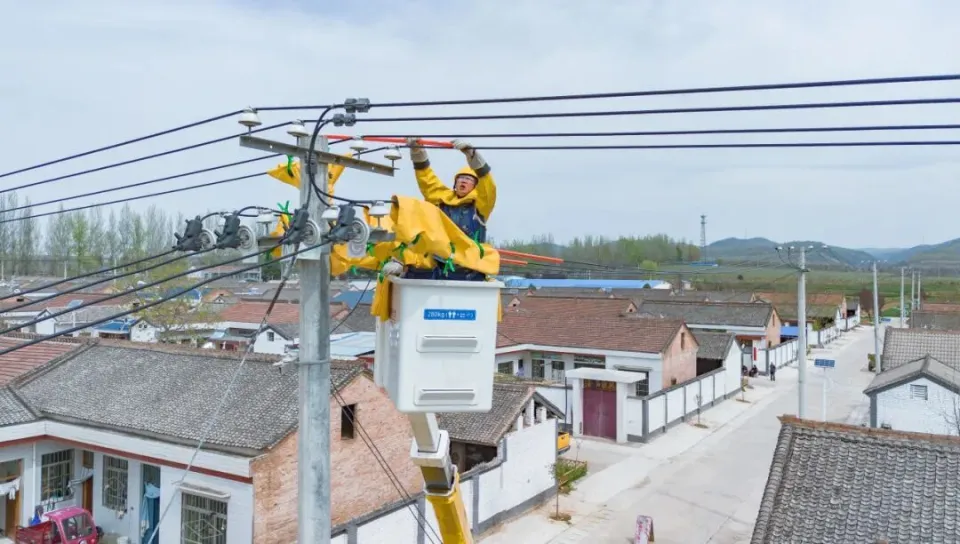
Image source: Northwest Information News / State Grid Baoji
- Operator: State Grid Baoji Supply Company / State Grid Qianyang County Supply Company
- Location: Zhangjiatian Town, Qianyang County, Baoji
- Original transformer: 100 kVA
- Replacement transformer: 200 kVA
- Customers served: 104 residential households
- Duration: ~8 hours (09:30 to 17:00)
- Significance: First implementation by State Grid Baoji Supply Company
This most recent case introduced a synchronization device to manage the parallel connection of the generator vehicle with the grid supply, automatically verifying phase sequence, voltage, frequency, and phase angle before closing the parallel connection — eliminating out‑of‑phase switching transients.
Source: Northwest Information News via Tencent News
Equipment Required
Every one of the five cases required the same three categories of specialist vehicle on site:
- Mobile box‑type substation vehicle – a complete distribution transformer and associated switchgear mounted on a road‑going chassis, with flexible HV/LV cable connections. Typical operating voltage is 10 kV input / 0.4 kV output; the Wuxi case required a purpose‑built 20 kV unit.
- Insulated aerial work platform (insulated bucket truck) – required for all live‑line connection work at overhead conductors.
- Crane vehicle – required for the physical removal of the old transformer and installation of the new unit. Pole‑mounted distribution transformers in the 100–400 kVA range typically weigh between 400 and 1,200 kg.
In the Yongding case, a fourth vehicle — a flatbed transport for the new transformer — was also present on site.
What This Means for Transformer Procurement
The adoption of live replacement methodology has a direct implication for transformer specifications. When zero‑downtime replacement is possible, capacity upgrades can be carried out more frequently and in smaller increments, since each upgrade no longer carries the cost and disruption of a planned outage.
From a procurement perspective, this creates demand for a broader range of transformer ratings — particularly in the 200–630 kVA range — and for transformers that are compatible with the connection interfaces used by mobile substation equipment.
Conclusion
The zero‑downtime transformer replacement method documented here is not experimental. It has been implemented multiple times by State Grid subsidiary companies across China, at different network voltages, in residential, industrial, and mixed‑use supply contexts. The technique is spreading because the economics are compelling: the cost of deploying specialist equipment for a few hours is substantially lower than the cost of a planned outage for most commercial and industrial customers.
The key enabler is the mobile box‑type substation — a piece of equipment that the electrical industry has had available for decades, now being applied in a systematic way to one of distribution grid maintenance’s most disruptive routine tasks.
What this method does not require is any special modification to the permanent transformer being installed. The distribution transformer at the centre of the operation — whether oil‑immersed or dry‑type, whether 100 kVA or 630 kVA — is a standard unit. What changes is the operational context: it must be ready to energize cleanly into a network that has been live throughout the replacement window.
That operational context is increasingly the normal context. As live replacement methodology spreads through China’s distribution grid and begins to appear in international markets, the manufacturers who understand it — and who build transformers and mobile substation equipment to the connection interfaces and reliability standards it demands — are the ones who will be specified into these projects.
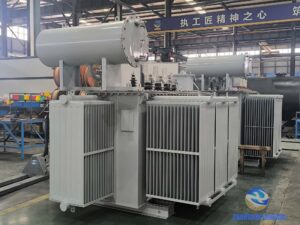
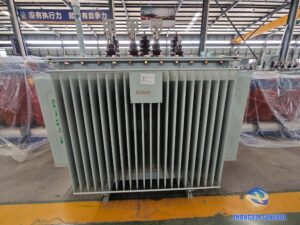
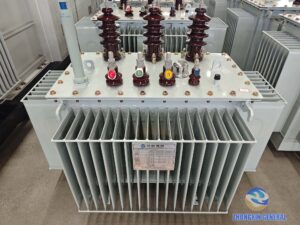
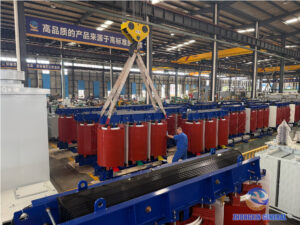
Zhongxin General (Sichuan Zhongxin General Electric Energy Co., Ltd.) manufactures oil‑immersed and dry‑type distribution transformers across the full range of ratings used in the cases documented here, from 100 kVA to well above 400 kVA, at standard 10 kV and non‑standard voltage levels. Our prefabricated box‑type substation products include mobile and transportable configurations suitable for use as temporary bypass supply in live replacement operations.
For project inquiries, please email to Kevin by below address or reach out via WhatsApp.