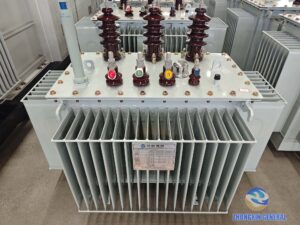
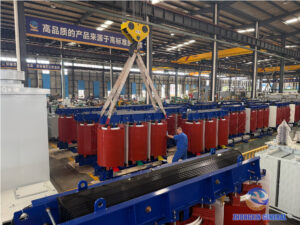
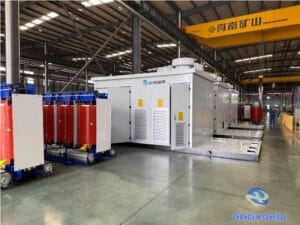
This practical maintenance guide covers common failure triggers, symptom identification and standardized layered troubleshooting workflows for dry‑type epoxy‑cast and oil‑immersed power transformers. It includes quick emergency repair cheat‑sheet, safety rules and daily prevention advice for field power‑distribution operation & maintenance personnel.
ntro Dry‑type and oil‑immersed transformers serve as core power‑supply equipment within power distribution systems. Their faults are often concealed, develop rapidly and can cause severe damage. Minor unresolved defects may trigger overheating tripping, insulation breakdown, winding burnout, large‑scale power outages and substantial economic losses.
According to operation and maintenance statistics, around 80 % of transformer faults can be identified via visual inspection, temperature measurement and electrical tests, without complete unit disassembly. In field practice, disorganized maintenance workflows and confusion over the difference between dry‑type and oil‑immersed transformer failures frequently lead to inefficient troubleshooting. You can find more technical analysis in our industry insights library.
Combined with structural differences and real‑world operation experience, this guide sorts out high‑frequency fault triggers, typical symptoms and standardized step‑by‑step inspection workflows to help maintenance crews rapidly detect and eliminate defects.
1. Fundamental Fault Differences Between Dry‑Type and Oil‑Immersed Transformers
Due to different cooling and insulating media, dry‑type and oil‑immersed transformers show distinct fault patterns and different inspection priorities.
Outdoor exposure, rainwater intrusion, short‑circuit caused by small animals, long‑term heavy‑load operation
Supplementary note: Dry‑type transformers rely on air cooling and are mostly deployed indoors; faults mainly stem from environmental conditions, heat dissipation problems, insulation damage and poor connections. Oil‑immersed transformers use insulating oil for both cooling and insulation, widely applied for high‑power outdoor distribution, and tend to develop latent internal defects. Review our case studies to see how these fault characteristics appear in real‑world project scenarios.
2. High‑Frequency Faults, Symptoms and Troubleshooting for Dry‑Type Transformers
Dry‑type transformers are highly environment‑sensitive. Most failures originate from environmental influences, abnormal heat dissipation and insulation deterioration.
2.1 Multi‑Point Core Earthing (Core‑to‑Earth Insulation Drops Near Zero)
Symptoms: Increased no‑load loss, local overheating on core housing; core‑to‑earth insulation resistance close to zero; protection devices prone to mis‑operation and tripping. Causes: Burrs on core laminations, bridging metallic debris; aged or damaged spacer insulating gaskets; conductive metal fragments connecting core and clamping plates.
Troubleshooting Steps:
Measure core‑to‑earth insulation with a 2500 V megohmmeter; values below 10 MΩ indicate a fault.
Symptoms: Hissing or cracking discharge noise during operation; noise worsens under humid weather; carbonized creepage marks on insulation surfaces; discharge spots observable at night; large fluctuation of insulation resistance; tripping easily when load varies. Causes: Dust deposits absorb moisture and form conductive paths; mis‑aligned high‑voltage components cause concentrated electric‑field stress; gaps created by poor connector processing produce gap discharge.
Troubleshooting Steps:
Power off and check windings and terminals for burn‑in or creepage traces.
Measure high‑ and low‑voltage side insulation resistance; readings lower than 80 % of factory test values suggest insulation degradation.
Carry out partial‑discharge test: partial‑discharge level ≤10 pC for equipment ≤35 kV.
Purge dust with dry compressed air and perform dehumidification drying.
If faults persist, replace insulators and readjust component installation clearances.
Dry‑type transformer inside cabinet with temperature monitoring controller displaying winding temperature 26.8 °C
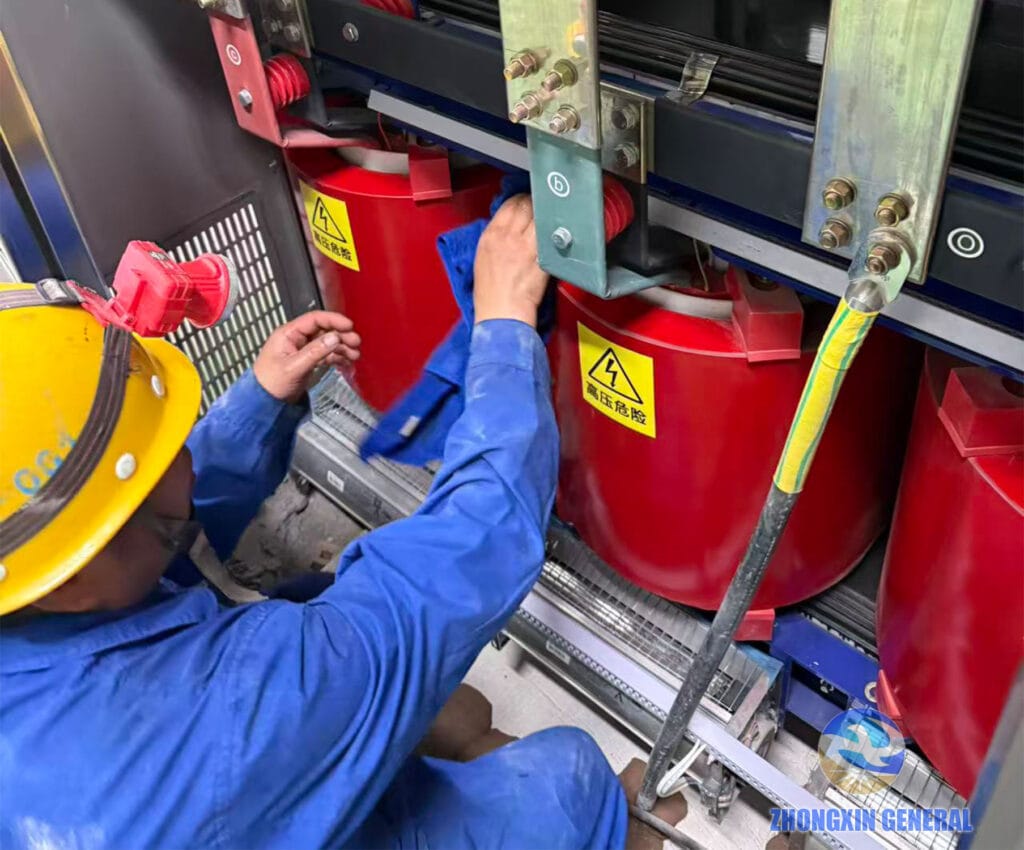
Field operator cleans and inspects winding parts of dry‑type transformer
2.3 Excessive Temperature Rise & Overtemperature Alarm (High‑Incidence Fault)
Symptoms: Overtemperature alarm triggered by temperature controller; winding temperature difference among three phases>10 ℃; fan malfunctions; burnt smell detected; obvious hot‑spots captured via infrared thermal imaging. Causes: Overloading, unbalanced three‑phase loads; dust‑clogged air ducts, defective cooling fans; loose tap‑changer bolts; high ambient temperature and poor ventilation inside distribution room; faulty temperature‑sensing probes or temperature controller.
Troubleshooting Steps:
Check three‑phase current readings and control load‑unbalance ratio.
Remove dust from air ducts and test cooling‑fan performance.
Take infrared temperature readings and calibrate temperature‑sensing probes.
Locate hot‑spots by infrared thermal imaging.
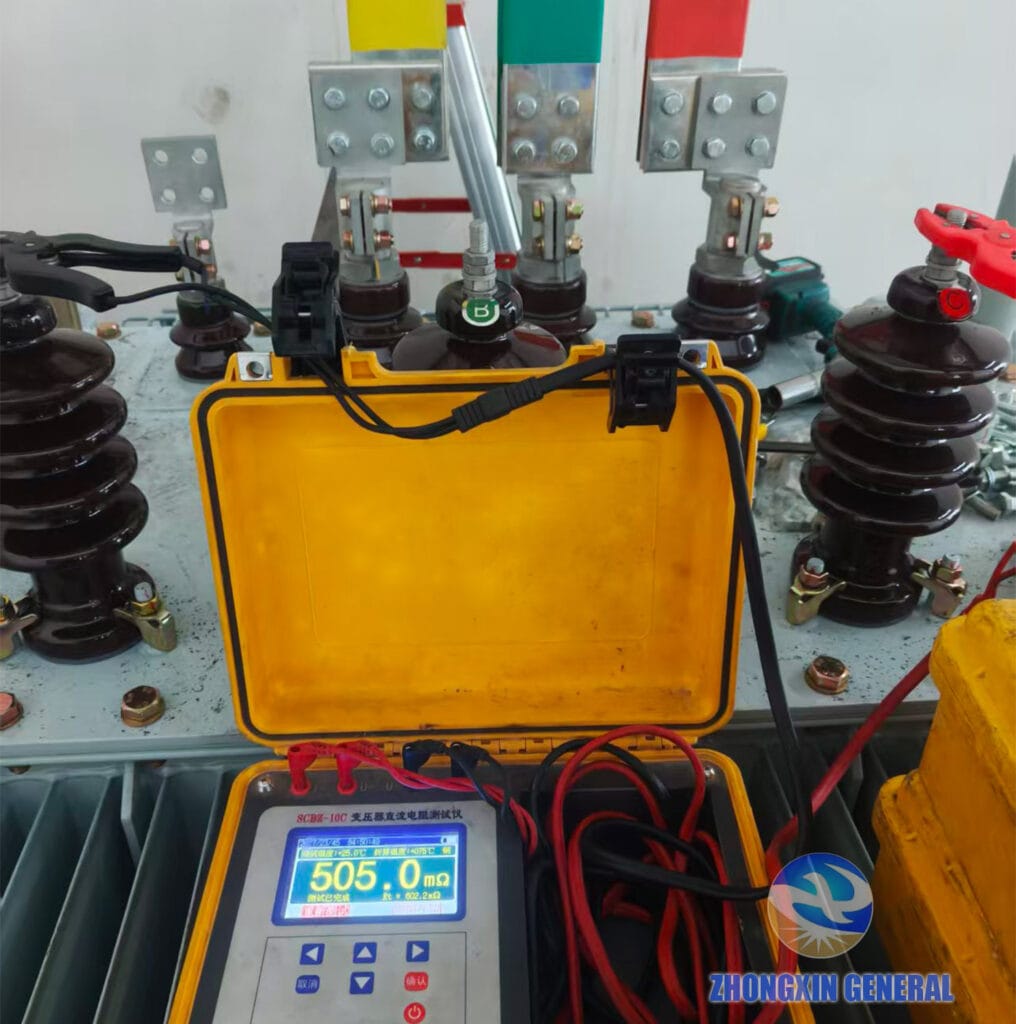
Fasten tap‑changer bolts and re‑measure DC resistance.
Symptoms: Oxidized and blackened connectors; unbalanced three‑phase DC resistance; heating aggravates with rising load, resulting in contact‑related tripping. Causes: Low‑quality connector materials, oxidized contact surfaces; bolt loosening caused by vibration and thermal expansion‑contraction cycles.
Troubleshooting Steps:
Locate hot terminals by live‑line infrared inspection.
Power off and inspect bolts and gaskets; remove oxidation from conductor surfaces.
Test contact resistance.
Polish contact surfaces, fasten bolts according to specified torque and replace aged gaskets.
2.5 Excessive Vibration‑Noise & Malfunctioning Temperature‑Control System
Abnormal Roaring & VibrationSymptoms: Harsh noise, cabinet base resonance.Causes: Loose clamping‑plate and pressure‑plate bolts; harmonic resonance; missing or damaged shock‑absorbing pads.Troubleshooting: Fasten bolts; replace broken shock‑absorbing pads; install filter devices under severe harmonic conditions.
Faulty Temperature‑Control with False AlarmsSymptoms: Abnormal temperature readings, disordered fan start‑stop logic, missing or false overtemperature alerts.Causes: Displaced / aged probes, loose wiring connections, defective temperature‑controller hardware.Troubleshooting: Inspect probe wiring and reset parameters; cross‑verify readings with infrared measurement; replace defective components directly.
Supplementary note: Aged & damaged winding insulation: persistent discharge noise, excessive partial discharge readings, cracked or peeling insulation. Usually caused by high‑temperature corona, collision‑induced micro‑cracks or long‑term damp aging. Detect by partial‑discharge and ratio‑test. Minor defects can be fixed via reinforcement and dehumidification; severe cases require factory repair.
3. High‑Frequency Faults, Symptoms and Troubleshooting for Oil‑Immersed Transformers
Supported by DGA oil‑chromatography analysis, oil‑immersed transformer faults are divided into thermal faults, discharge faults and mechanical / leakage faults.
3.1 Internal Overheating Faults (Low / Medium / High‑Temperature Overheating)
Symptoms: Rising top‑oil temperature, darkened oil color; methane and ethylene concentrations increase in DGA without acetylene; hot‑spots appear externally on bushings and tap‑changers. Causes: Low‑temp: overload & three‑phase load imbalance; medium‑temp: worn tap‑changer contacts, loose connections; high‑temp: short‑circuited core laminations, multi‑point core earthing.
Troubleshooting Steps:
Readjust unbalanced loads; find external hot‑spots by infrared scanning.
Judge overheating severity level by DGA chromatogram.
If no external abnormality found, perform core lifting inspection on tap‑changer, leads and iron core.
On‑site cabinet interior view of heavily dust‑polluted oil‑immersed power transformer needing maintenance
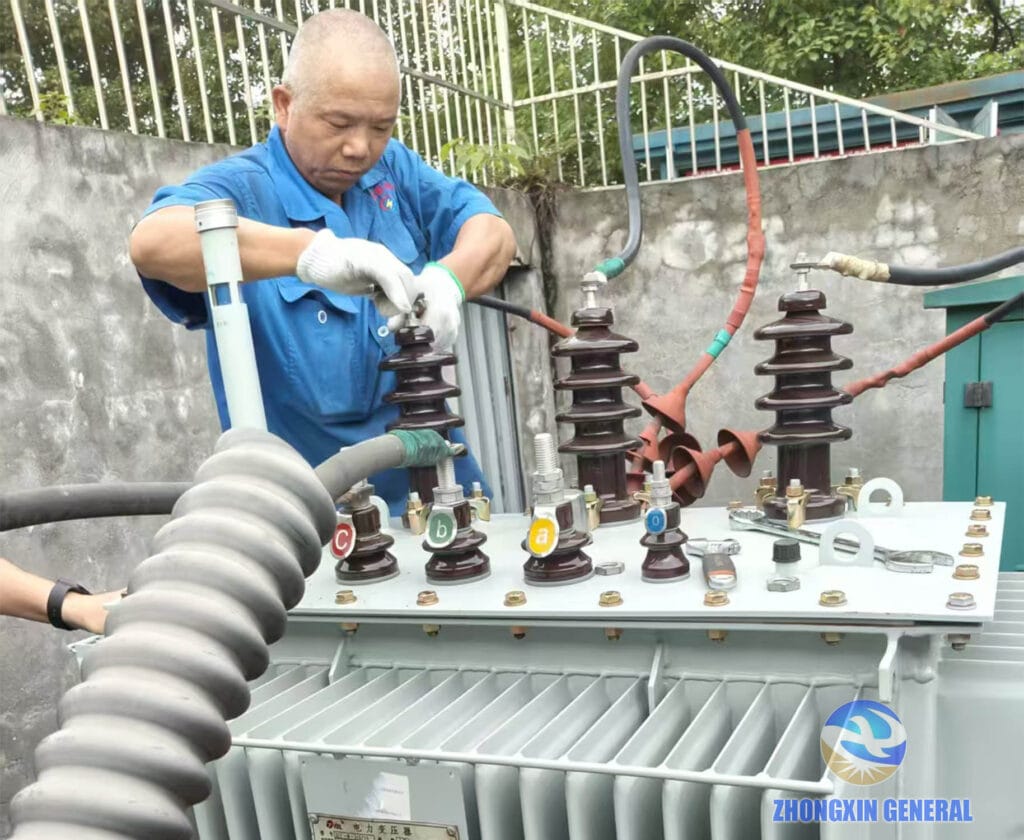
Repair technician carries out connection overhaul on bushing of outdoor oil‑immersed transformer
Oil seepage at flange and bushing root, decreasing oil‑level; fast color‑change of breather silica‑gel; turbid oil with impurities; unqualified breakdown voltage, moisture content or acid‑value in oil tests. Causes: Aged sealing gaskets, weld‑joint leakage; rainwater entering oil tank; high‑temperature accelerating oil oxidation and degradation.
Troubleshooting Steps:
Locate all leakage points.
Test oil sample for moisture, breakdown‑voltage and chromatogram.
Replace sealing components and repair leaking weld points.
Apply vacuum oil‑filtration for mild degradation; replace oil completely under severe conditions.
3.4 Gas‑Relay Protection Activation
Symptoms:Light gas relay: internal gas generation, abnormal DGA readings. Heavy gas relay: internal short‑circuit arc, direct equipment tripping. Causes: Oil‑gas decomposed by overheating, arc‑related faults, air intake or oil leakage.
Troubleshooting: When light gas relay triggers, collect gas and oil sample for analysis; only reset protection after fault removal. Once heavy gas relay trips, never attempt forced energization; cut power and perform core‑lifting overhaul.
3.5 Multi‑Point Core Earthing Leading to Overheating
Symptoms: Higher no‑load loss and no‑load current, elevated oil temperature; methane and carbon‑monoxide rise in chromatogram. Causes: Degraded core insulation; multi‑point earthing caused by metallic foreign objects; over‑excitation operation.
Troubleshooting: Measure core earthing current and no‑load loss; judge fault severity via chromatogram; lift core to clear foreign objects and restore core insulation.
Symptoms: Frequent protective tripping, abnormal noise; increased acetylene and ethylene; distorted FRA frequency‑response curve. Causes: Winding displacement caused by electromagnetic force from short‑circuit surges; insulation wear from long‑term vibration; inter‑turn insulation breakdown by over‑voltage.
Troubleshooting Steps:
Apply FRA frequency‑response test to detect winding deformation.
Use DC‑resistance and transformation‑ratio test to check inter‑turn short‑circuit.
Apply withstand‑voltage test to expose hidden insulation defects.
Reinforce for minor damage; send back to factory for winding re‑winding for severe damage.
3.7 Breather & Radiator Malfunction
Symptoms: Higher‑than‑normal oil temperature without overload; caked / discolored silica‑gel; fouled radiator surfaces. Causes: Failed moisture‑absorption and blockage; oil‑dust fouling on radiators; defective oil‑pump or cooling fans.
Troubleshooting: Replace silica‑gel; clean radiators; overhaul oil‑pump and cooling‑fan assemblies.
4. General Standard Multi‑Layer Troubleshooting Workflow (For Both Dry‑Type & Oil‑Immersed Transformers)
General principles: from outside to inside; from simple to complex; live‑line inspection first then power‑off work; prioritize data analysis before disassembly.
Layer 1: Emergency Preliminary Assessment (No Power‑Off, Rapid Screening)
Record fault timestamp, load current, voltage, protection alarms, ambient conditions and historical maintenance logs.
Four‑sense inspection:
Observe: carbonization traces, oil seepage, fan working condition
Listen: distinguish normal hum from discharge / impact noise
Smell: burnt odor or insulating‑oil smell
Touch: only touch housing surface to judge local overheating
Infrared temperature measurement: For dry‑type transformers focus on terminals, windings and iron‑core. For oil‑immersed units inspect bushings, radiators and connectors. Temperature difference>15 ℃ within nearby areas indicates potential fault location.
Layer 2: Power‑Off In‑Depth Visual Inspection
Dry‑type: Purge dust with dry compressed air; fasten all bolts; inspect insulation for cracks or carbonization; verify fan and temperature‑controller performance.
Oil‑immersed: Mark oil‑leakage positions; check breather silica‑gel; look for action traces of gas relay and pressure‑release valve; clean and examine bushing porcelain insulators.
Layer 3: Professional Electrical Tests for Hidden Defects
Common tests for both types
Insulation‑resistance test (2500 V megohmmeter): winding phase‑to‑phase, phase‑to‑earth, core‑to‑earth. Reading ≥1000 MΩ at ambient temperature; values<10 MΩ indicate dampness or insulation damage.
DC resistance test: Three‑phase unbalance ≤2 % for ≤1600 kVA units; ≤1 % for larger‑capacity transformers.
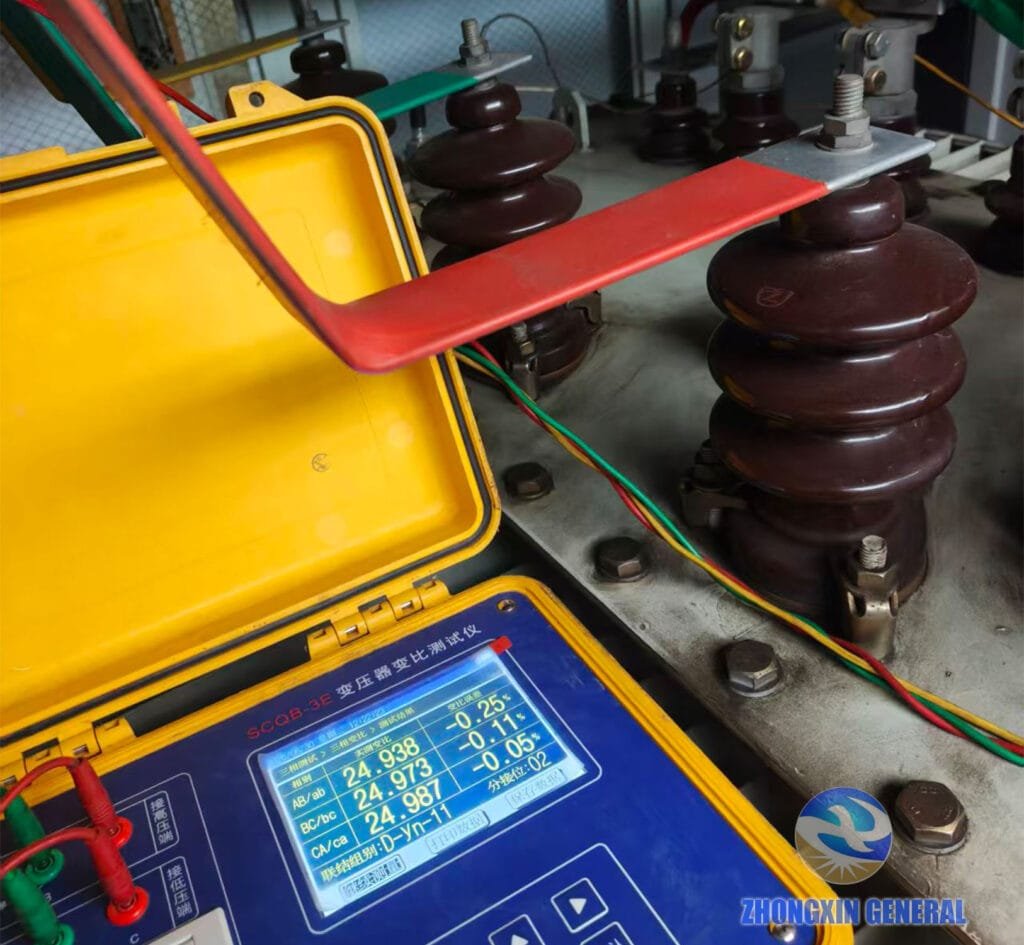
Transformation‑ratio test: Deviation within ±0.5 % across all tap positions.
Additional for dry‑type transformer: Partial‑discharge test. Additional for oil‑immersed transformer: DGA oil‑chromatography & oil‑quality analysis. If winding damage suspected: run FRA winding‑deformation test; adopt three‑ratio method / Duval triangle diagram to classify fault patterns.
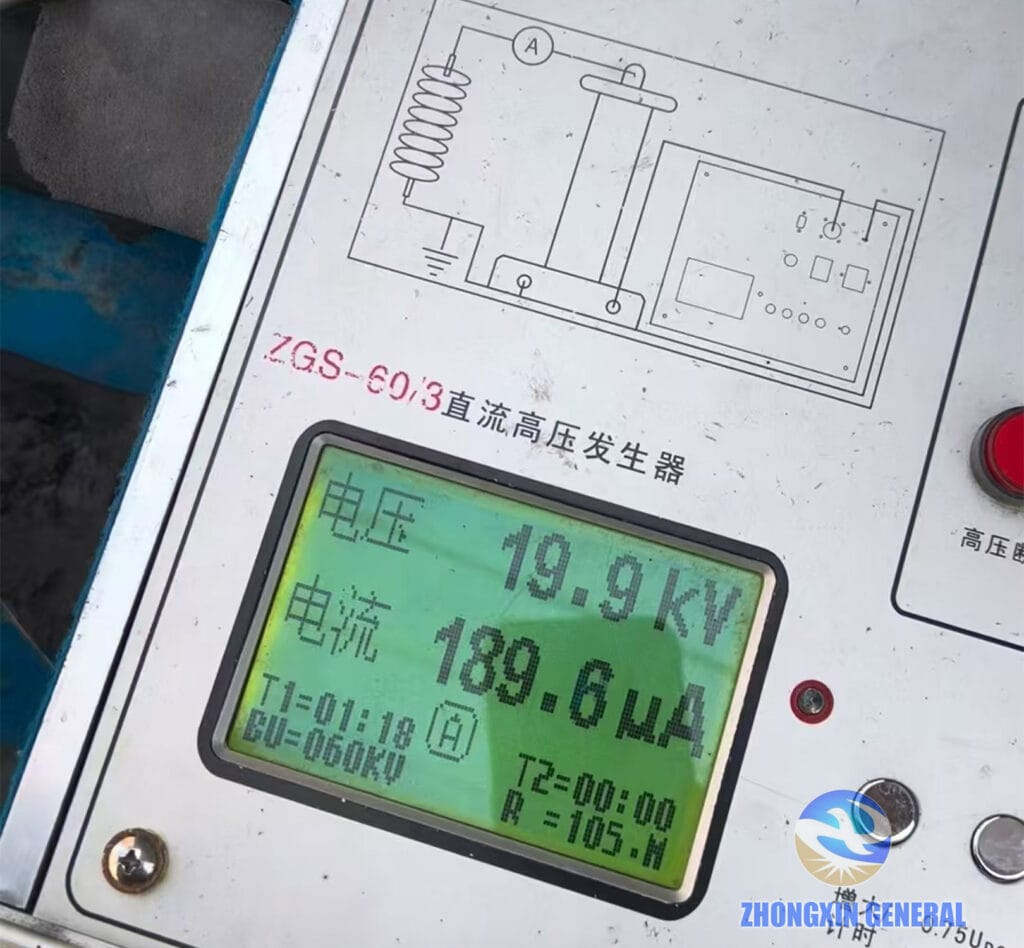
DC high‑voltage generator under transformer test, screen shows test voltage 19.9 kV, leakage current 189.6 μA
Transformer ratio tester in operation, screen shows three‑phase transformation‑ratio test data
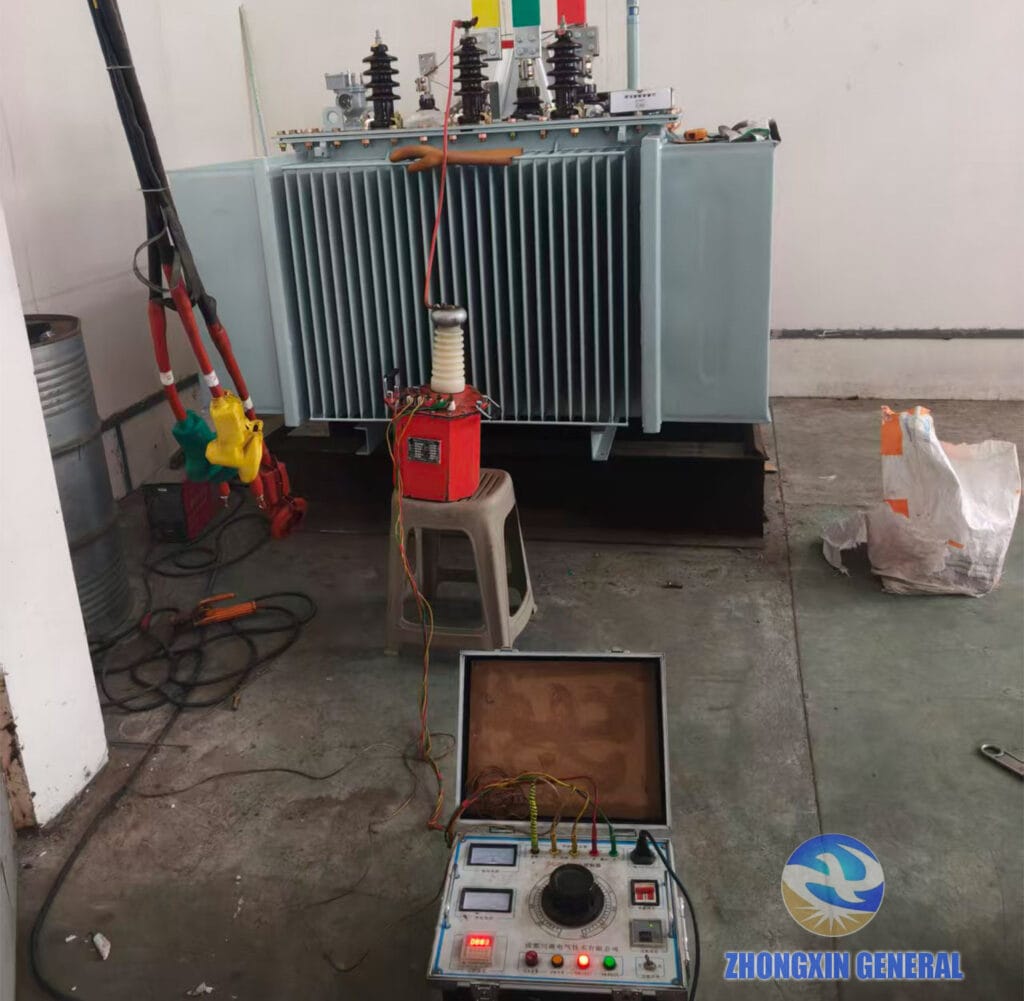
Indoor laboratory test setup for oil‑immersed transformer AC withstand‑voltage test with complete external test equipment layout
FAQ — Frequently Asked Questions for Transformer Troubleshooting
Q1: Can I skip DGA test for oil‑immersed transformer if there are no obvious external faults?
A: No. Many internal latent faults produce no visible external symptoms. DGA chromatogram is critical for detecting early thermal and discharge defects before severe accidents.
Q2: Is partial‑discharge test only needed after obvious discharge noise appears?
A: Not exactly. Partial‑discharge test belongs to preventive test. Even without audible noise, hidden partial‑discharge may already erode insulation, so it shall be included in routine preventive maintenance.
Q3: What should I do if infrared test finds large temperature difference but cannot locate exact fault point?
A: Perform power‑off comprehensive visual inspection plus standard electrical tests: insulation resistance, DC resistance, transformation‑ratio test, to dig out hidden contact‑looseness or insulation degradation.
Conclusion
Transformer troubleshooting should follow the workflow: visual preliminary assessment → power‑off inspection → instrument‑aided testing. For dry‑type transformers focus on dust contamination, heat‑dissipation performance and contact joints; for oil‑immersed units pay close attention to oil quality, sealing performance, core earthing and dissolved gas in oil.
Most transformer failures stem from long‑term accumulated hidden defects. Regular cleaning, bolt tightening, temperature monitoring and preventive electrical tests can effectively mitigate major accidents. This practical guide can serve as operation reference for factory plants, substations and distribution‑network maintenance teams.
These seven practical maintenance tips cover core dimensions including load control, environment management, heat‑dissipation component cleaning, terminal inspection, insulation testing, insulating‑oil care, and record‑keeping. They help operators capture early fault signals and slow insulation aging, maximizing the service life of both dry‑type and oil‑immersed transformers.
Dry‑type and oil‑immersed transformers adopt completely different structures, so generic maintenance standards cannot be applied to both. Many low‑cost, under‑configured transformers on the market lack sufficient insulation and heat‑dissipation design margins, and may suffer frequent overheating and short‑circuit failures even under regular maintenance.
All ZHONGXIN GENERAL dry‑type and oil‑immersed transformers adopt pure‑copper windings and high‑grade silicon‑steel sheets with redundant insulation structures, delivering stronger anti‑aging and anti‑failure performance under full‑load and harsh‑environment working conditions. Browse our full product portfolio on our products page.
We provide customized transformer solutions for photovoltaic power stations, industrial mines, charging‑pile projects and commercial buildings. Our engineers can offer free parameter matching and power‑distribution safety scheme suggestions. Please contact us via official channels for product quotations.
Uganda’s Ambassador to China and her delegation toured our transformer, switchgear and prefabricated substation lines, exploring how Zhongxin General can support Uganda’s growing demand for
Zhongxin General is a China-based manufacturer, factory and supplier of 4000 kVA three-phase outdoor oil-immersed transformers — model S11-4000/38.5 GY, Yd11 vector group, ONAN cooling,
Zhongxin General manufactures S11‑M‑630/10GY 630 kVA three‑phase outdoor oil‑immersed distribution transformer, 10 kV to 400 V, Dyn11 vector group, ONAN cooling. Compliant with GB1094, GB20052‑2024,
ZHONGXIN GENERAL manufactures S11‑M‑250/10 250 kVA three‑phase outdoor oil‑immersed distribution transformer. Rated 10 kV to 400 V, ONAN cooling, compliant with GB1094.1.2‑2013, GB/T 6451‑2023, GB20052‑2024,
Through China’s National Day Golden Week, ZHONGXIN GENERAL’s Chengdu factory keeps production and logistics running for five days — assembling, testing and dispatching transformers, switchgear
Ahead of the National Day holiday, ZHONGXIN GENERAL worked overnight to dispatch prefabricated cabin substations and 35 kV transformers. After the break, the first twenty
Thanks for leaving message to us, in workdays your message will be replied in 24 hours. Please be specific on your needs, so we can reply targetedly.
Send a Message to Us
Thanks for leaving a message to us, we will reply as soon as possible! The more detailed your message is, the more targeted reply we will make!
Get In Touch Now
Thank you for leaving message to us, the more specific and detailed your message is, the more targeted reply you will receive, your message usually will be replied within 24 hours!