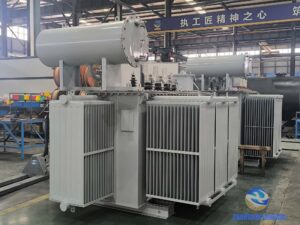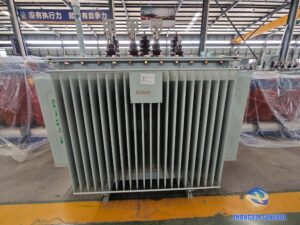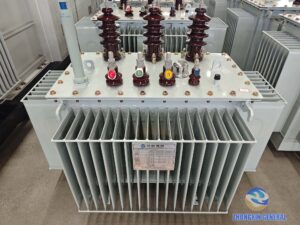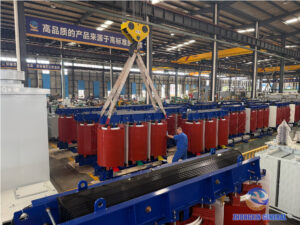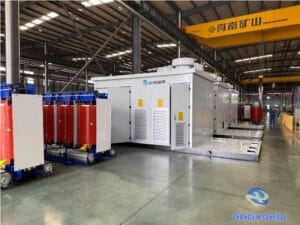
Dry type cast resin transformers have become the mainstream power distribution equipment for hospitals, subways, data centers, commercial complexes and new energy projects due to fire resistance, low noise and zero oil leakage advantages. As a professional Chinese manufacturer featured on our Products page supplying 30kVA to 20000kVA SCB18 series dry transformers up to 35kV voltage level, Zhongxin General shares our full standardized production workflow with real on-site factory photos, covering silicon steel core processing, epoxy winding casting, overall assembly and multi-layer quality testing.
1. Silicon Steel Raw Material Processing (Core Manufacturing Stage)
The iron core determines transformer loss, noise and energy efficiency, so our silicon steel processing workshop implements full traceability quality control from raw feeding to finished core storage.
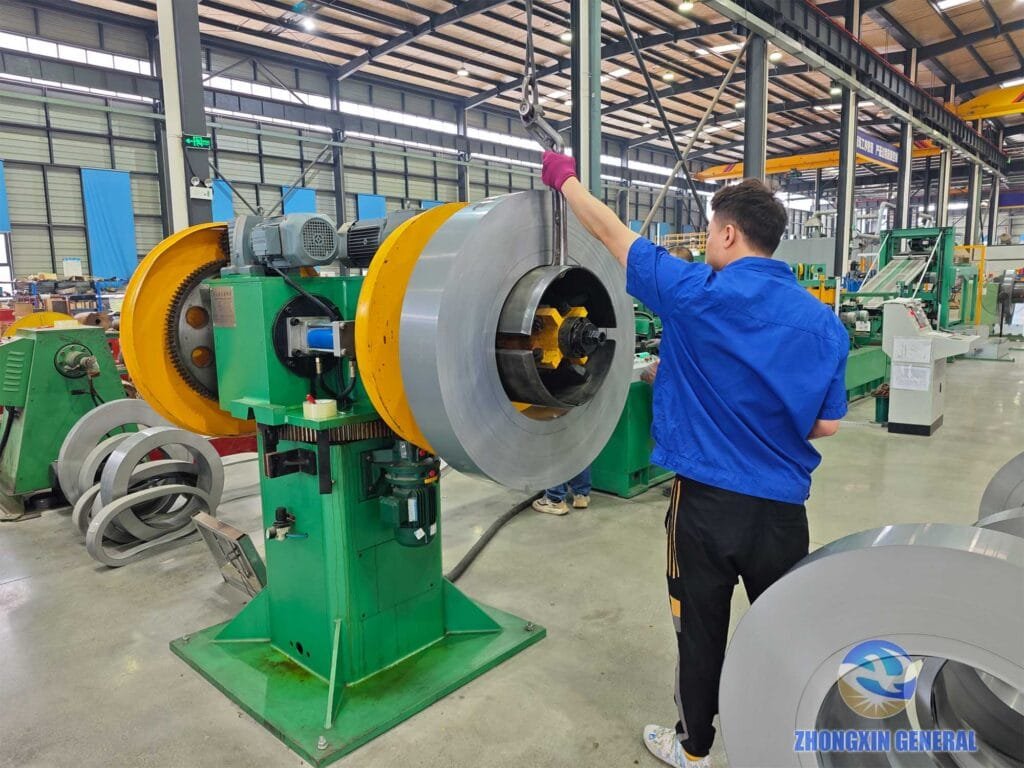
Step 1: Silicon Steel Coil Feeding
Our workshop uses overhead travelling cranes to hoist large silicon steel coils and transport raw materials onto automatic uncoiling equipment, realizing automated raw material feeding without heavy manual handling.
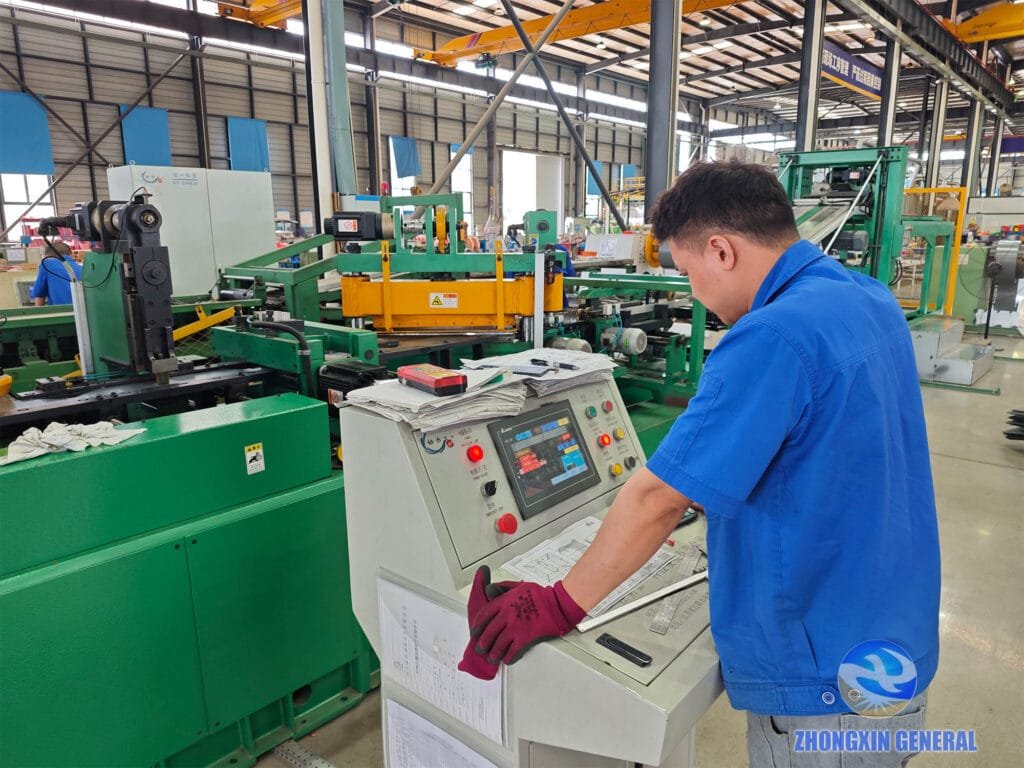
Step 2: CNC Automatic Silicon Steel Cutting
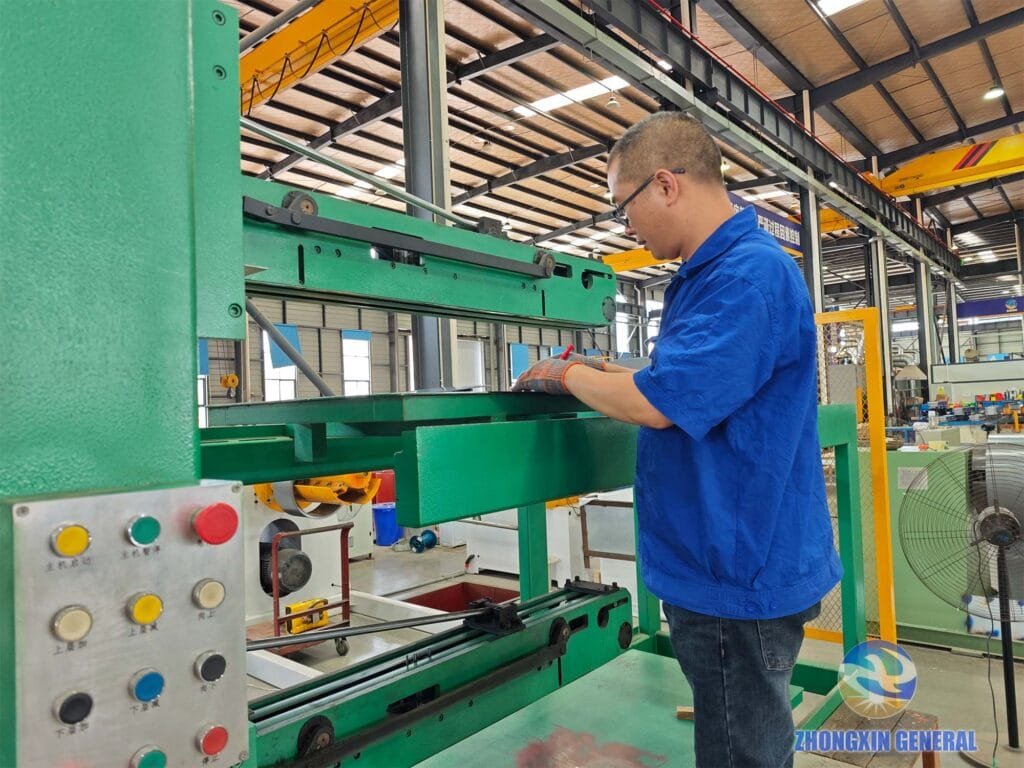
Professional operators calibrate numerical control cutting machines to realize precise automatic shearing of silicon steel sheets, ensuring consistent sheet sizes for subsequent core lamination.
Step 3: Dimensional Sampling Inspection
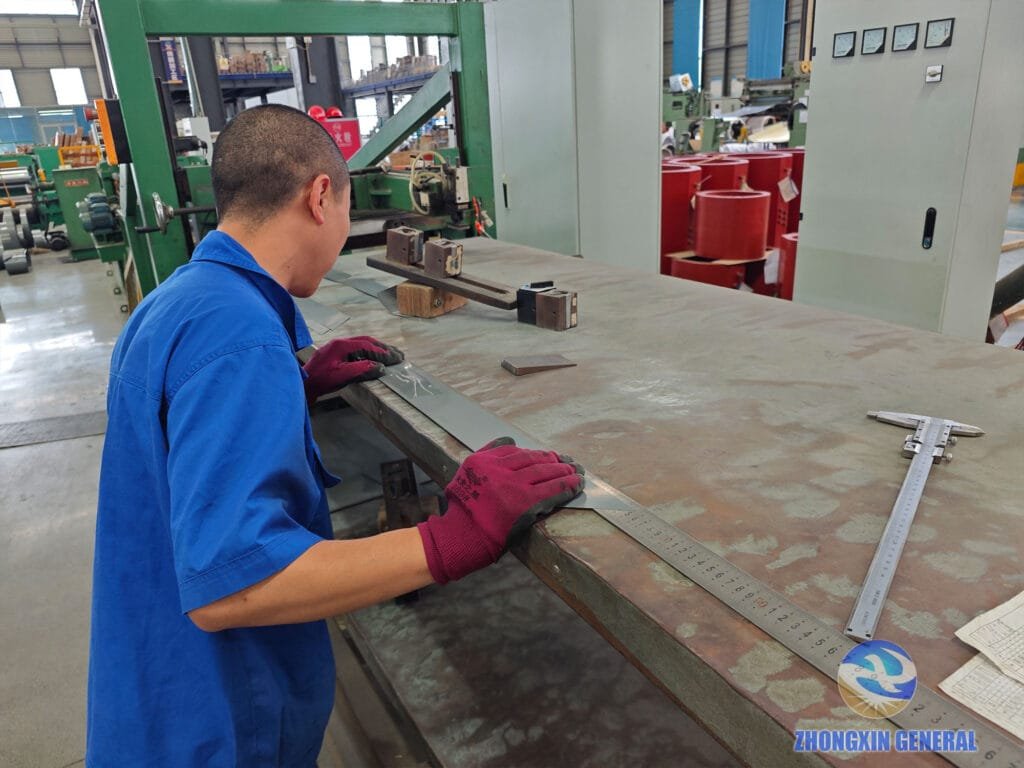
After cutting, quality inspectors use precision measuring tools to randomly test silicon steel dimensions and strictly control machining tolerances within national and IEC standards, consistent with the strict QC standards we apply to all cast resin dry transformers.
Step 4: Inspection Data Filing
All measured dimensional data of silicon steel sheets are recorded and stored electronically. Every batch of raw materials has complete quality records to achieve full lifecycle traceability for every finished transformer, which you can verify in our on-site project records from Case Studies archive.
Step 5: Qualified Silicon Stacking
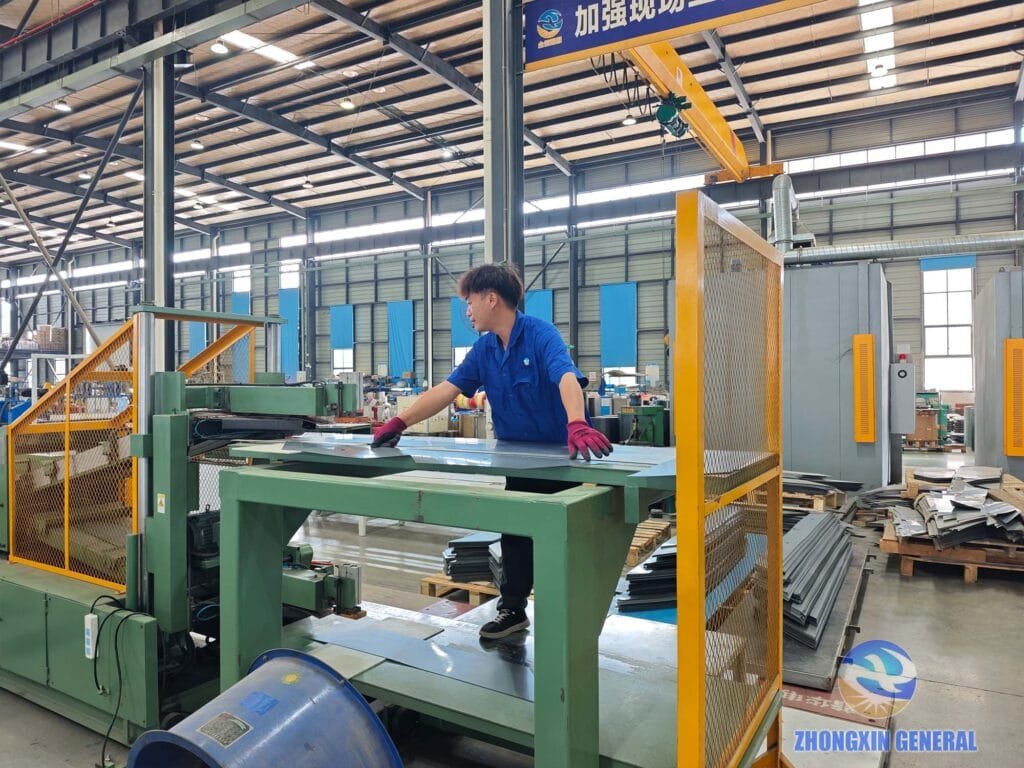
Silicon steel sheets passing inspection are sorted and stacked neatly according to different size specifications to avoid mixed specifications during lamination.
Step 6: Partitioned Raw Material Storage
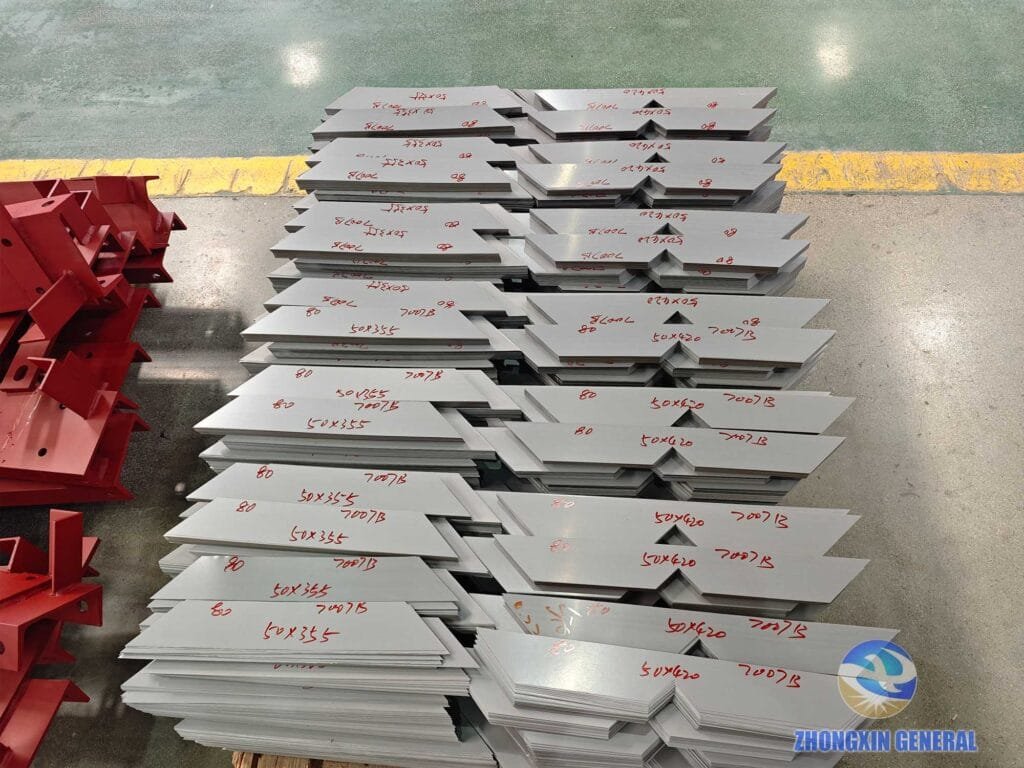
Our workshop sets independent storage zones for each silicon steel specification with clear identification labels, improving picking efficiency and preventing raw material mixing errors.
1.1 Transformer Core Assembly & Insulation Treatment
Step 7: Layered Core Lamination
Technicians stack silicon steel sheets layer by layer following strict technical parameters to build the integral transformer iron core body, minimizing magnetic leakage and no-load loss — a core advantage of our high-efficiency SCB18 dry transformers compared with traditional products.、
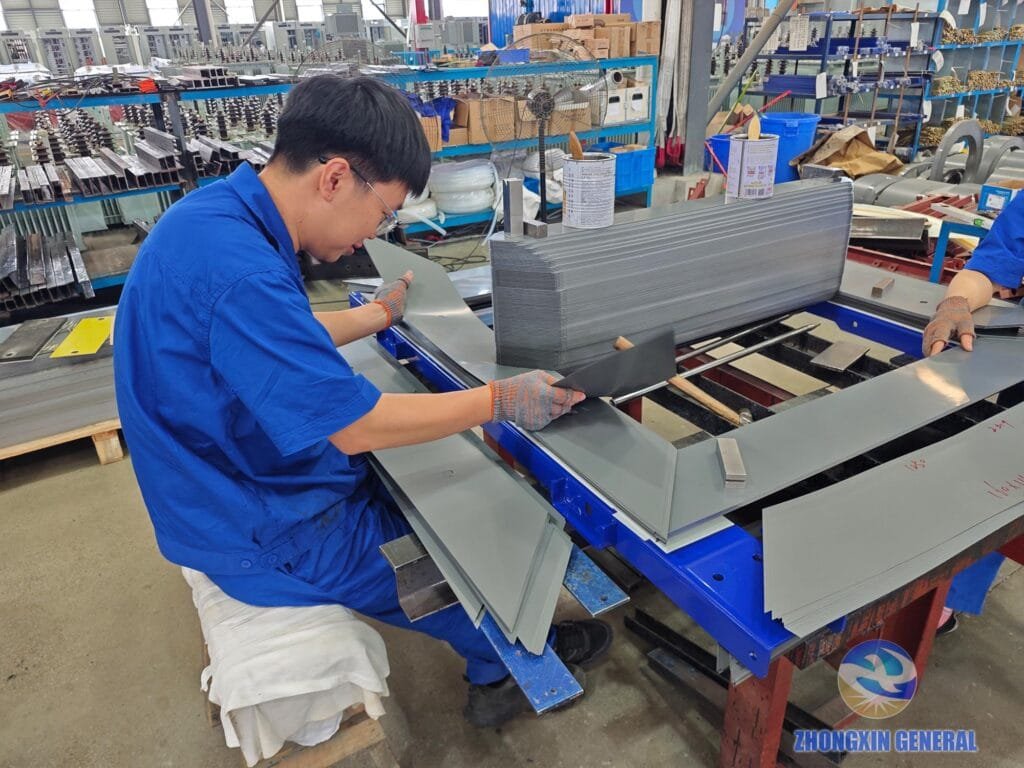
Step 8: Steel Frame Compression Fix
After lamination, install the outer steel frame and fully tighten all bolts to compress the whole core tightly, eliminating gaps between silicon layers.
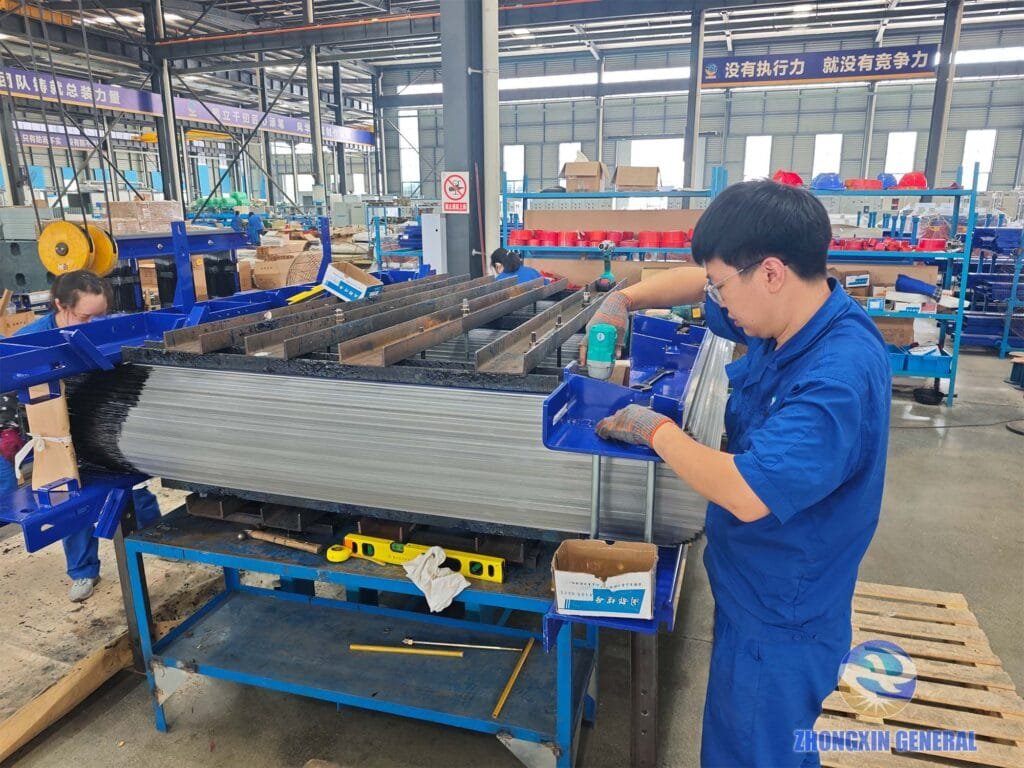
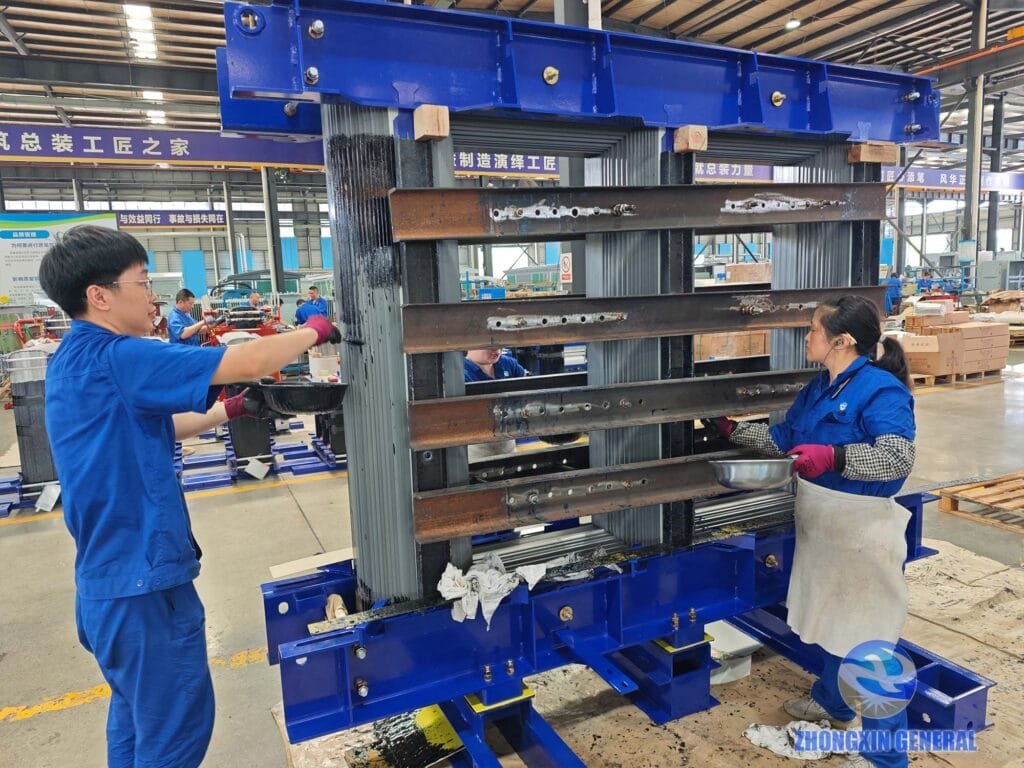
Step 9: Core Insulation Coating
Special insulating anti-rust paint is evenly brushed over the entire core surface to enhance insulation performance and prevent moisture corrosion. This insulation process is identical to the standard we adopt for the dry transformers delivered to the Xinjin Hospital power project.
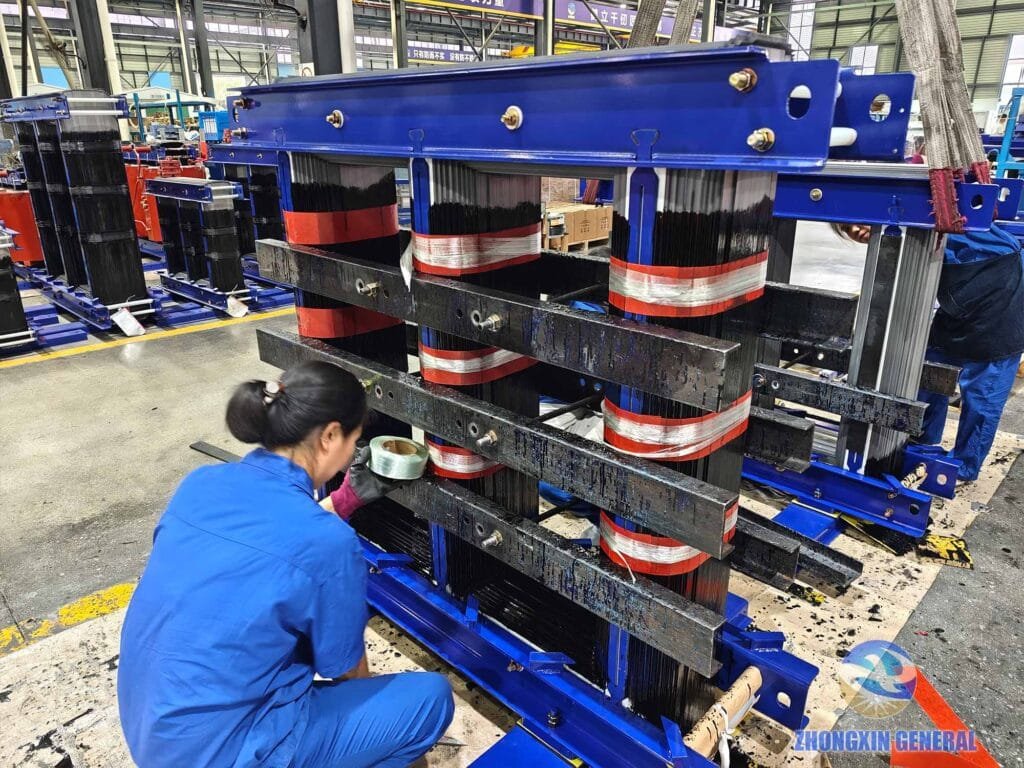
Step 10: Insulating Tape Secondary Binding
Wrap the whole core with high-strength insulating binding tapes for secondary shaping and fixation, stabilizing the core structure under long-term operation.
2. High & Low Voltage Winding Production (Core Link of Dry Transformer)
Cast resin winding is the core component distinguishing dry transformers from oil immersed transformers. Our vacuum casting process complies with EU Tier 2 energy efficiency standards specified in EU Regulation No. 548/2014.
Step 11: Thin Foil Winding Machine Operation
Before coil formal production, operators operate professional foil winding machines to wind coils evenly, maintaining consistent wire tension and neat wire arrangement for standardized winding work.
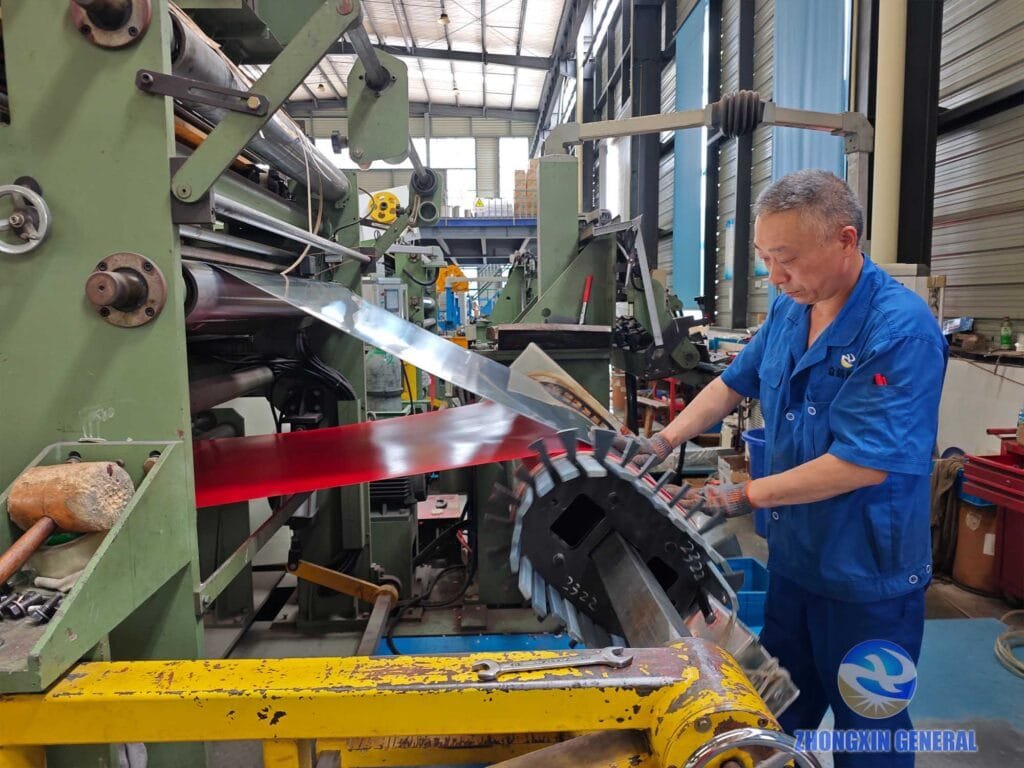
Step 12: Copper Busbar Docking Assembly
Workers precisely connect winding coils with copper busbars, ensuring low contact resistance and stable current transmission during operation. The matching HV/LV busbars and switch cabinets can be viewed on our HV/MV/LV Switchgear product page.
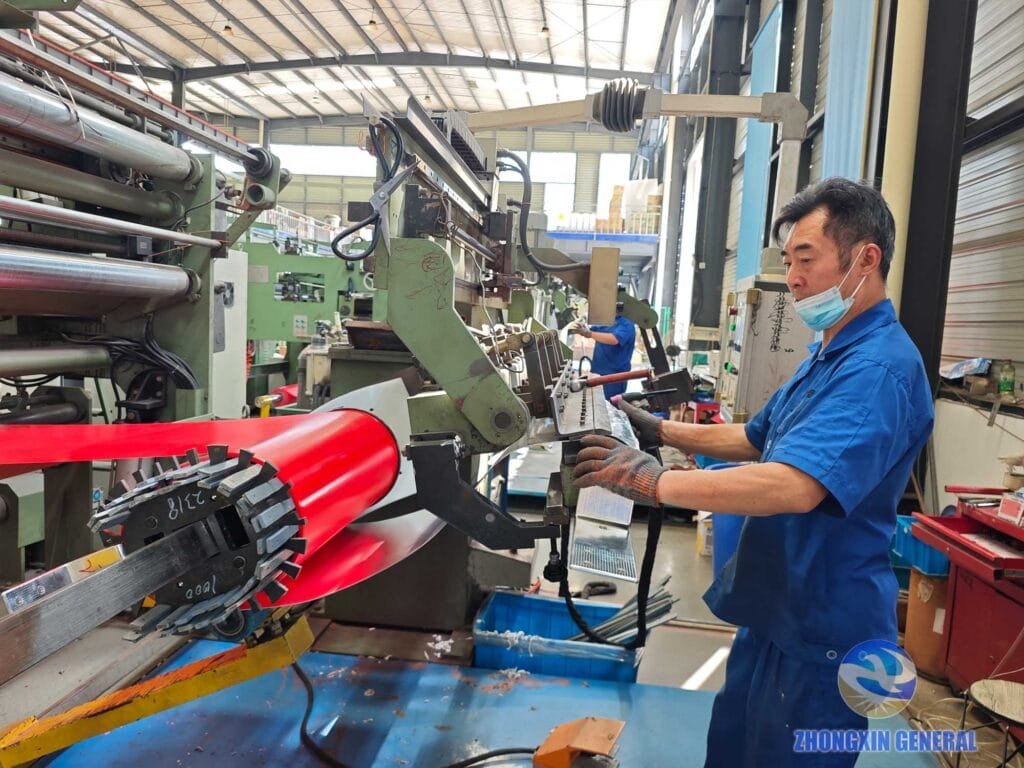
Step 13: Precision Coil Winding
Specialized winding equipment completes fine winding for high voltage and low voltage coils separately, strictly following design turns and wire diameters.
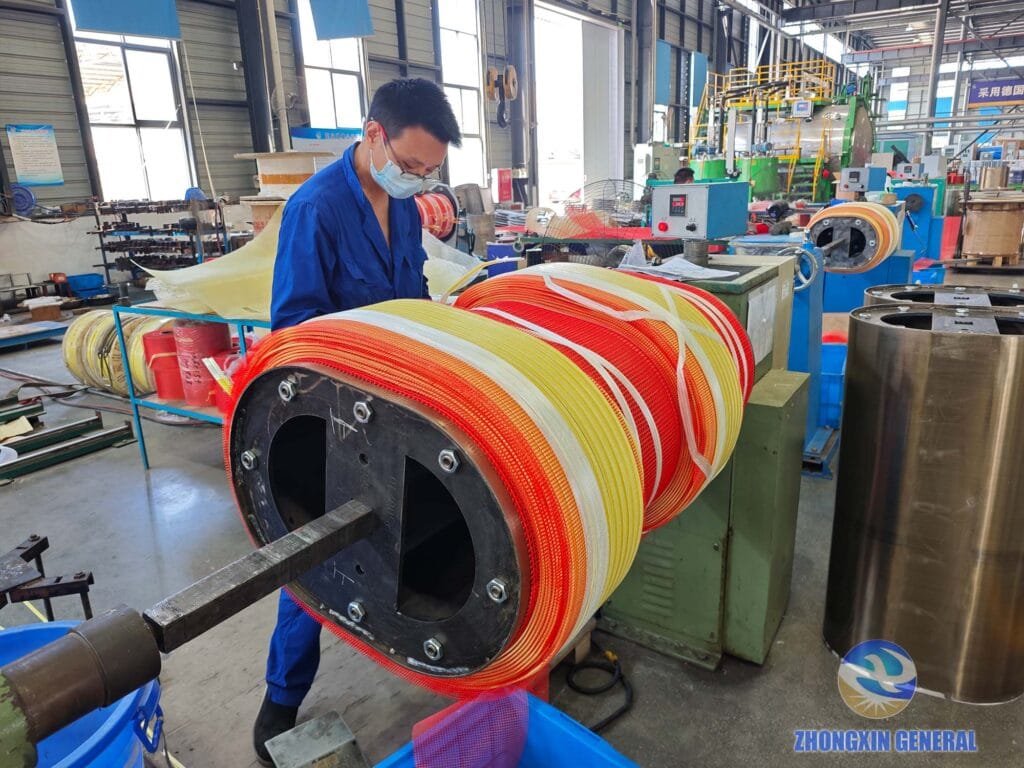
Step 14: Winding Lead Sorting & Mold Fix
Coil outgoing leads are tidily arranged and fixed with dedicated casting molds to avoid displacement during high-temperature baking and resin pouring.
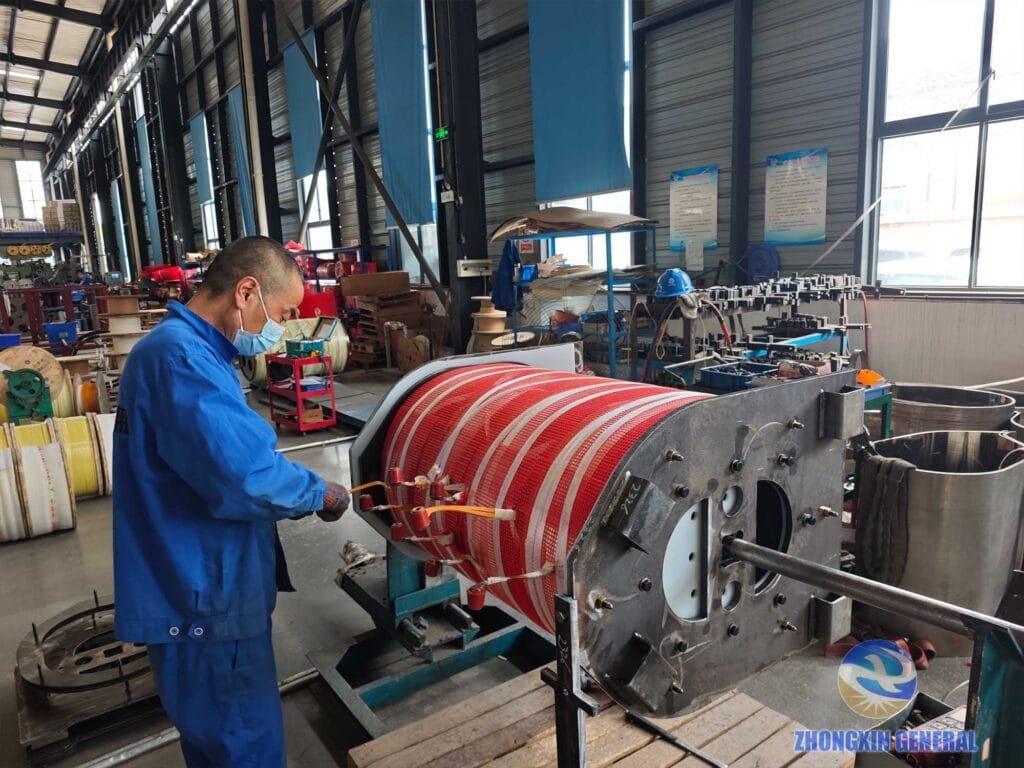
Step 15: Oven Dehumidification Treatment
Molded windings are sent into constant temperature industrial ovens for long-time high-temperature dehumidification to eliminate internal moisture before vacuum casting.
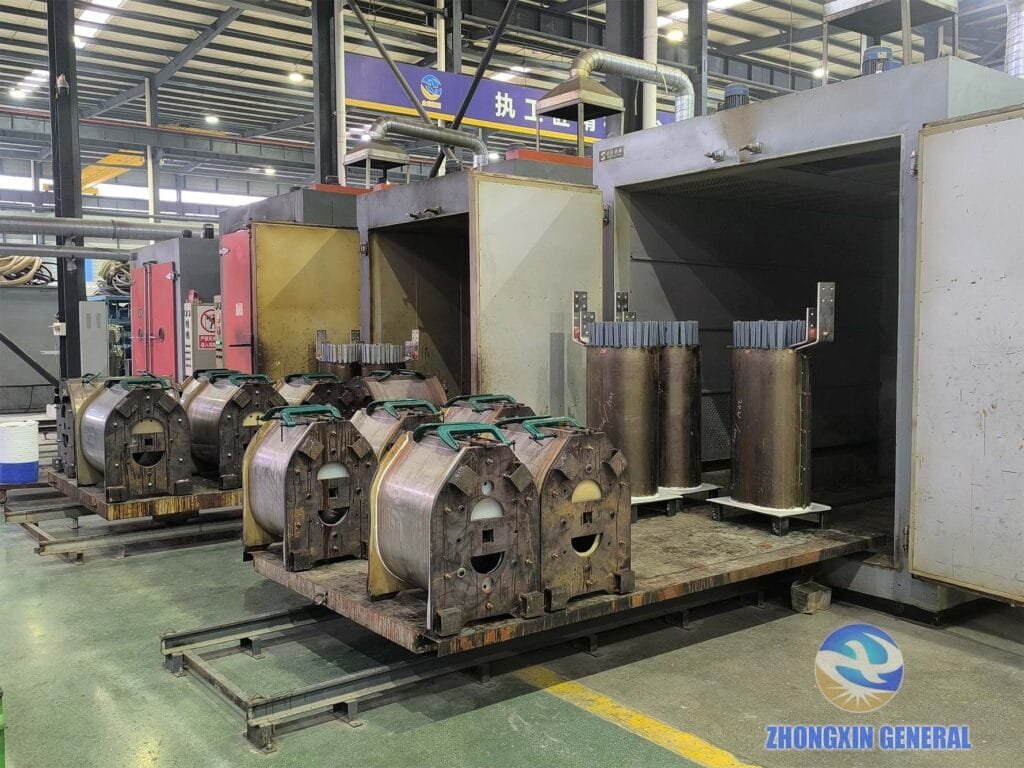
Step 16: Vacuum Epoxy Resin Casting & Curing
The core vacuum casting equipment injects insulating epoxy resin under negative pressure, then the whole mold enters high-temperature baking rooms for full resin solidification. Vacuum design eliminates internal bubbles to guarantee insulation safety, which is the core craft we used for the Europe export dry transformer order recorded in our European project case.
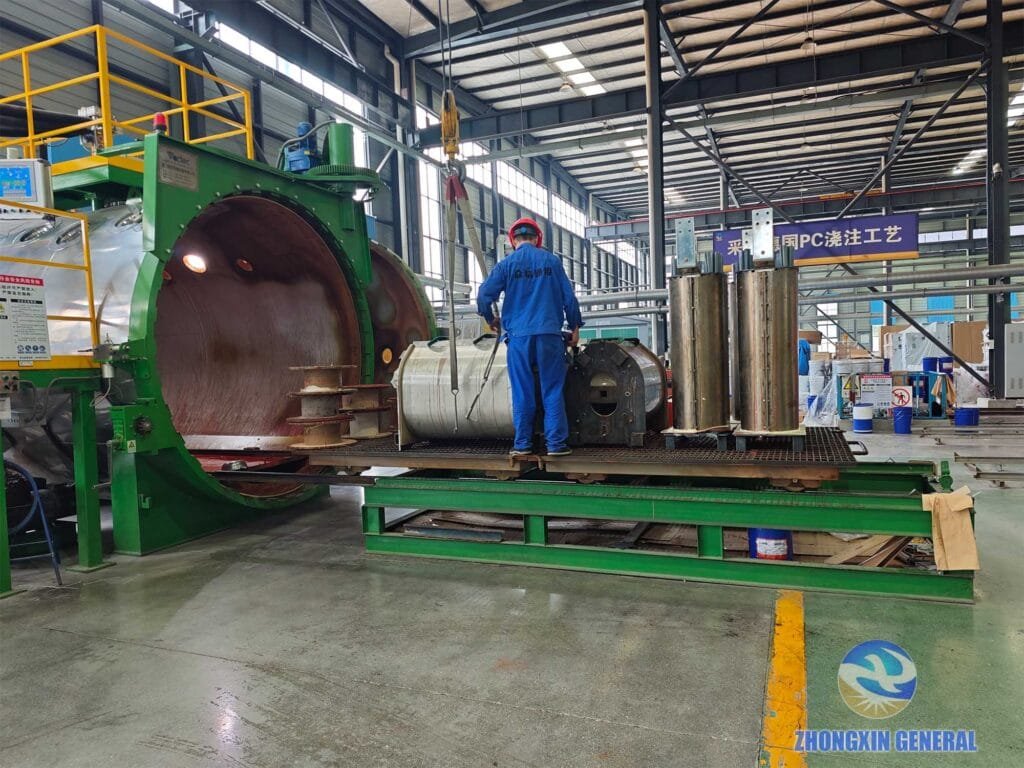
Step 17: Cured Winding Demolding
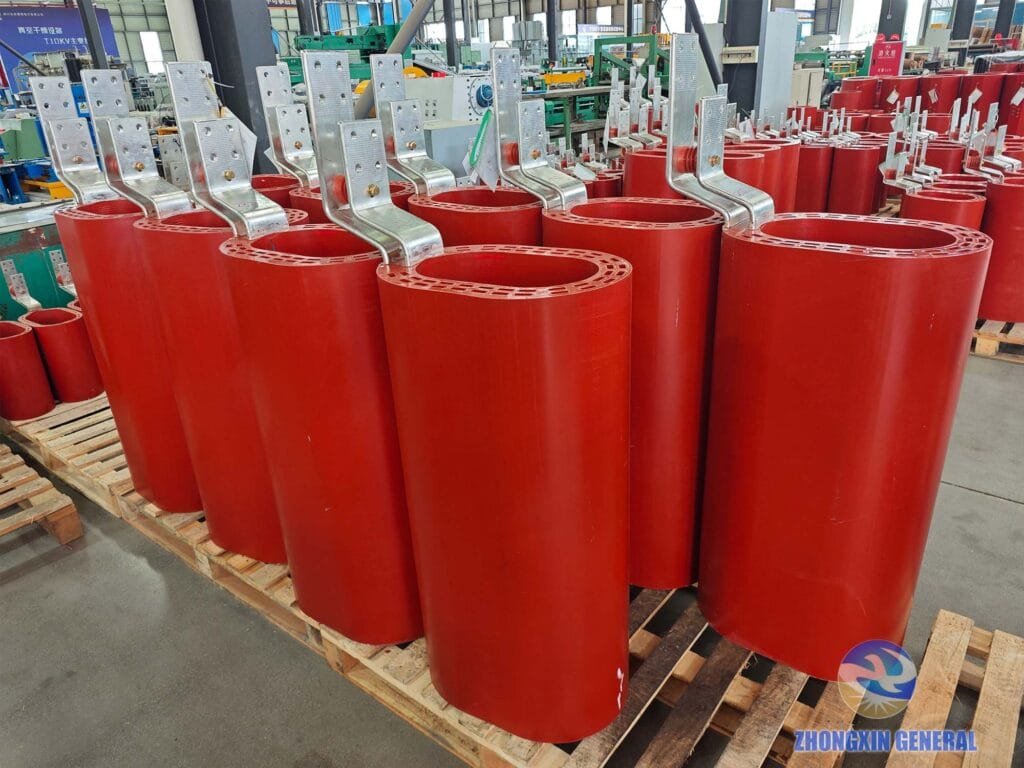
After complete resin curing, workers demold the integral high/low voltage winding components without damaging cast resin surfaces.
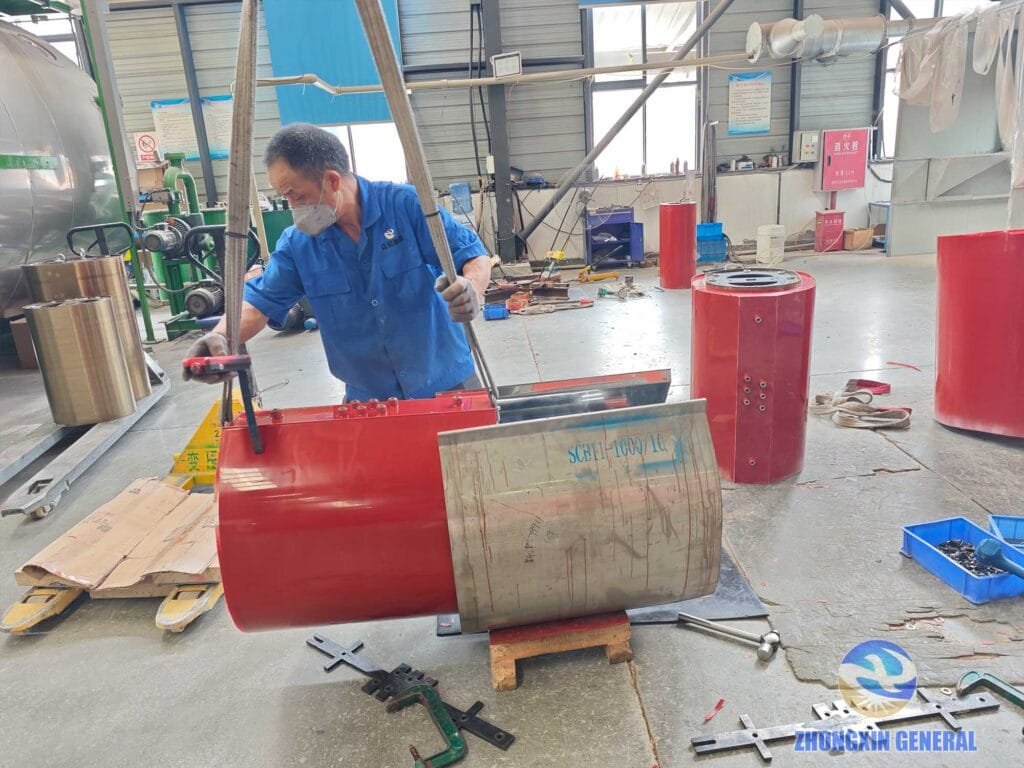
Step 18: Winding Surface Polishing & Trimming
Manual polishing removes burrs, uneven edges and surface defects on cast winding surfaces for a smooth finish.
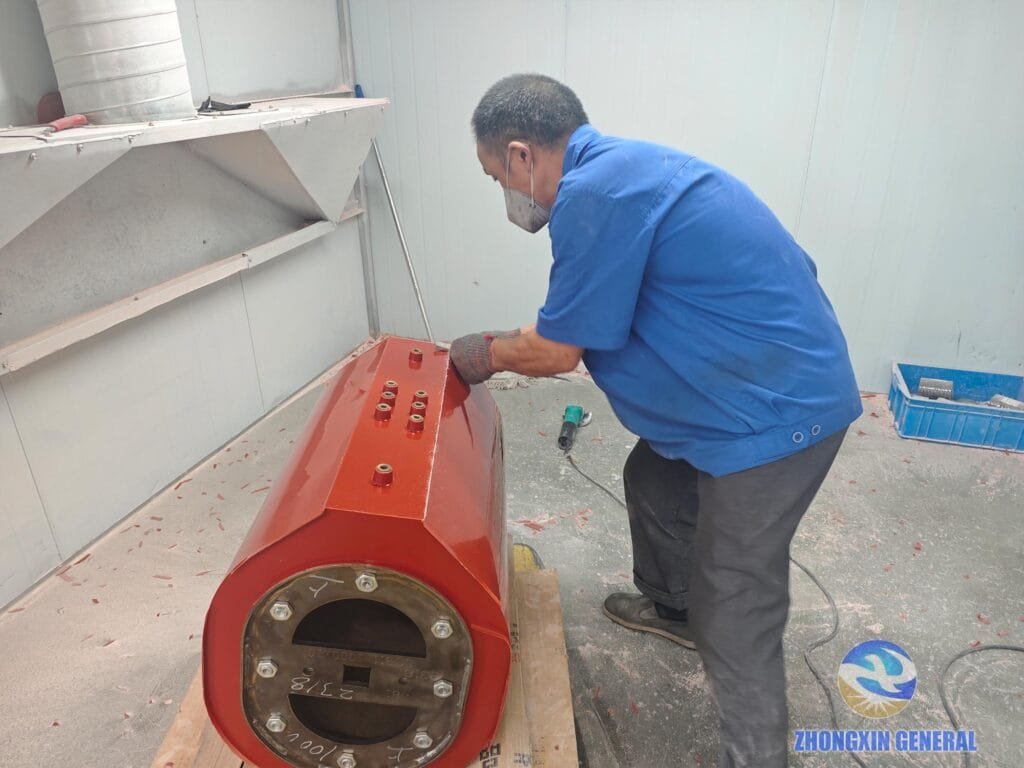
Step 19: Qualified Winding Semi-Finished Goods
Fully trimmed and inspected windings become standard semi-finished parts waiting for overall transformer assembly.
3. Overall Transformer Assembly Process
All semi-finished cores and windings enter the general assembly workshop for systematic assembly. Many of our complete transformer solutions are integrated into prefabricated modular substations for mining, port and LNG energy projects.
Step 20: High & Low Winding Position Calibration
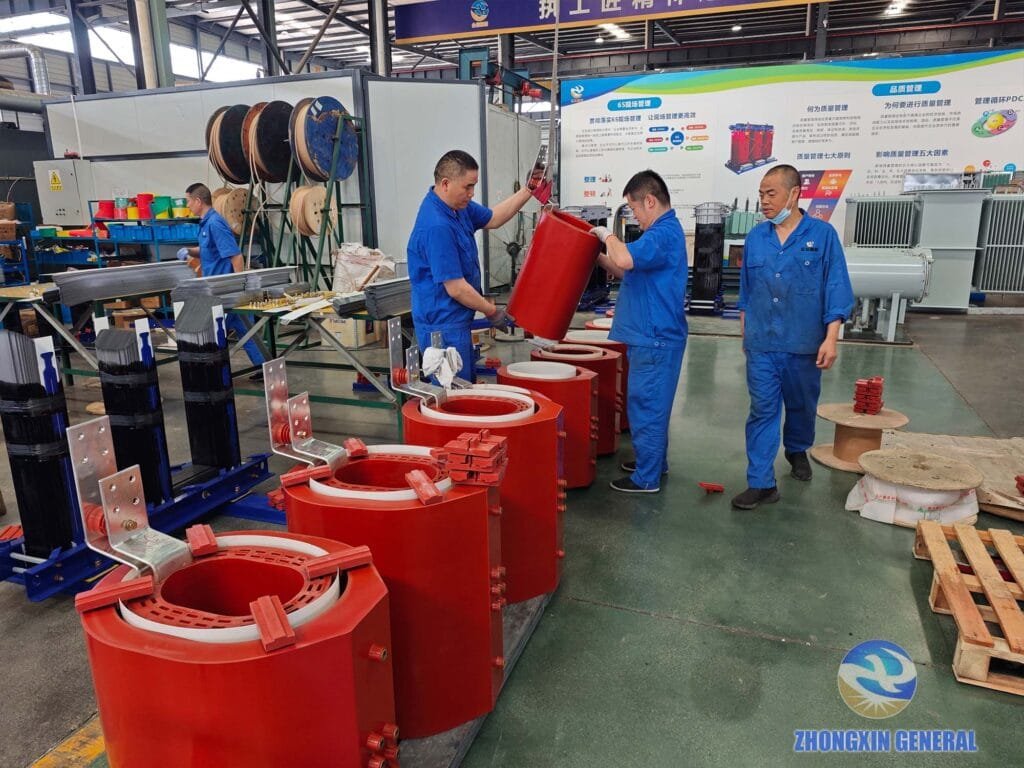
Workers align high voltage and low windings accurately according to design gaps before embedding into the iron core.
Step 21: Embed Windings into Iron Core
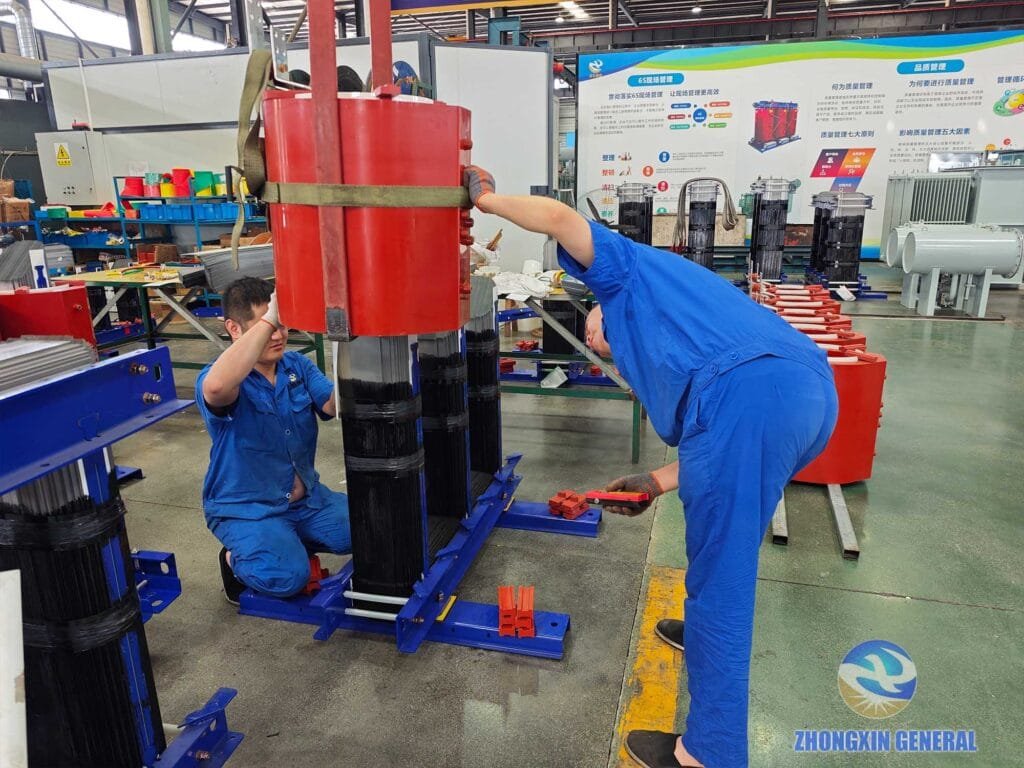
Disassemble the top steel core frame, then place matched high-low voltage windings into the core inner cavity accurately. This assembly flow was fully applied to the 2 sets of SCB18 transformers shipped to CATL supply chain project in Zigong.
Step 22: Reset & Fasten Top Core
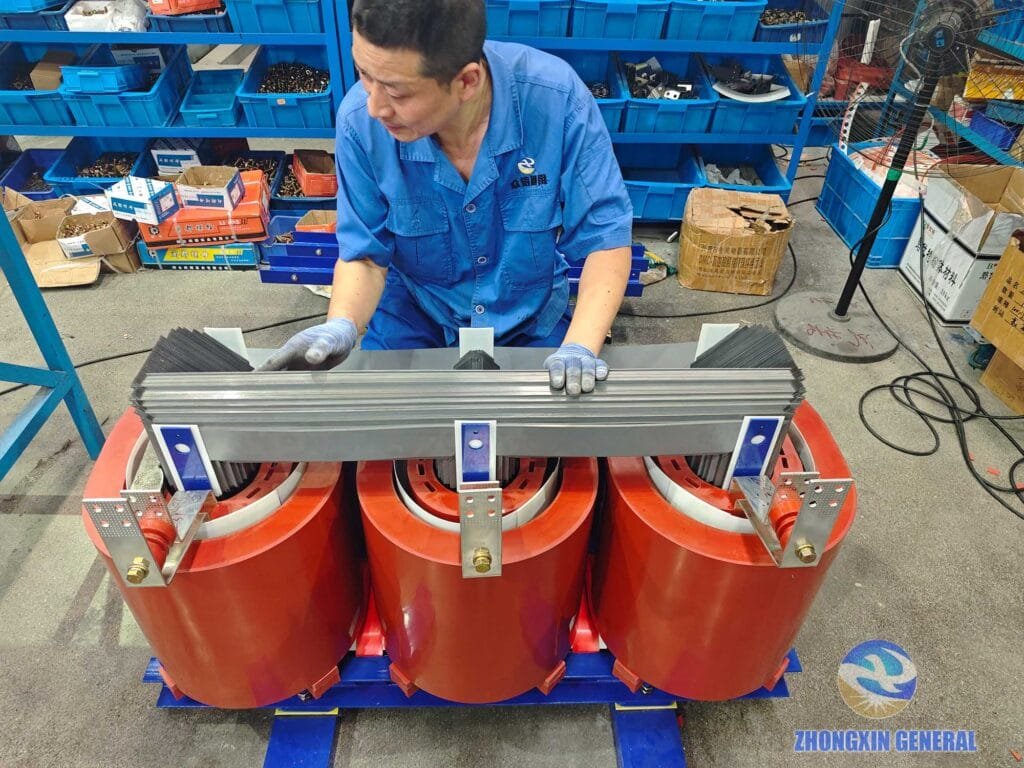
Reinstall the disassembled top core and lock all bolts to form a complete transformer main body.
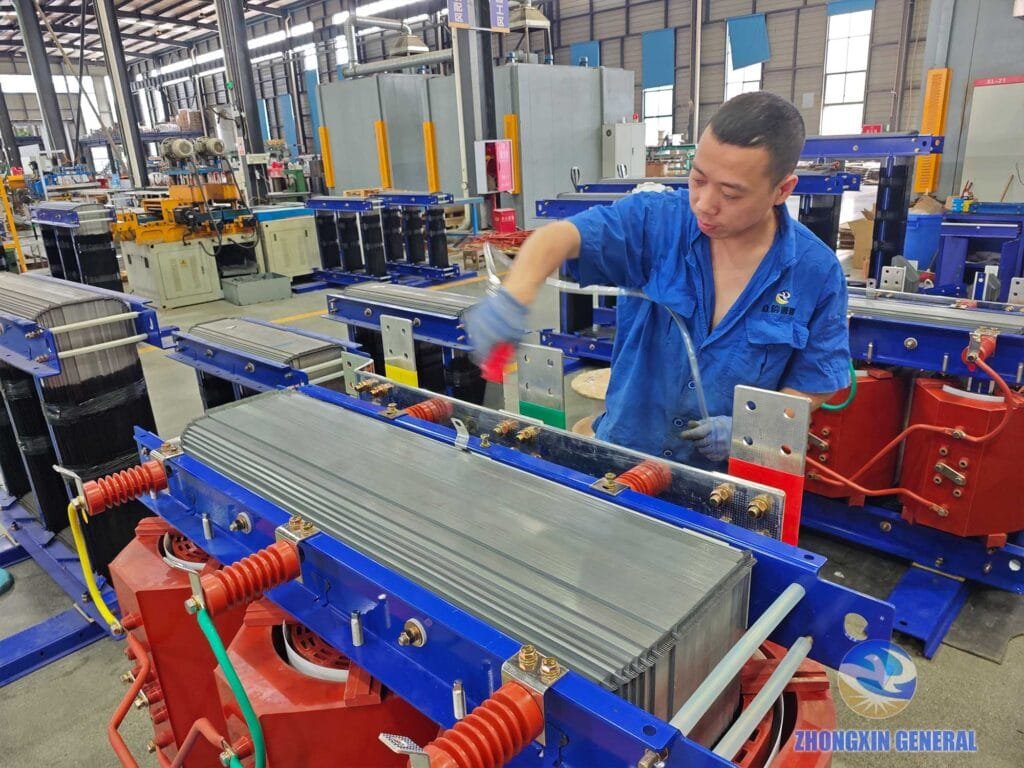
Step 23: High Pressure Internal Dust Cleaning
High-pressure air blowers clear all metal dust and debris inside the assembled transformer to avoid partial discharge risks.
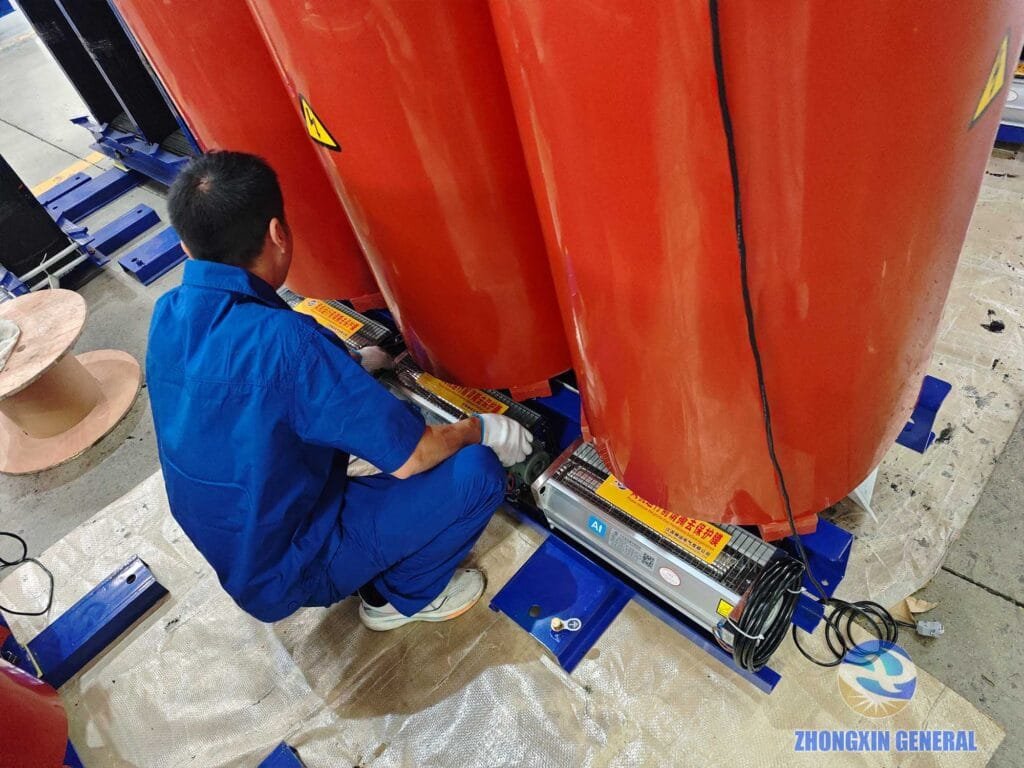
Step 24: Cooling Fan Installation
Mount matched heat dissipation fans at the transformer bottom to control operating temperature under full load.
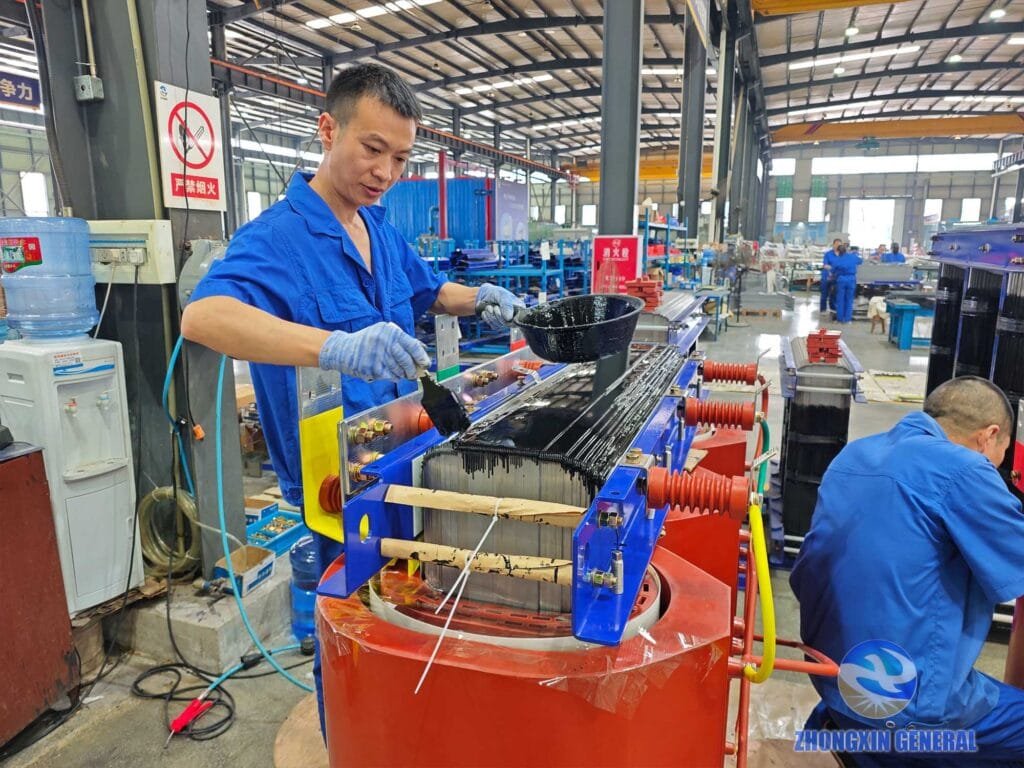
Step 25: Top Core Insulation Paint
Repaint the exposed top core with insulating coating for secondary moisture-proof and insulation protection.
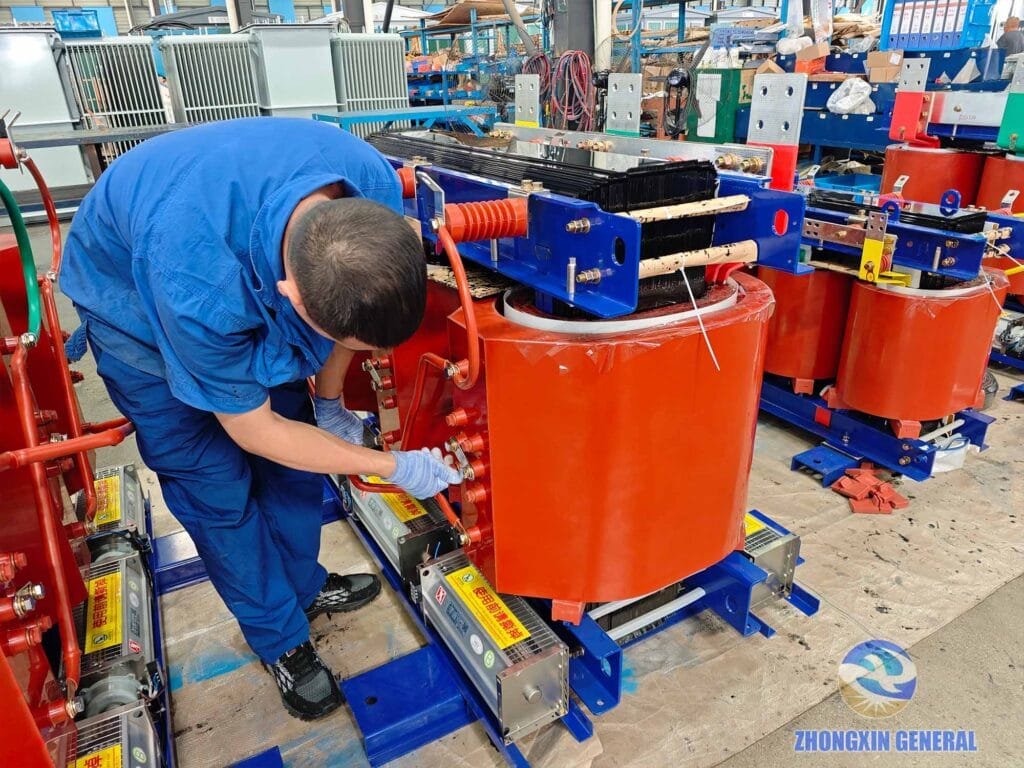
Step 26: Full Manual Visual Inspection
Experienced technicians conduct a full surface and assembly inspection, trimming small assembly flaws to improve appearance and safety.
4. Multi-Stage Factory Performance Testing (Strict Quality Control)
All finished units pass strict electrical tests before delivery. For energy storage scenarios, we also match energy storage substation dedicated dry transformers with customized testing standards.
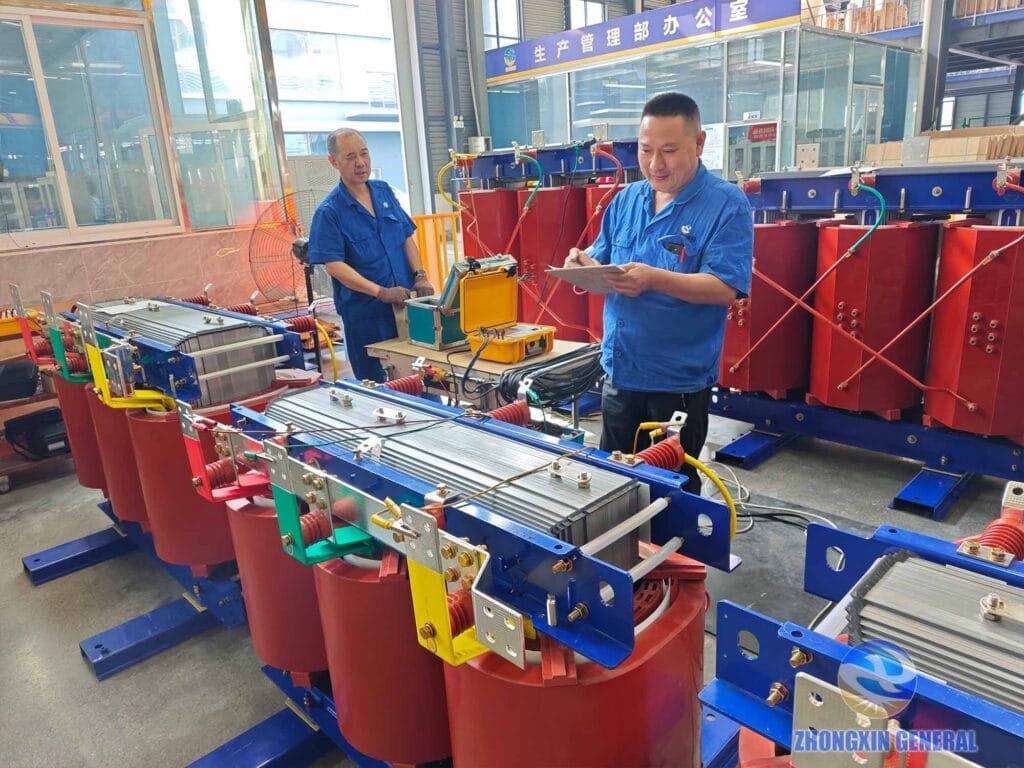
Step 27: Preliminary Electrical Performance Test
Professional portable instruments run initial tests on loss, impedance and insulation resistance.
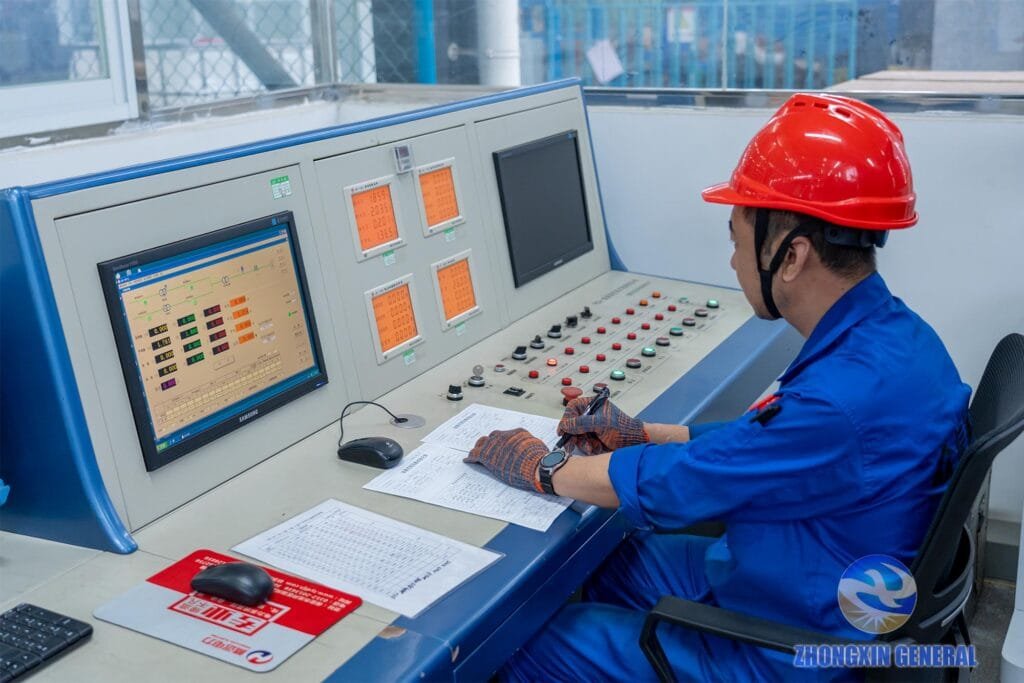
Step 28: Comprehensive Final Inspection
Large professional transformer test benches carry out full-range final detection, including no-load loss, load loss, partial discharge, insulation voltage, temperature rise and other IEC standard items. All test records are archived same as our large-capacity 35kV power transformer projects.
5. Finished Dry Transformer Storage & Delivery
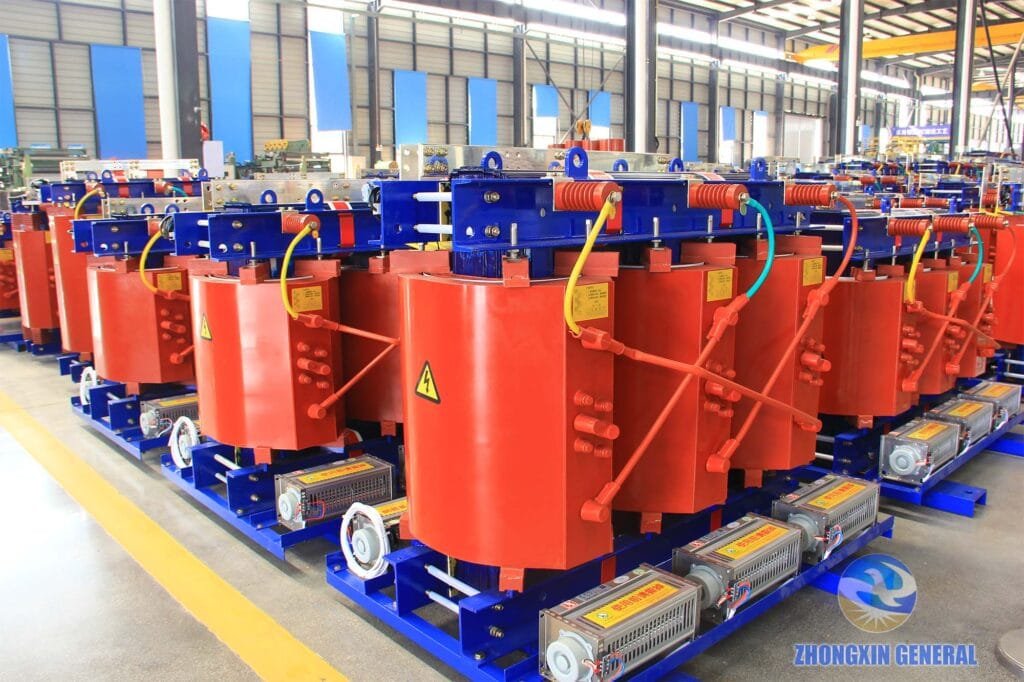
Step 29: Qualified Finished Product Storage
All transformers passing full final inspection are centrally stacked in our finished goods warehouse, waiting for packaging and delivery to domestic and overseas projects. Browse all completed engineering projects in our Case Studies page to view more real delivery photos.
Why Choose Zhongxin General Dry Type Transformers?
Our dry transformer R&D and production team is led by Chief Engineer Mr. Li Xianming with 45 years transformer industry experience, specializing in cast resin dry transformers for nearly 30 years.We have introduced German iron core manufacturing technology and upgraded the SCB18 series products to comply with Tier 2 energy efficiency requirements stipulated in EU Regulation No. 548/2014.
We supply a full set of power distribution equipment covering:
- Dry Type Transformers
- Oil Immersed Transformers
- HV/MV/LV Switchgear
- Prefabricated Modular Substations
- Energy Storage Substations
Browse our factory overview and team profile for full details of our production capacity. All technical data of our products can be checked on our product catalog page.
If you need customized dry type transformers with specific kVA, voltage or impedance parameters, visit our Contact Us page to send your requirements and get technical drawings & factory quotations promptly.