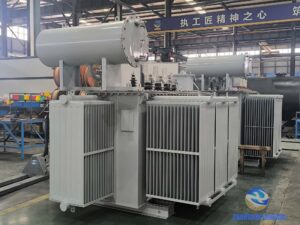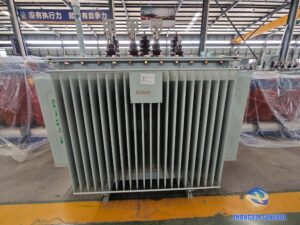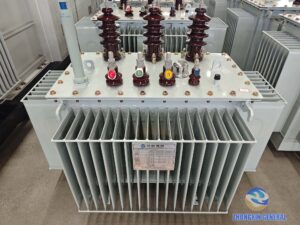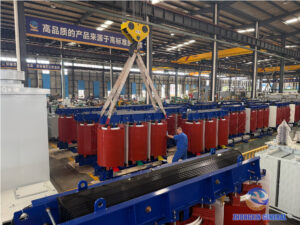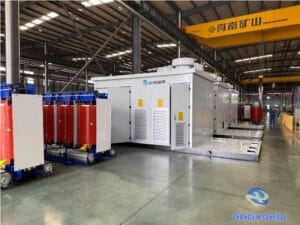
This article walks through every step of oil immersed distribution transformer manufacturing, from silicon steel coil feeding, core lamination, winding production, core-coil assembly, tanking, oil filling to multi-stage factory performance tests. Real workshop photos show our standardized production system and strict quality control standards for distribution transformers ranging from small pole-mounted units to large power transformers.
Oil immersed distribution transformers remain the most widely used type of transformer in power systems worldwide. Compared to dry-type transformers, oil-immersed models offer smaller size, lower cost, and stronger overload capacity at equivalent ratings, making them the backbone of power distribution networks across industrial facilities, residential communities, urban power grids, and rural electrification projects. As a professional Chinese manufacturer supplying oil immersed transformers rated at 110 kV / 63 MVA (63,000 kVA) and below, Zhongxin General shares our full standardized production workflow with real on-site factory photos, covering silicon steel core processing, winding production, core-coil assembly, tanking, oil filling, and multi-layer quality testing. Our S22 series oil-immersed transformers achieve energy efficiency levels that surpass the EU Tier 2 efficiency requirements implemented in 2019 under Commission Regulation (EU) No. 548/2014.
1. Silicon Steel Raw Material Processing (Core Manufacturing Stage)
The iron core determines transformer loss, noise and energy efficiency, so our silicon steel processing workshop implements full traceability quality control from raw feeding to finished core storage.
Step 1: Silicon Steel Coil Feeding – Production personnel use overhead travelling cranes to hoist large silicon steel coils and transport raw materials onto automatic uncoiling equipment, enabling automated raw material feeding without heavy manual handling.
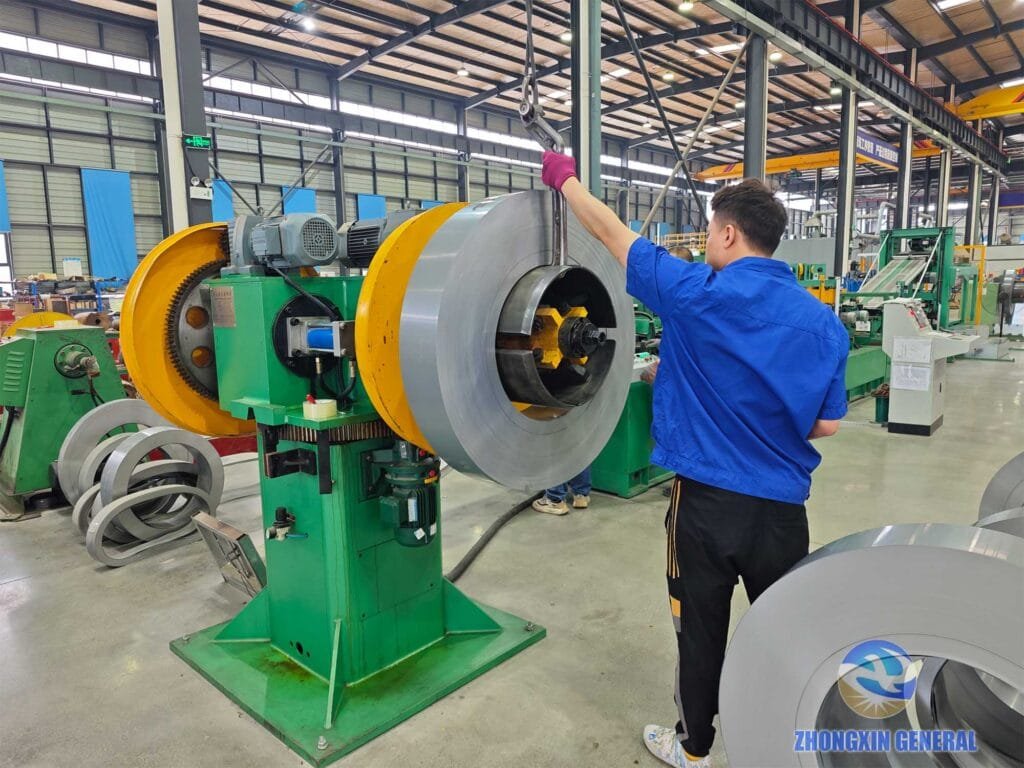
Step 2: CNC Automatic Silicon Steel Cutting – Operators calibrate numerical control cutting machines to achieve precise automatic shearing of silicon steel sheets, ensuring consistent sheet sizes for subsequent core lamination.
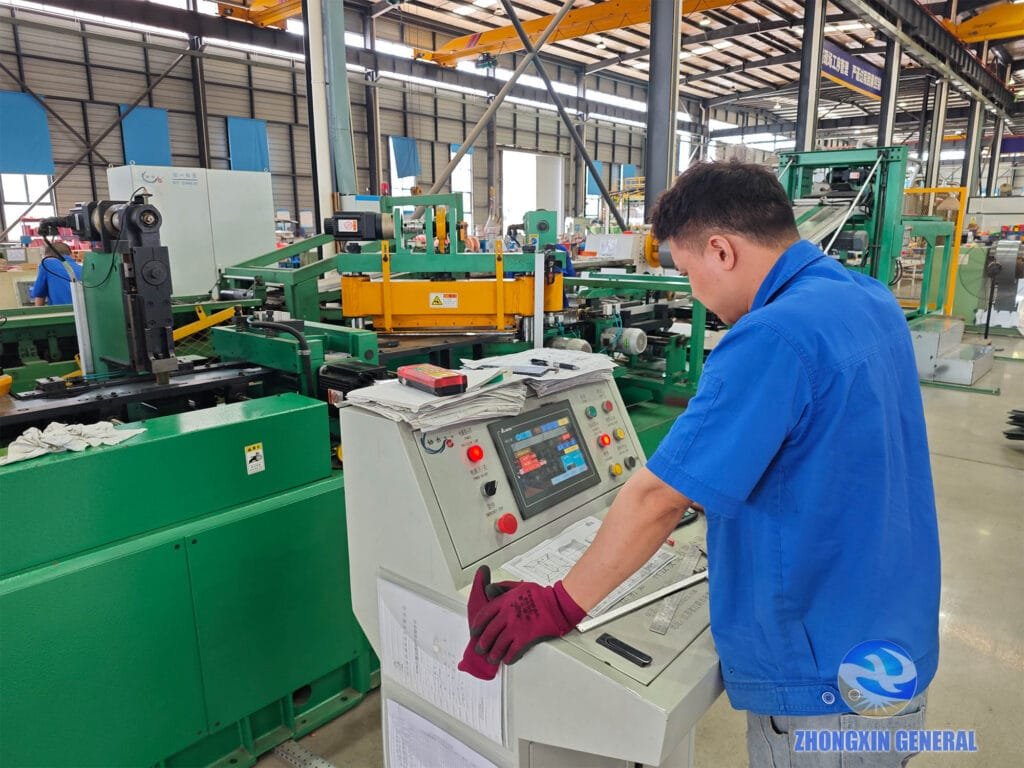
Step 3: Dimensional Sampling Inspection – After cutting, quality inspectors use precision measuring tools to randomly test silicon steel dimensions and strictly control machining tolerances within national and IEC standards.
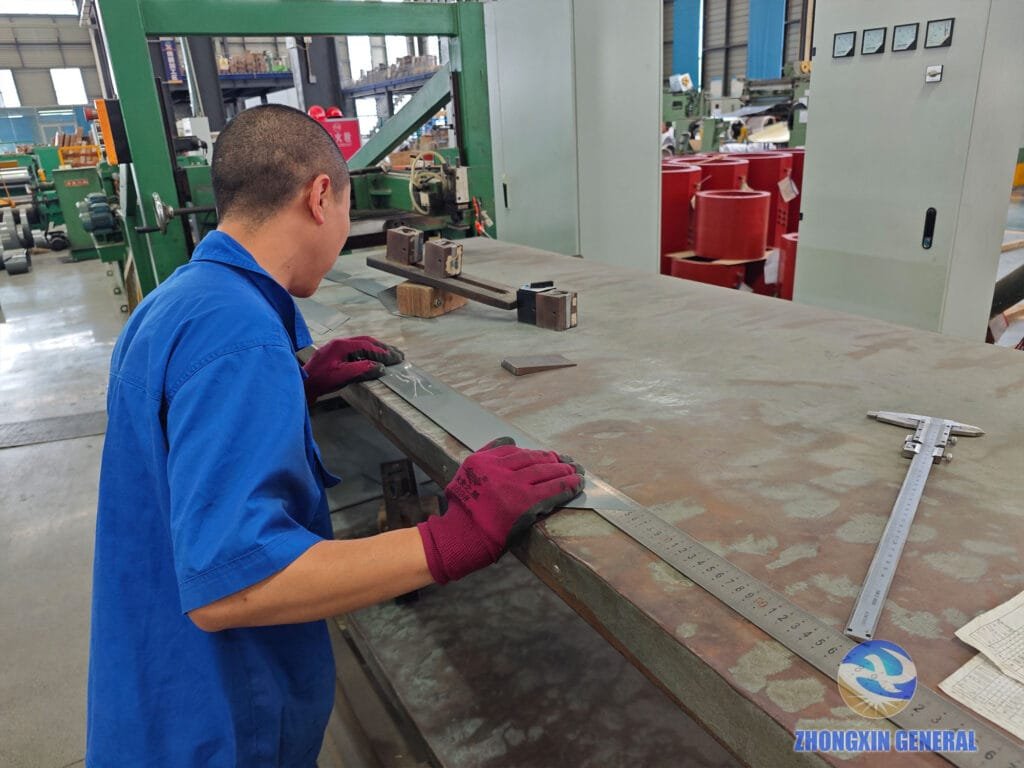
Step 4: Inspection Data Filing – All measured dimensional data are recorded and stored electronically. Every batch of raw materials has complete quality records to achieve full lifecycle traceability for every finished transformer.
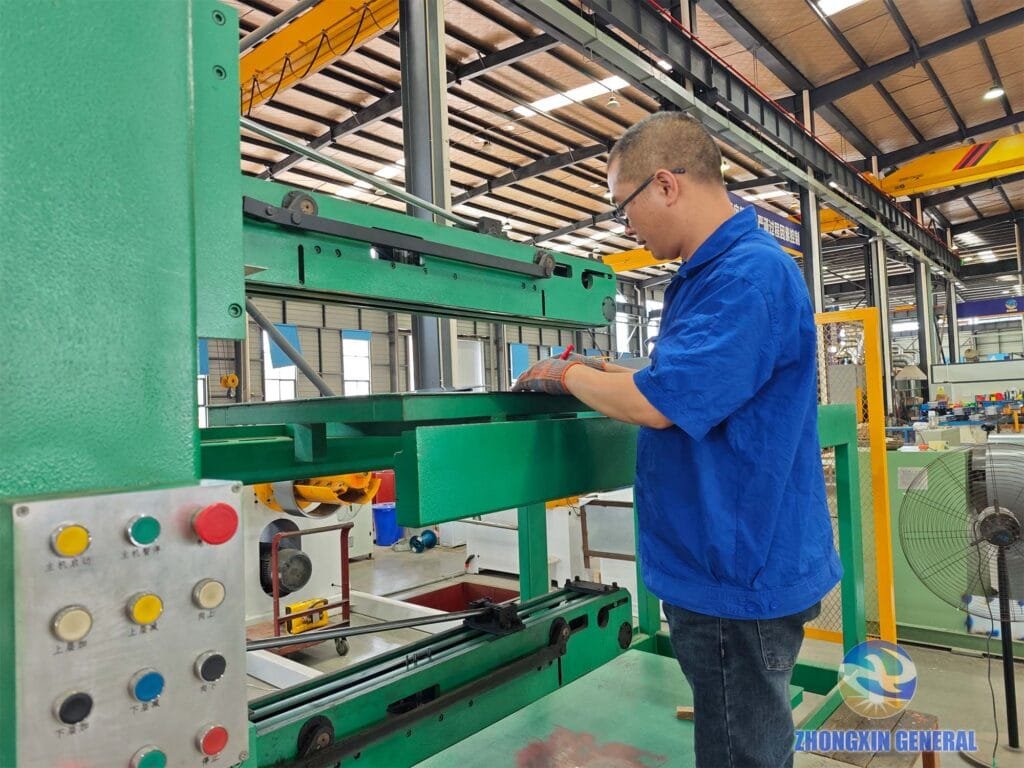
Step 5: Qualified Silicon Stacking – Silicon steel sheets passing inspection are sorted and stacked neatly according to different size specifications to avoid mixed specifications during lamination.
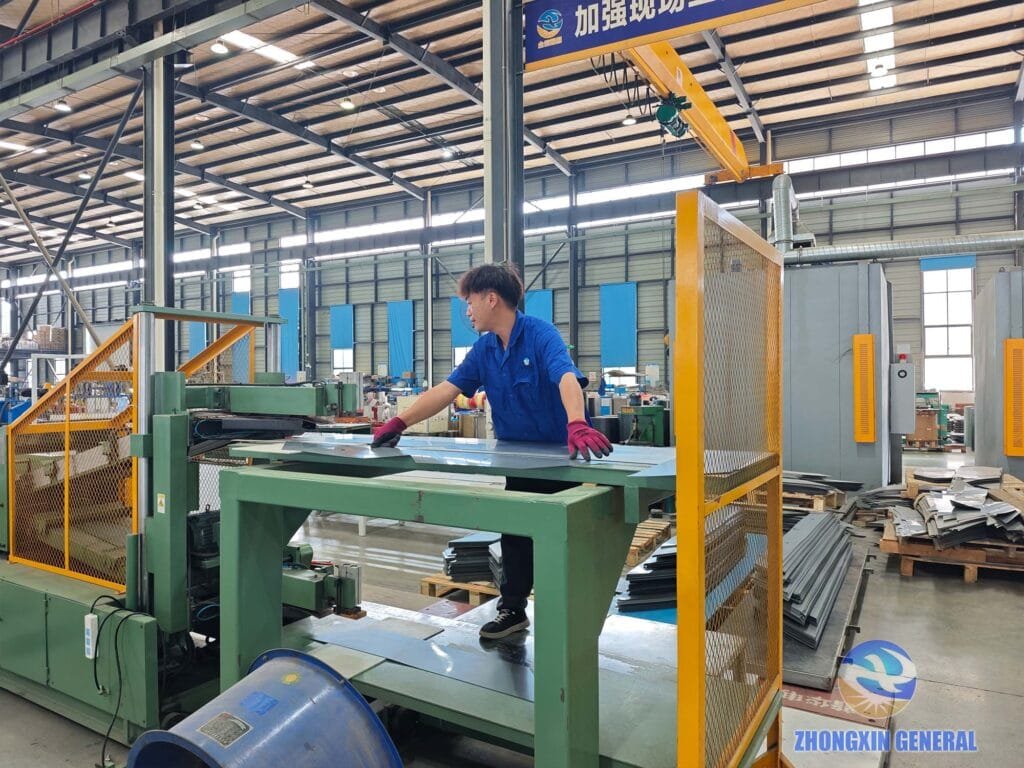
Step 6: Partitioned Raw Material Storage – Our workshop sets independent storage zones for each silicon steel specification with clear identification labels, improving picking efficiency and preventing raw material mixing errors.
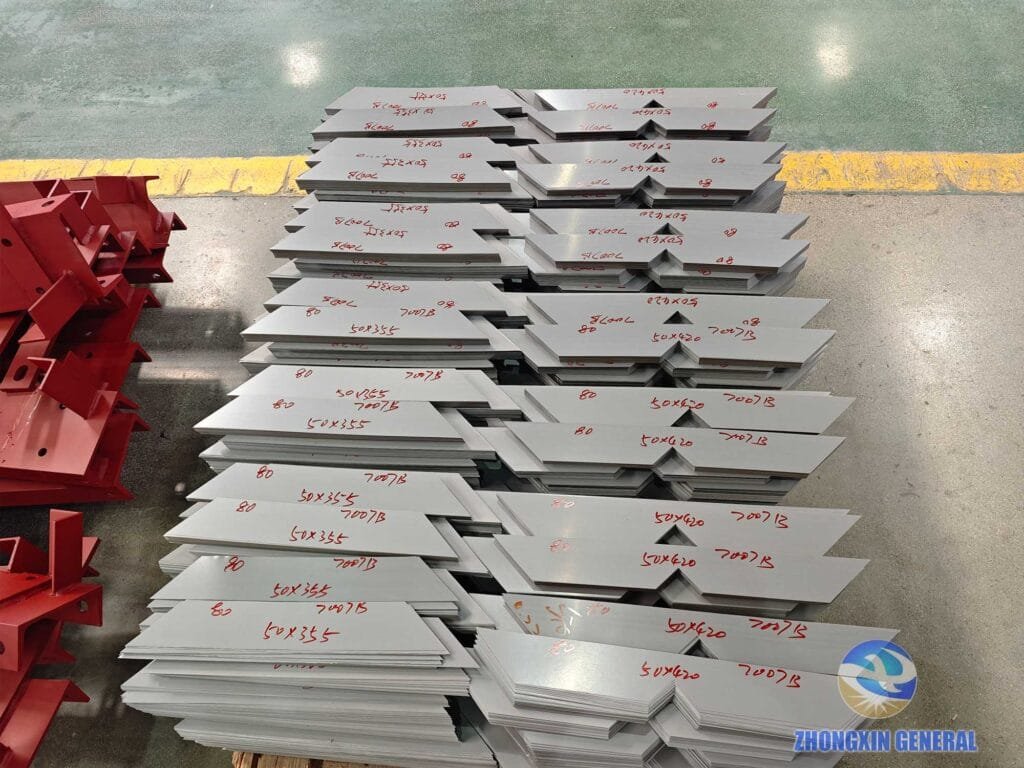
2. Transformer Core Assembly
Step 7: Layered Core Lamination – Technicians stack silicon steel sheets layer by layer following strict technical parameters to build the integral transformer iron core body, minimizing magnetic leakage and no-load loss.
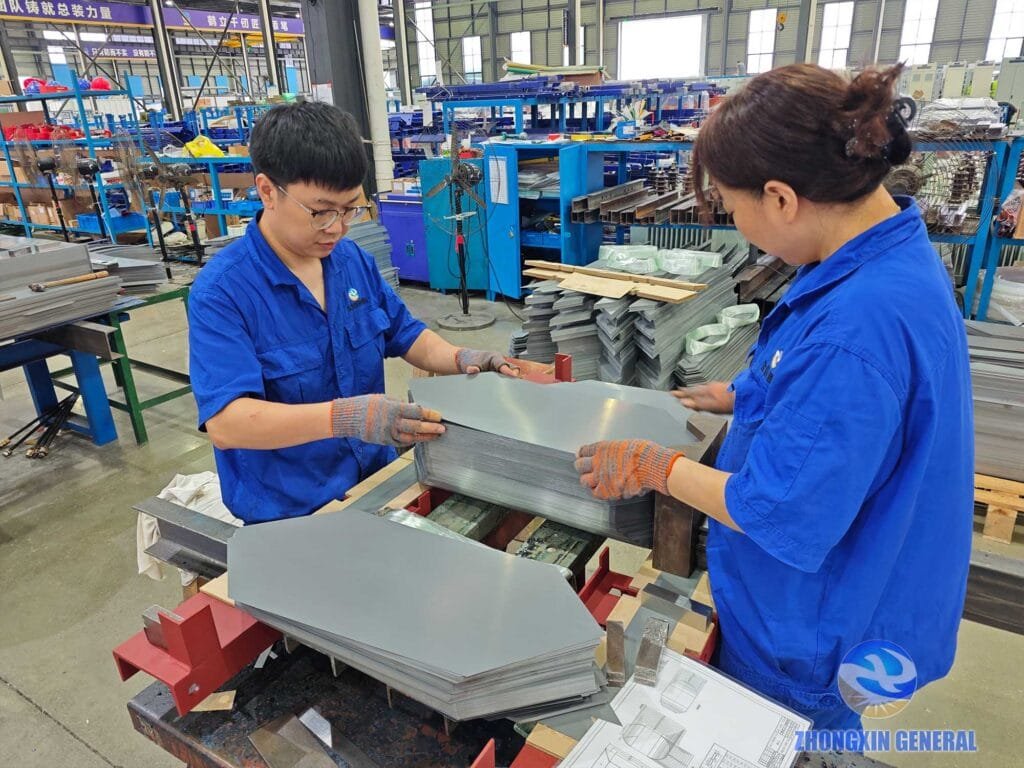
Step 8: Steel Frame Compression Fix – After lamination, install the outer steel frame and fully tighten all bolts to compress the whole core tightly, eliminating gaps between silicon layers.
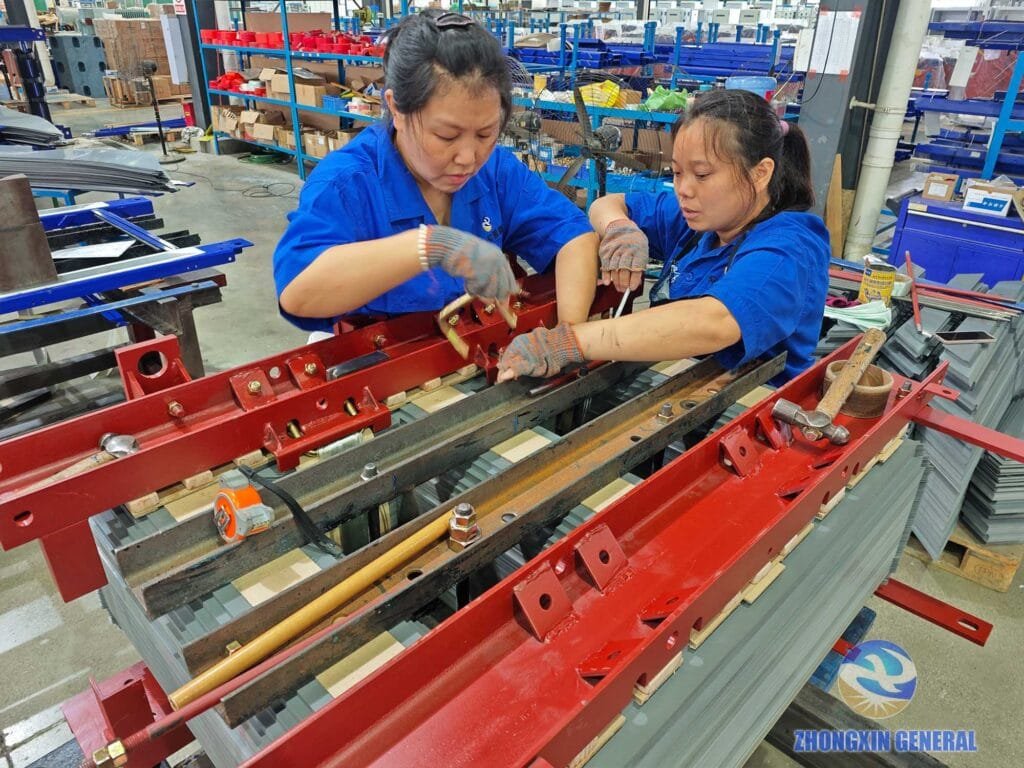
Step 9: Core Pre-Assembly – The core assembly is pre-positioned and prepared for subsequent winding installation.
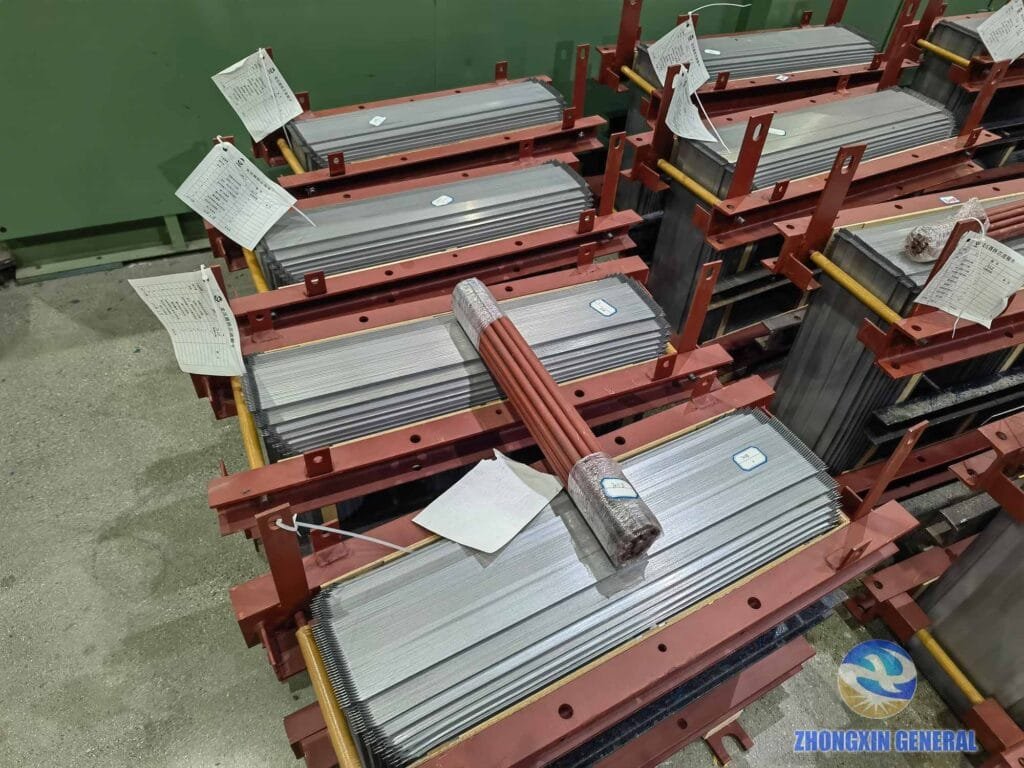
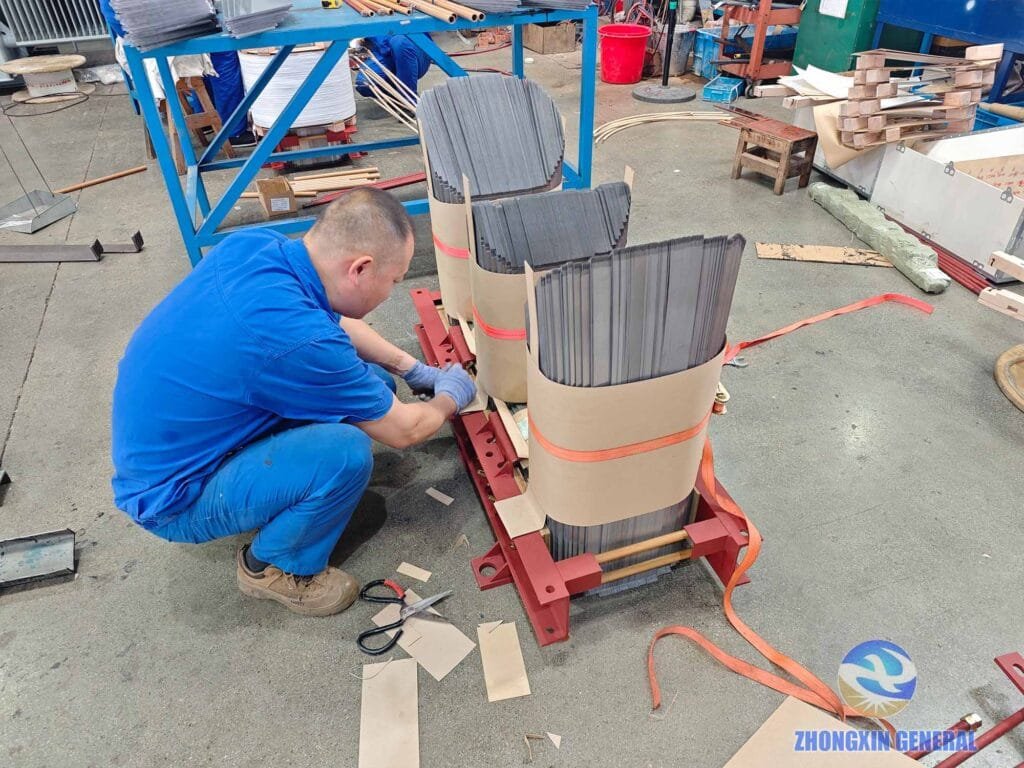
Step 10: Upper Core Frame Removal – Two workers collaborate to remove the upper core frame, facilitating access for winding installation into the core.
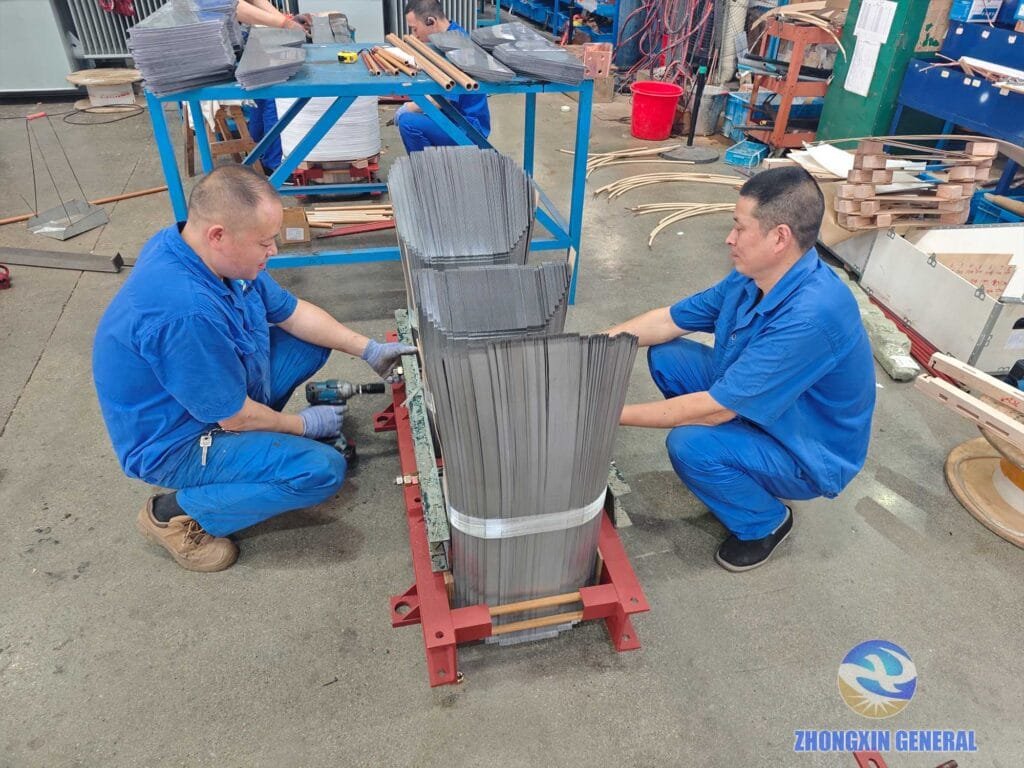
Step 11: Insulation Paper Accessory Installation – Workers install insulation paper accessories on the core assembly, preparing for winding fixation.
3. Winding Production
Cast resin winding is the core component distinguishing dry transformers from oil immersed transformers. For oil immersed transformers, windings are precision-wound with high-strength insulated copper or aluminum conductors, then dried and impregnated with insulating oil during final assembly.
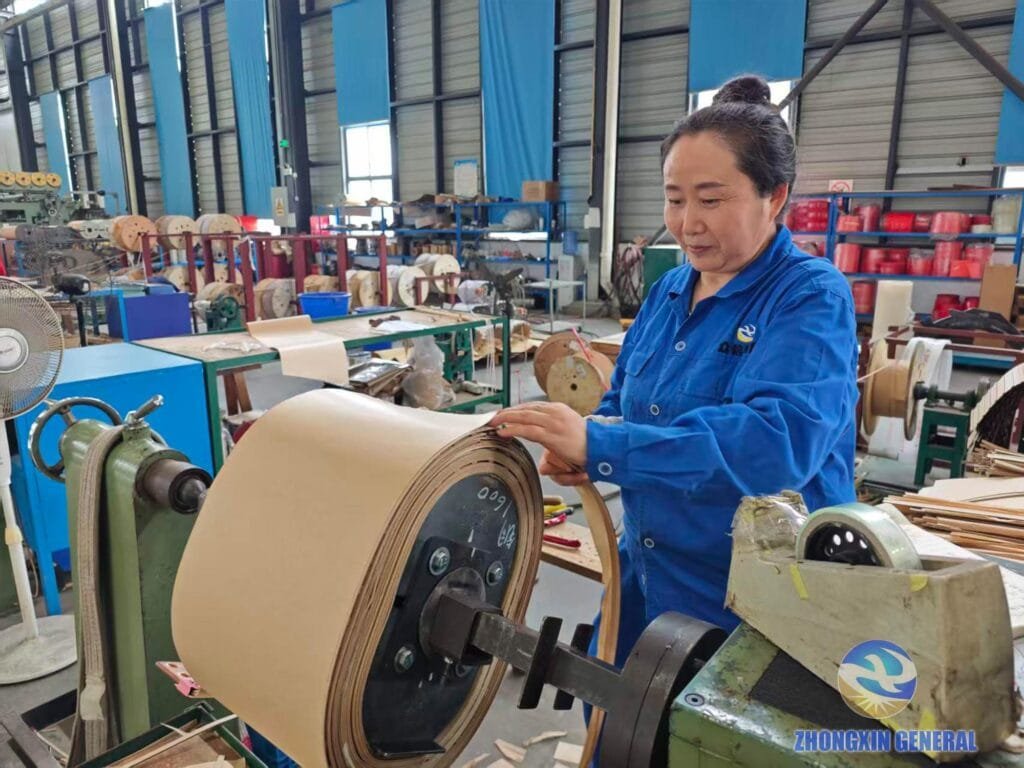
Step 12: Thin Foil Winding Machine Operation – Operators calibrate and operate professional foil winding machines to wind coils evenly, maintaining consistent wire tension and neat wire arrangement.
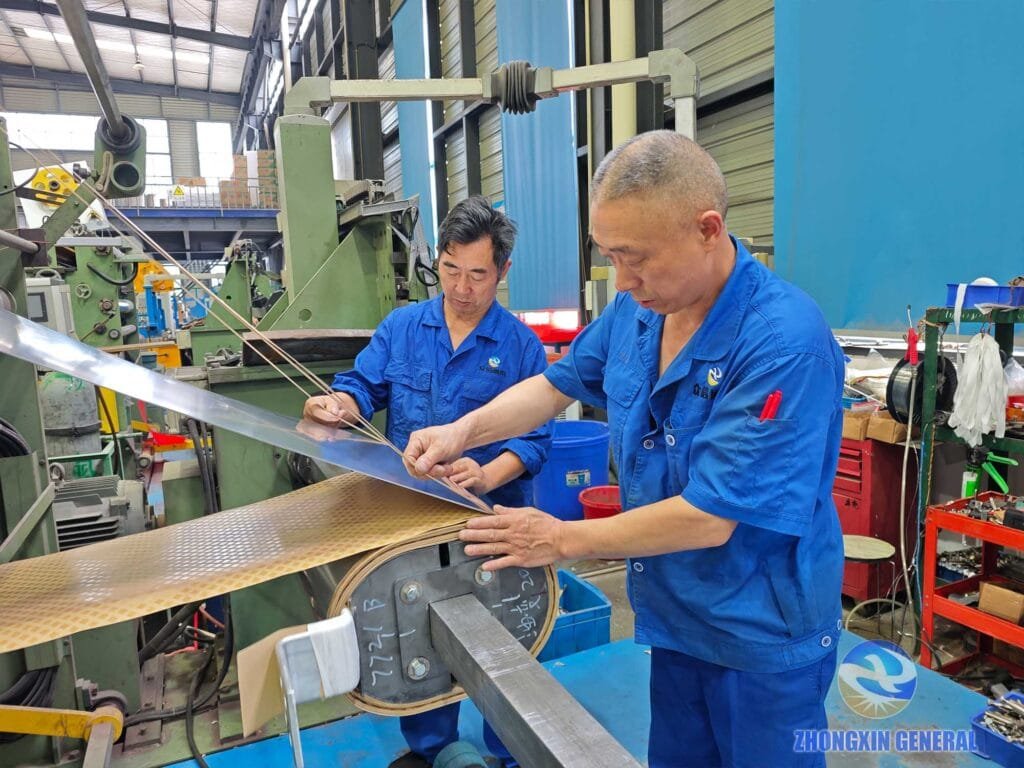
Step 13: Precision Coil Winding – Specialized winding equipment completes fine winding for high voltage and low voltage coils separately, strictly following design turns and wire diameters.
Step 14: Electrical Performance Testing of Formed Windings – Operators use multimeters to conduct electrical testing on formed windings, verifying winding performance parameters.
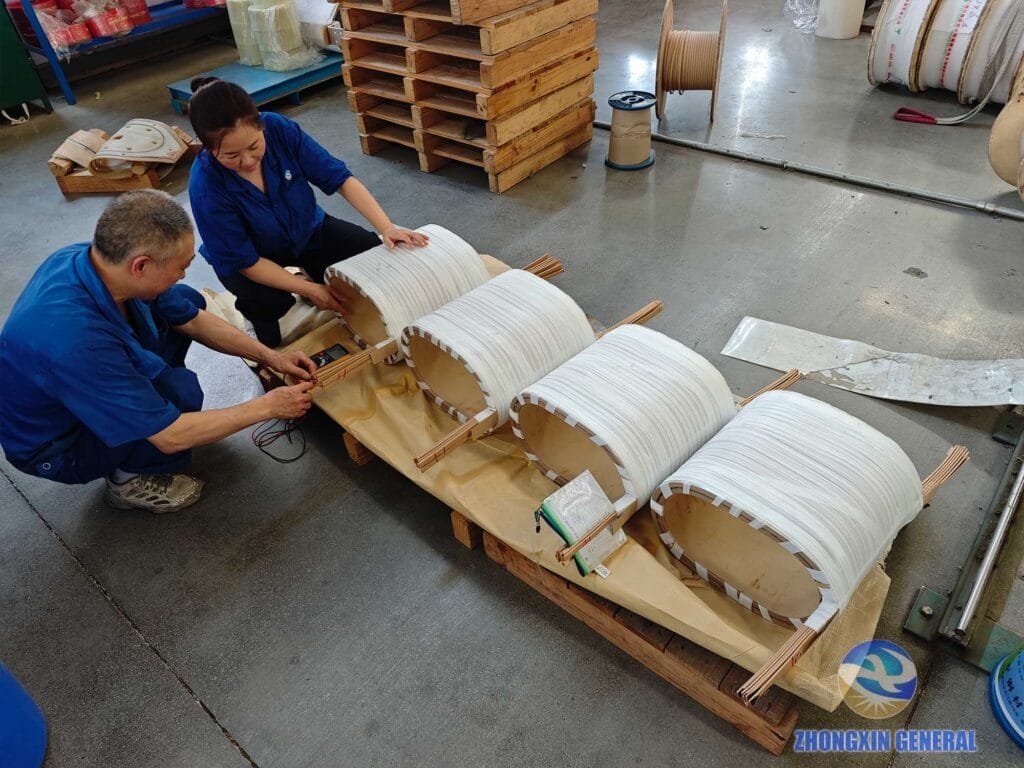
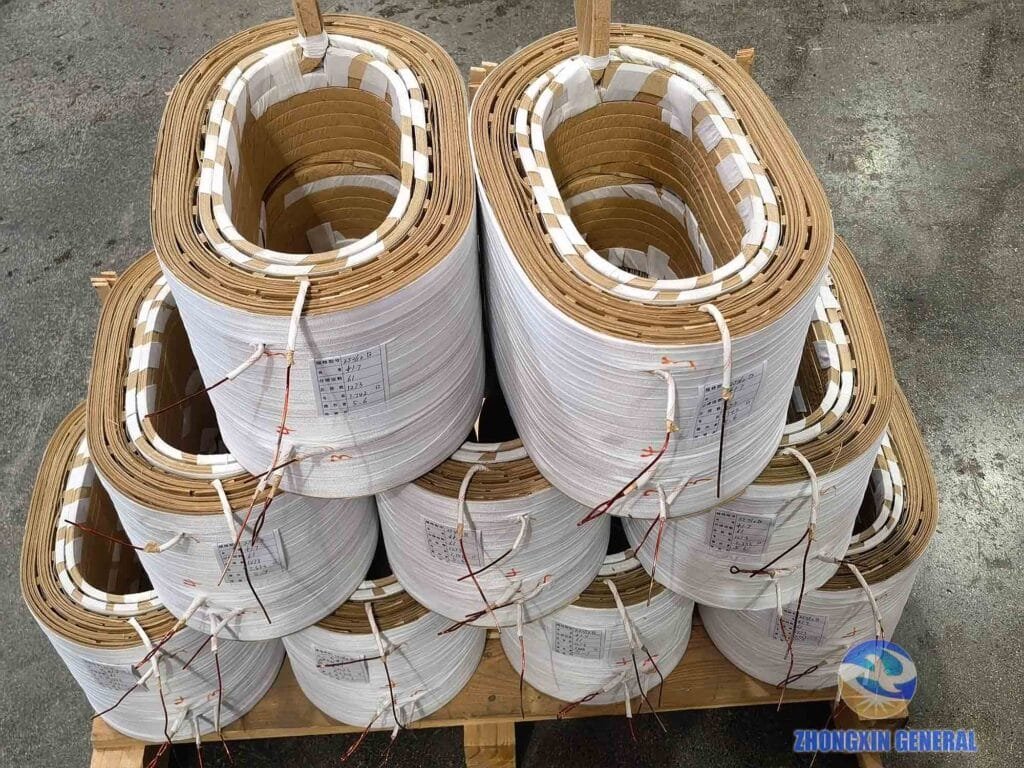
Step 15: Formed Winding Storage – Completed windings that pass inspection are stacked neatly on wooden pallets, organized by specification for subsequent assembly.
4. Core-Winding Assembly (Active Part Assembly)
Step 16: Multi-Person Coordinated Winding Hoisting – Multiple workers coordinate to hoist windings and implement the core-winding assembly process, precisely fitting high and low voltage windings into the core inner cavity.
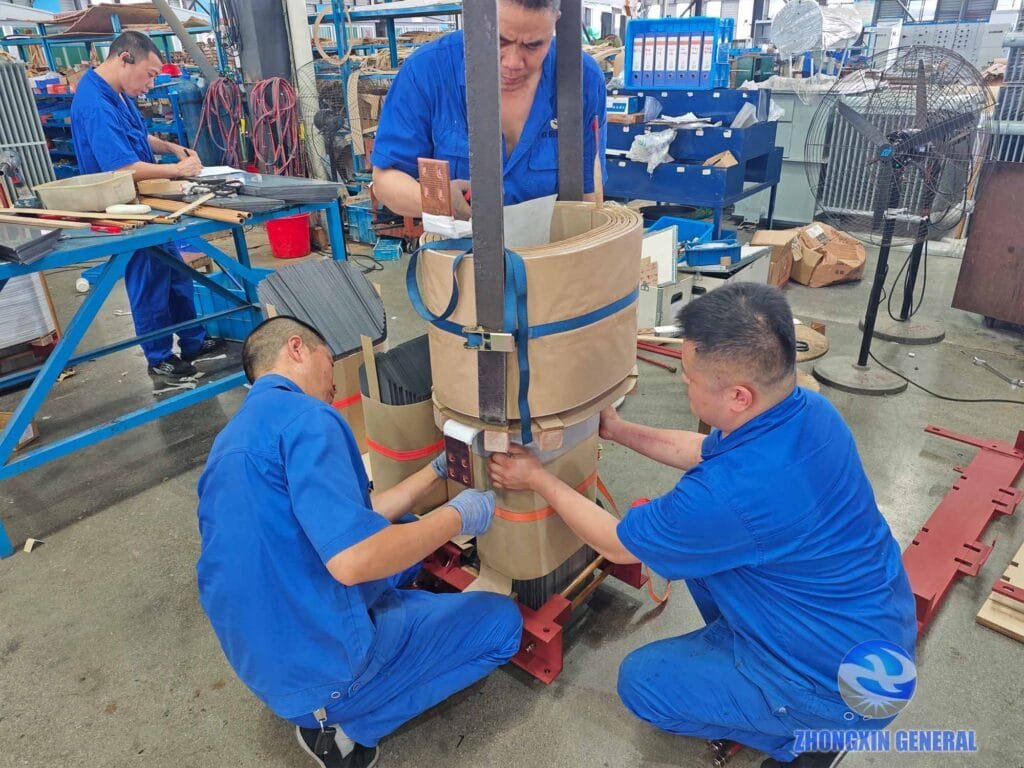
Step 17: Top Core Lamination Completion – Operators place top silicon steel sheets to complete the upper core lamination assembly.
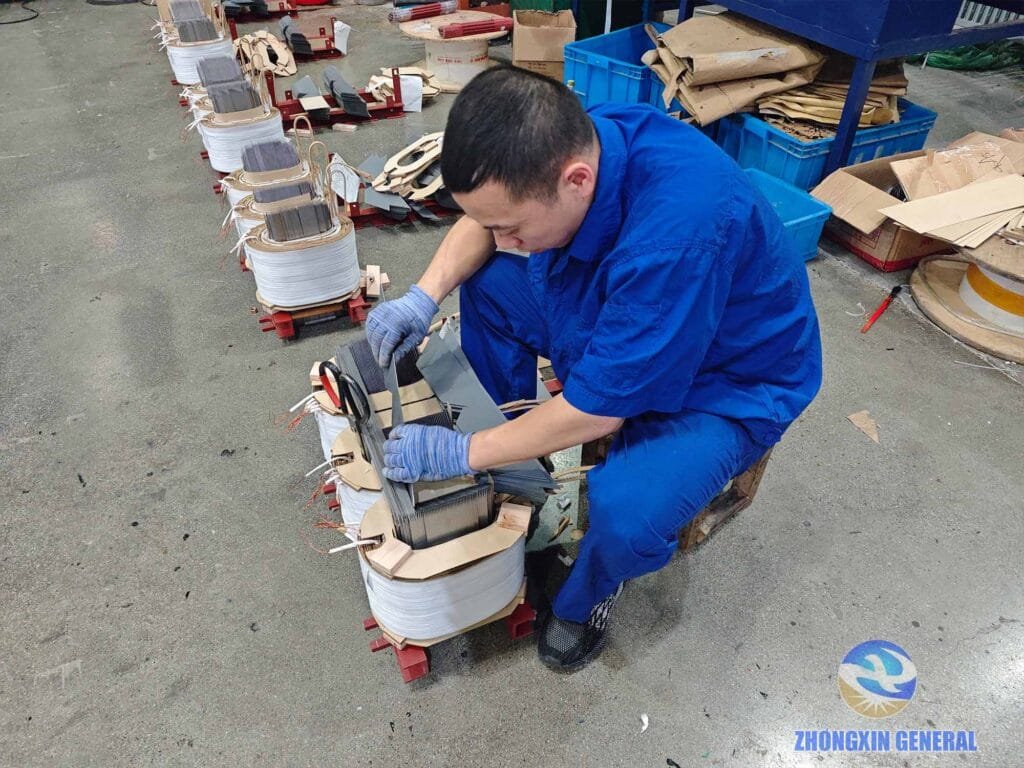
Step 18: Lead Arrangement and Connection – Assembly personnel arrange and connect leads, completing the active part wiring and connection work.
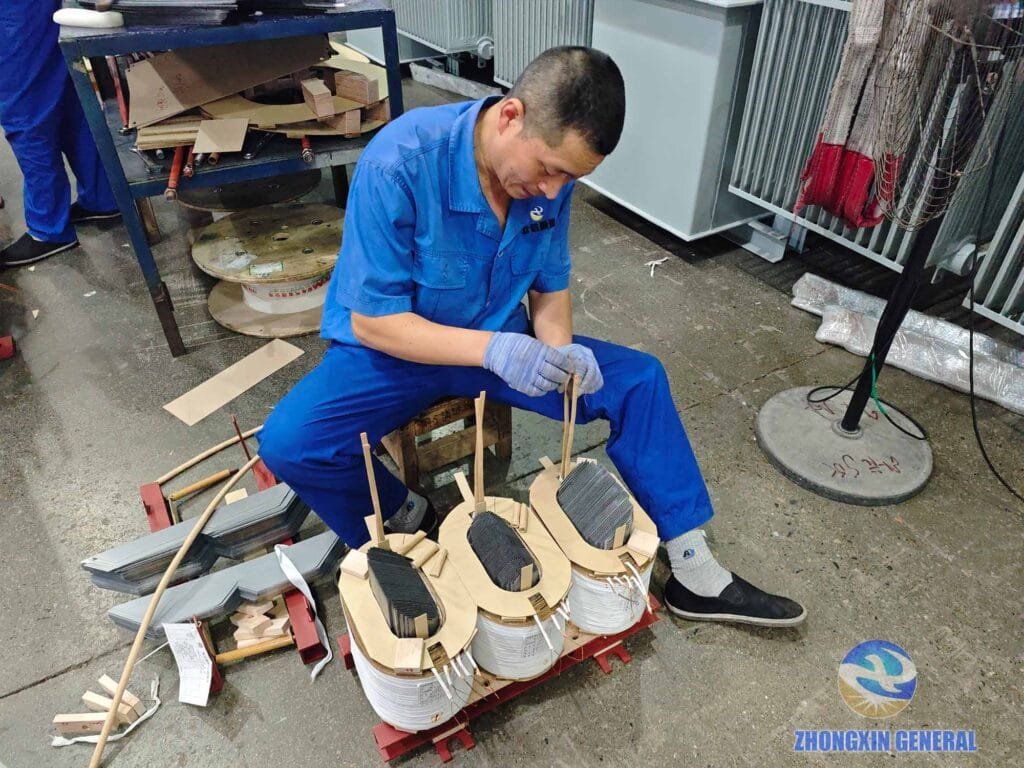
Step 19: Active Part Frame Construction – Operators build and secure the transformer active part frame structure.
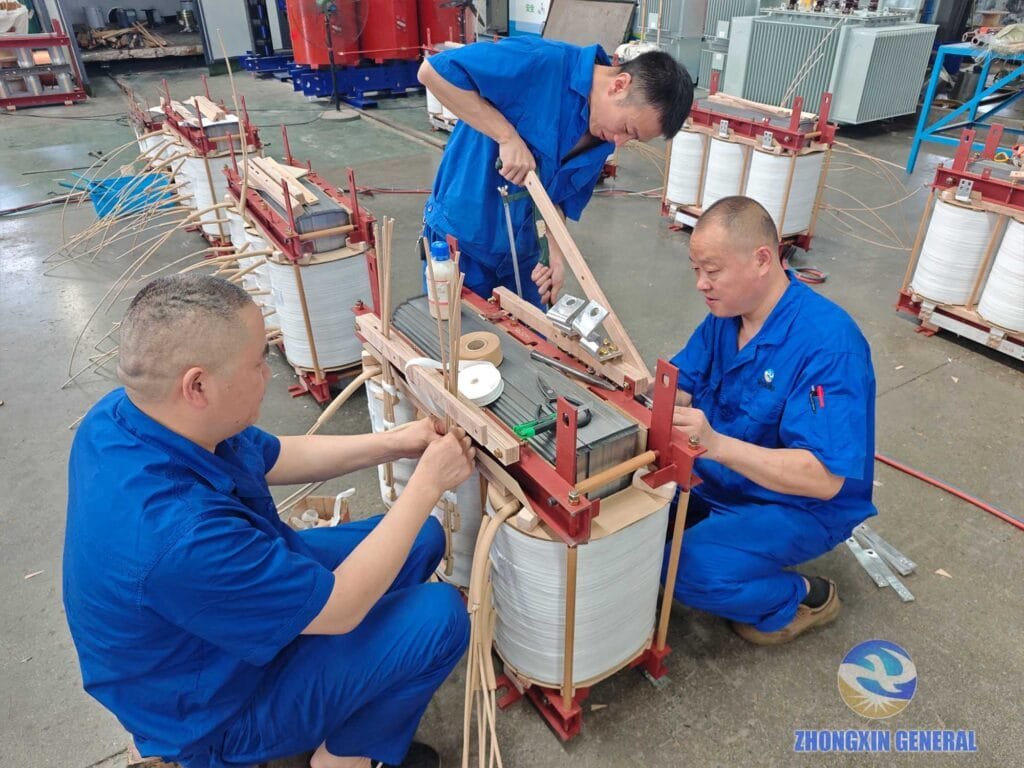
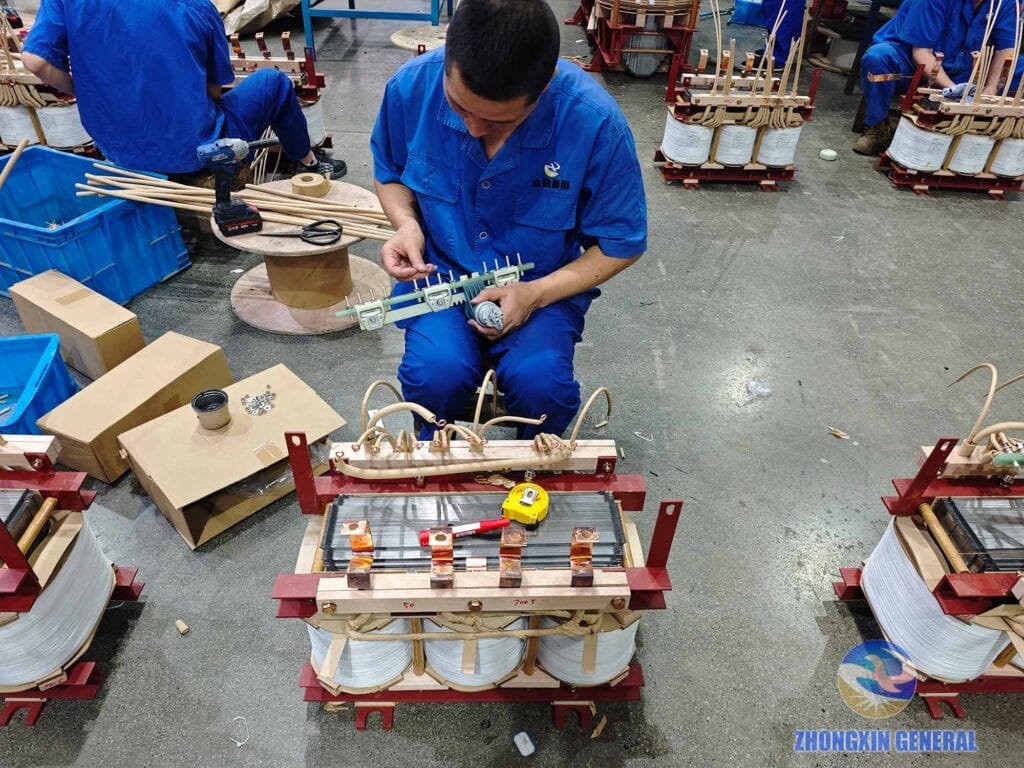
Step 20: Off-Circuit Tap Changer Installation – Operators install the off-circuit tap changer on the oil immersed transformer for voltage regulation capability.
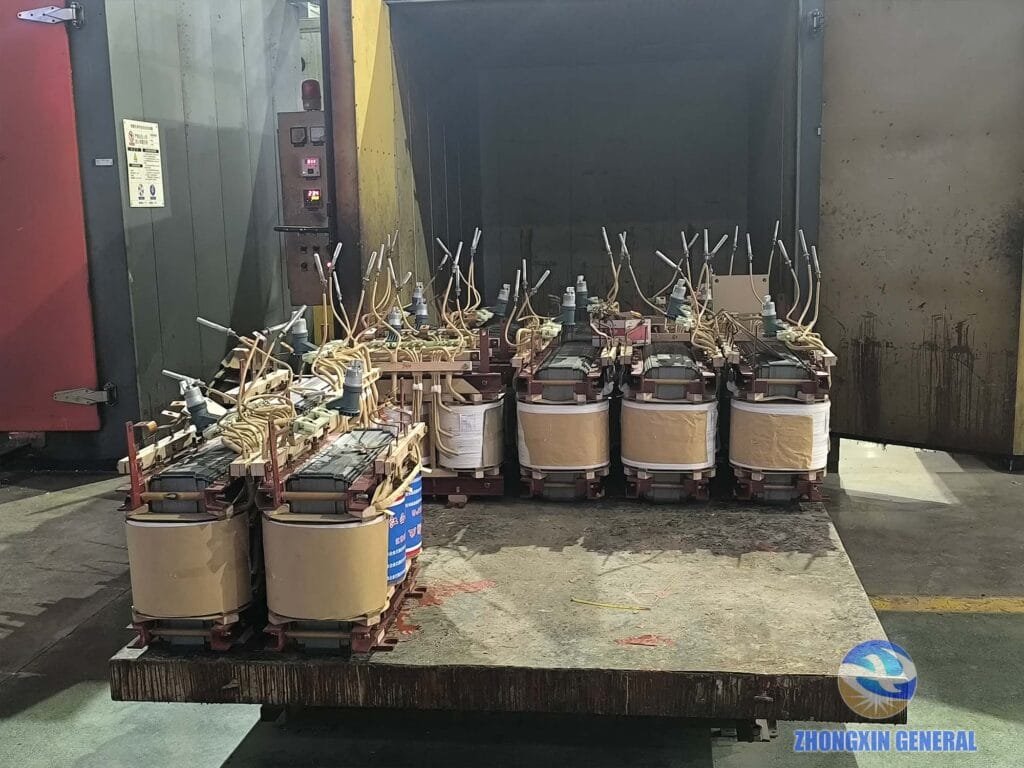
Step 21: Active Part Oven Drying – After internal assembly is complete, the active part enters a high-temperature oven for dehumidification and baking, removing all internal moisture before tanking.
5. Tanking and Final Assembly
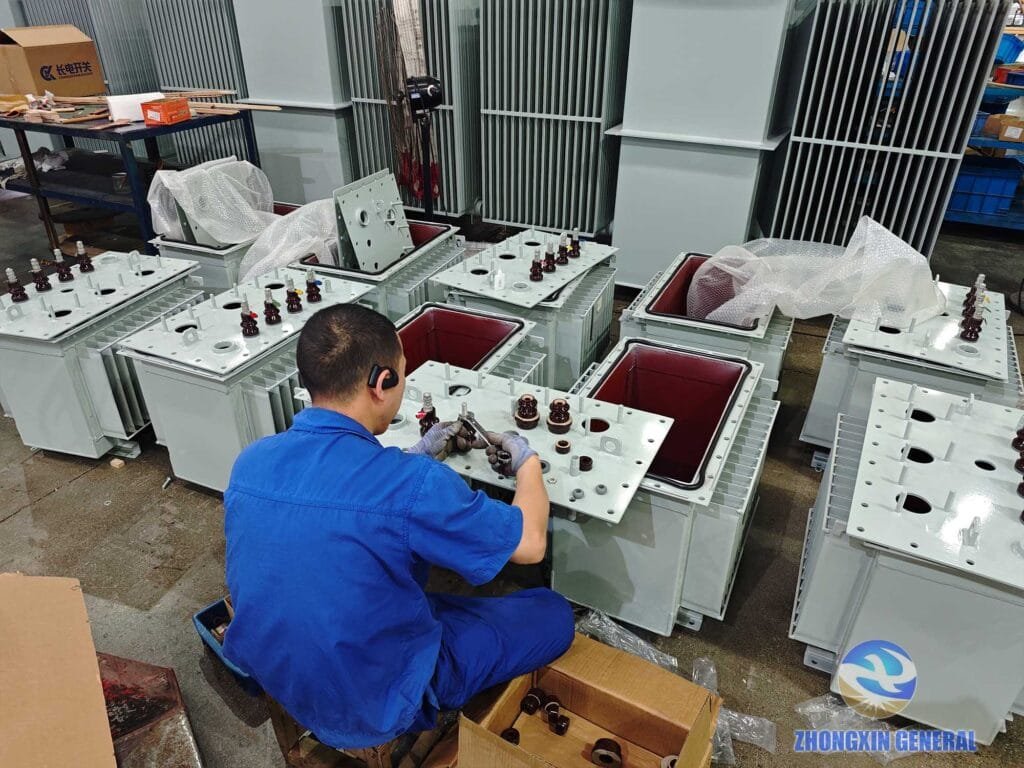
Step 22: Top Cover Installation and Active Part Tanking – Construction personnel install the transformer tank top cover components and hoist the internal active part into the tank for final assembly.
6. Oil Filling
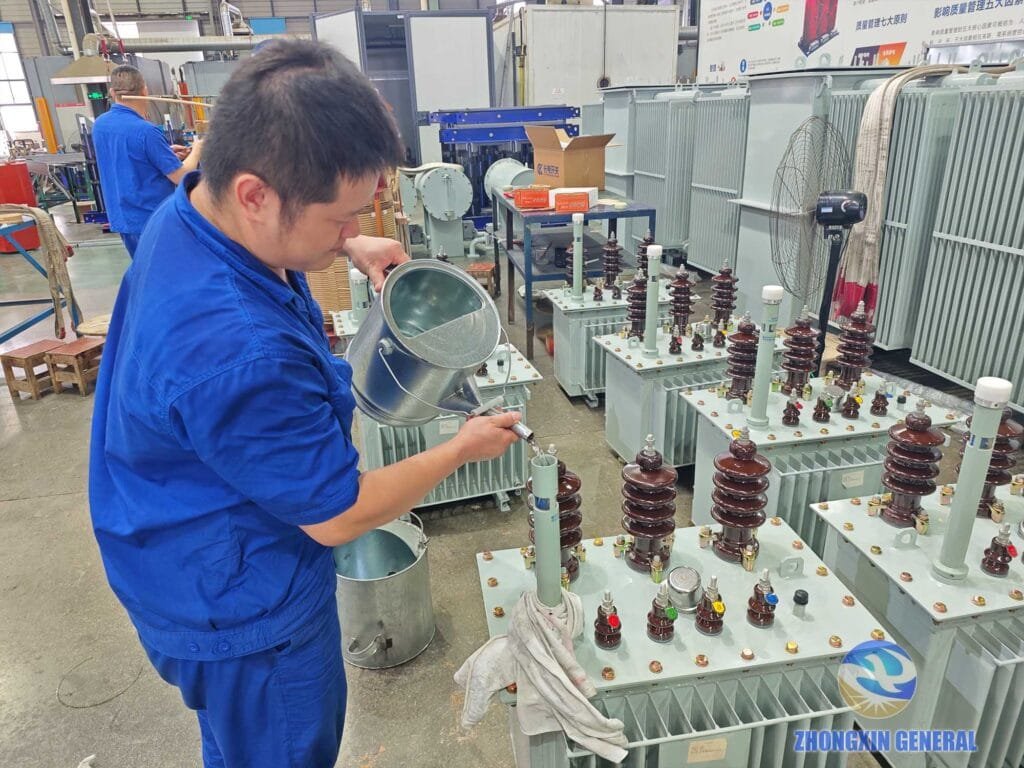
Step 23: Transformer Oil Filling – Operators perform oil filling on small transformer tanks, adjusting oil level to the standard range. The insulating oil provides both electrical insulation and efficient heat dissipation through natural convection.
7. Multi-Stage Factory Performance Testing (Strict Quality Control)
All finished units pass strict electrical tests before delivery. Our testing protocols follow IEC and GB standards, consistent with the quality standards applied to all our transformer products.
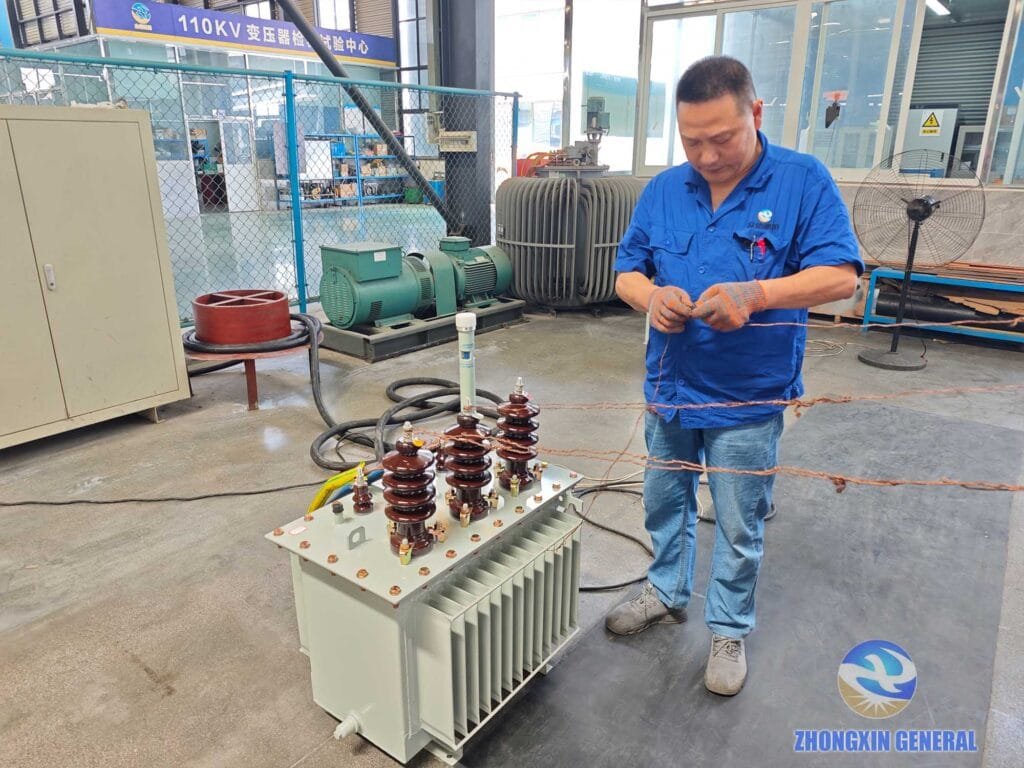
Step 24: Portable Comprehensive Testing – Testing personnel use portable comprehensive test instruments to conduct winding DC resistance, turns ratio, and other parameter tests on the transformer.
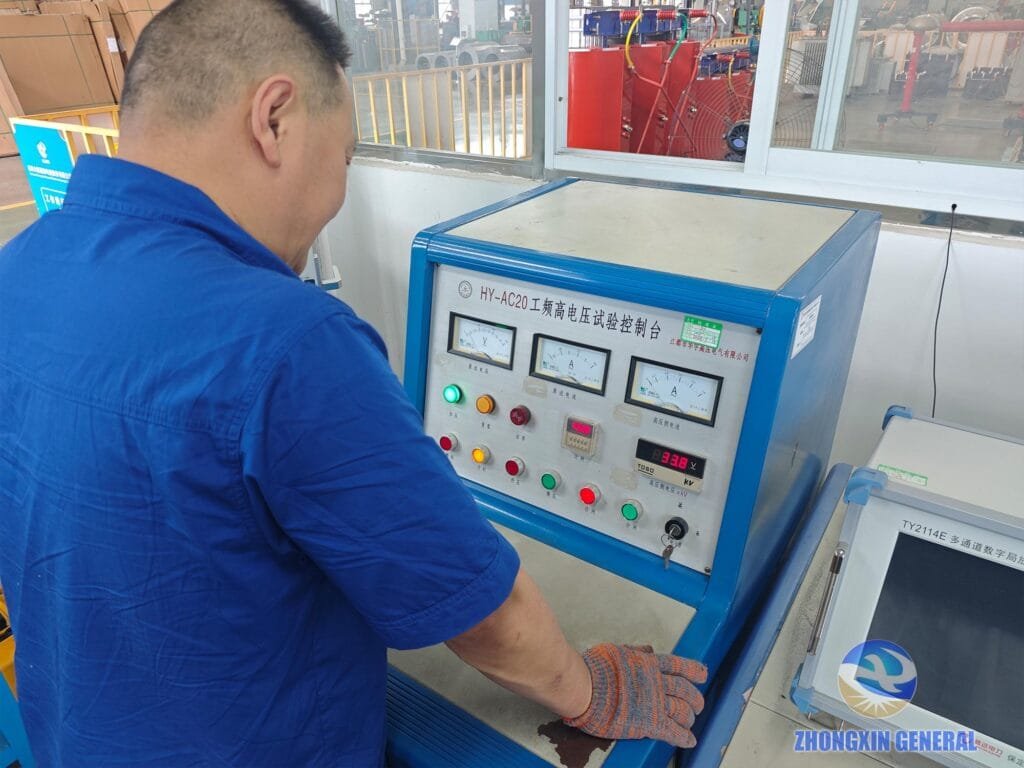
Step 25: Power Frequency High Voltage Test – Testing personnel operate the power frequency high voltage test console to conduct power frequency withstand voltage insulation testing and factory calibration verification on the transformer.
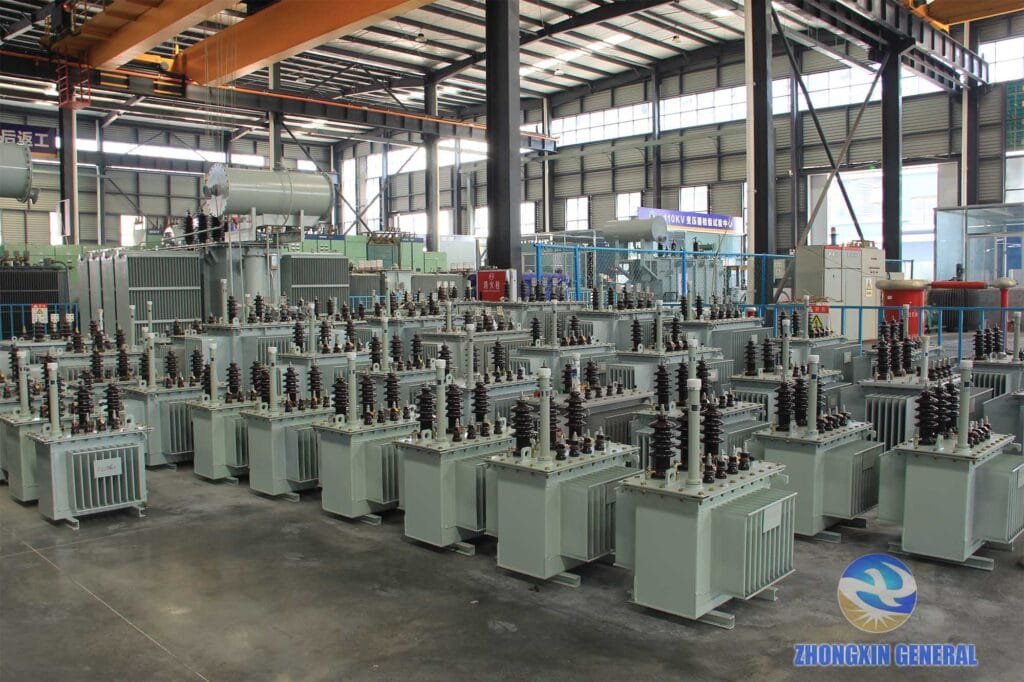
Step 26: Finished Product Storage – Completed oil immersed distribution transformers are neatly arranged in the workshop finished goods area, awaiting final factory inspection and dispatch delivery.
Why Choose Zhongxin General Oil Immersed Transformers?
Our oil-immersed transformer R&D and production team is led by Chief Engineer Mr. Li Xianming, who first entered the transformer industry at age 16 as an apprentice at a state-owned transformer factory. Mr. Li brings 45 years of transformer industry experience, having served from apprentice to technician to Chief Engineer. Our oil-immersed transformer products embody the core values of reliability and soundness that Mr. Li upheld throughout his long career.
The design, management, and production team assembled under his leadership comprises exclusively seasoned industry professionals, providing a solid guarantee of consistent product quality and reliability.
Our oil-immersed transformer range covers on-load tap-changing and off-circuit tap-changing power transformers, as well as oil immersed transformer, rated at 110 kV / 63 MVA (63,000 kVA) and below. Our S22 series oil-immersed transformers achieve energy efficiency levels that surpass the EU Tier 2 efficiency requirements implemented in 2019 under Commission Regulation (EU) No. 548/2014.
We supply a full set of power distribution equipment covering:
- Oil Immersed Transformers
- Dry Type Transformers
- HV/MV/LV Switchgear
- Prefabricated Modular Substations
- Energy Storage Substations
Browse our Products page for a complete overview of our manufacturing capabilities, and explore real-world project deliveries in our Case Studies archive to see our transformers in action across diverse applications. Visit our About Us page for our company history and team profile.
If you need customized oil immersed transformers with specific kVA, voltage or impedance parameters, visit our Contact Us page to send your requirements and get technical drawings & factory quotations promptly.